
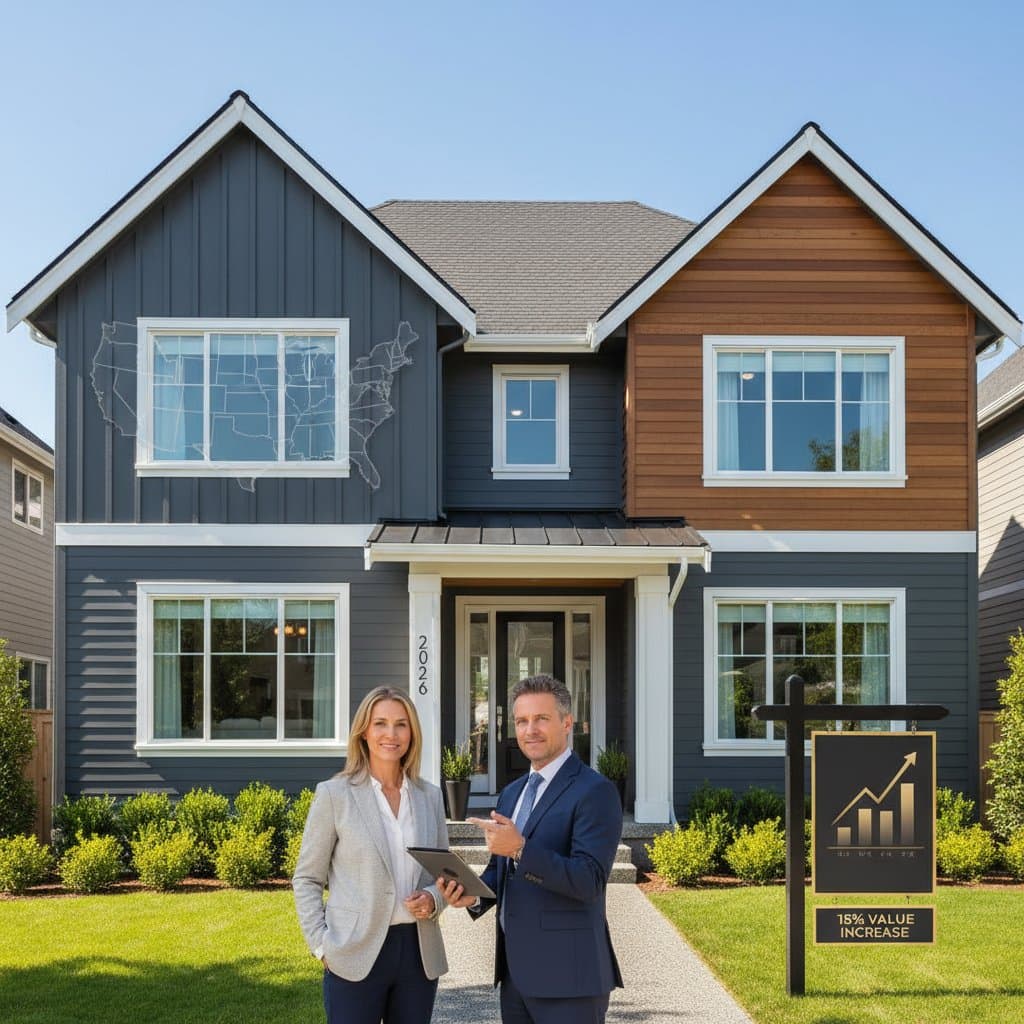
Discover 15% Higher Siding ROI in These 12 States
Replacing exterior siding is one of the few home improvement projects that can return most of its cost at resale. In certain regions, that return climbs even higher. Homeowners in twelve states are seeing up to fifteen percent stronger resale recovery compared to the national average. The gain comes from regional weather demands, local buyer expectations, and steadily rising material values.
This guide explains where those returns occur, why they happen, and how to plan a siding job that holds its value.
Style and Selection Explainer
Profiles and Placement
Common profiles include lap, board and batten, shingle, and panel.
- Lap siding fits most suburban homes and sheds water efficiently.
- Board and batten suits rural or farmhouse exteriors.
- Shingle style works on coastal or traditional properties.
- Panel systems fit modern or commercial designs.
Material Comparison
| Material | Pros | Cons | Typical ROI* |
|---|---|---|---|
| Vinyl | Low cost, wide color range, easy cleaning | Can crack in cold, limited fire resistance | High |
| Fiber Cement | Fire, impact, and rot resistant | Heavier, requires painted edges | Very High |
| Engineered Wood | Warm look, lighter than cement | Needs repainting every few years | High |
| Metal | Noncombustible, long life | Industrial appearance, dent risk | Moderate |
*ROI figures vary by region and housing market.
Mixing Rules
Limit the mix to two primary sidings plus one accent. Keep horizontal transitions on clear story lines such as window heads or floor framing. Too many textures lower resale value.
Trim and Accent Logic
Use color contrast at corners and openings to frame each elevation. PVC or prefinished aluminum trim holds color longer in humid regions.
Example Scenarios
- Coastal home: Fiber cement lap with PVC trim resists salt spray and wind.
- Mountain cabin: Engineered wood shakes with stained fascias match rustic settings.
- Urban infill: Metal panels with fiber cement accents deliver modern appeal.
Step-by-Step Project Prep
1. Define Goals and Scope
List what you want to fix: poor insulation, fading color, or structural wear. Decide if trim, soffits, and gutters are part of the same job.
2. Shortlist Contractors
Collect at least three written bids. Verify license, insurance, and references. Compare not only price but also wall preparation details and product lines.
3. Samples and Approvals
Ask for full-size sample boards. Place them on both sunny and shaded walls to see color shift. Confirm finish sheen and texture before ordering.
4. Site Readiness
Clear shrubs two feet away from walls. Move outdoor furniture and disconnect fixtures like lights and hose bibs. Arrange a safe material drop zone.
5. Daily Routine
Expect some noise and dust. Crews typically work in daylight hours and complete one wall at a time. Confirm where electrical outlets and water are available.
6. Quality Checks
- Moisture barrier: Should overlap shingle style with taped seams.
- Flashing: Must extend two inches beyond casings.
- Fastening: Verify nail heads sit flush, not sunk.
- Final walk: Review joints, touch-up paint, and cleanup.
Pro Tips for Long-Term Success
- Invest in flashing and housewrap first. Pretty siding fails when the wall beneath leaks.
- Match color stability to sun exposure. Dark vinyl fades faster on south walls.
- Document each step. Keep photos for warranty and resale proof.
- Schedule cleanings in mild weather. Avoid washing in direct sun or freezing conditions.
- Repaint on time. Waiting until peeling starts shortens board life.