
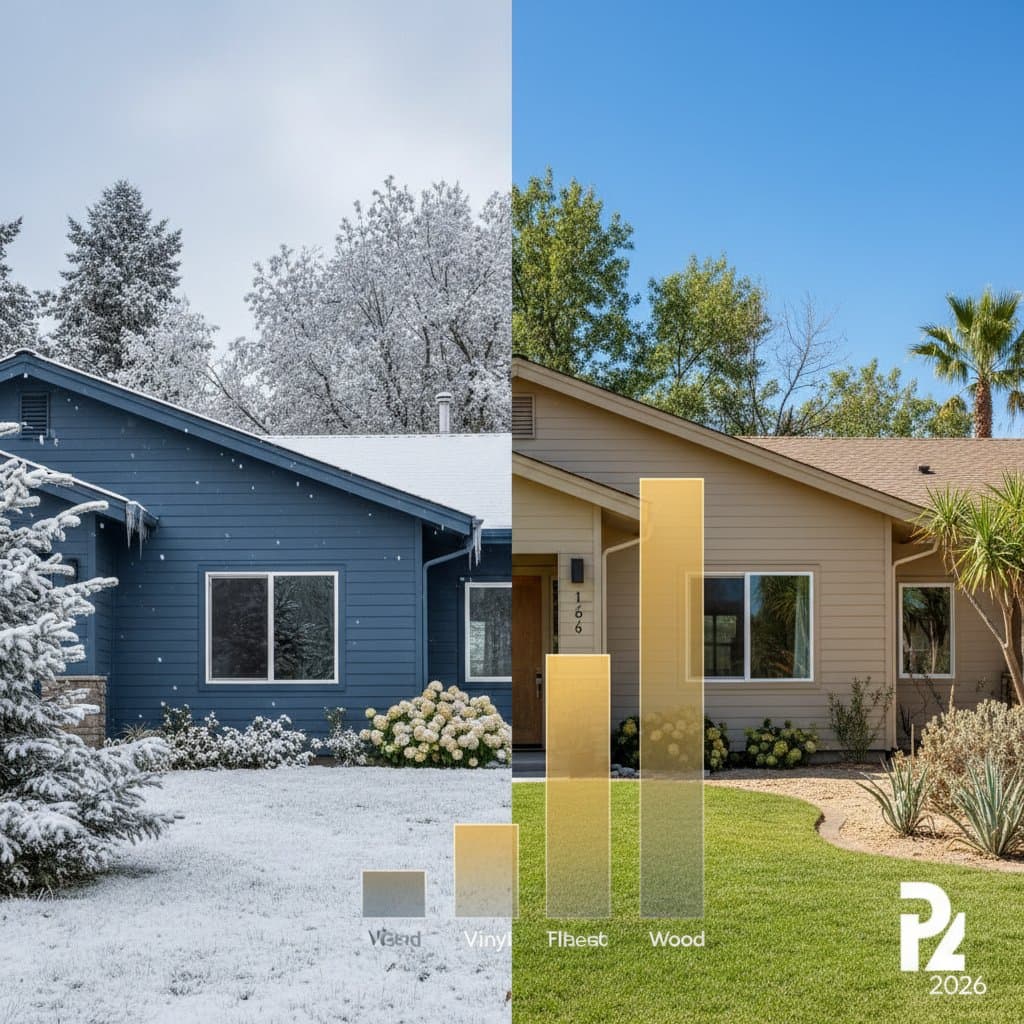
Why Fiber Cement Siding Provides Superior Return on Investment Across All Climates
Homeowners seek exterior cladding that enhances appearance, endures over time, and preserves property value during resale. The ideal material must perform reliably in diverse weather conditions while minimizing upkeep and maximizing financial recovery. Amid varying regional preferences, fiber cement siding emerges as the standout option for hot summers, harsh winters, humid coasts, and arid interiors. This material withstands environmental stresses, maintains structural integrity, and requires minimal intervention relative to alternatives like wood or vinyl. The following sections provide a comprehensive overview to guide informed decision-making.
Selecting Styles and Profiles
Primary Profile Options
Fiber cement siding offers versatile profiles to suit architectural preferences:
- Lap siding. These horizontal planks overlap for a classic look, ideal for ranch-style or colonial residences.
- Board-and-batten. Vertical boards separated by raised battens create a rustic accent, perfect for farmhouse or craftsman aesthetics.
- Panel and shingle. Larger panels or shingle-like textures add dimension, fitting contemporary or seaside homes.
Profiles arrive factory-primed for on-site painting or prefinished with durable, baked-on pigments that resist peeling.
Comparative Analysis of Materials
To evaluate fiber cement against competitors, consider key factors such as installation costs, longevity, care requirements, and environmental adaptability. The table below summarizes these attributes based on industry standards.
| Material | Installed Cost Range | Expected Lifespan | Maintenance Level | Best Climate Suitability |
|---|---|---|---|---|
| Vinyl | $5–$9 per sq. ft. | 20–30 years | Low | Mild, dry conditions |
| Wood | $9–$15 per sq. ft. | 20–40 years | High | Dry, temperate areas |
| Fiber Cement | $8–$14 per sq. ft. | 40–50 years | Low | Universal: all climates |
| Engineered Wood | $7–$12 per sq. ft. | 25–35 years | Moderate | Cold, dry regions |
| Metal | $9–$16 per sq. ft. | 40–60 years | Low | Coastal, high-wind areas |
Fiber cement excels due to its composition of cement, sand, and cellulose fibers, which provide strength without the warping of wood or brittleness of vinyl in extreme temperatures.
Integrating Trim and Accents
Effective trim selection enhances visual cohesion. For traditional homes, combine smooth lap siding with broad trim boards to frame windows and doors elegantly. Modern facades benefit from vertical panels paired with slim, minimalist trim. Fiber cement trim aligns seamlessly with siding, sharing identical expansion rates to prevent gaps or cracks at connections. Installers should avoid combining fiber cement with vinyl elements, as differing thermal movements lead to misalignment over time.
Tailored Recommendations by Climate
Adapt choices to local conditions for optimal performance:
- In hot, sunny regions: Opt for lighter hues with UV-resistant finishes to minimize heat absorption and color fading. Thicker profiles add insulation against intense solar exposure.
- In humid coastal areas: Specify factory-applied coatings and corrosion-resistant stainless steel fasteners. Ensure proper ventilation behind panels to deter mold growth.
- In cold climates: Select denser lap siding with reinforced edges. Install comprehensive flashing around openings to shield against ice expansion and thaw cycles that could damage substrates.
- In arid, windy zones: Choose shingle profiles for wind resistance. Prefinished options reduce dust accumulation and simplify cleaning in low-moisture environments.
These adaptations ensure longevity and efficiency tailored to specific challenges.
Preparing for Installation: A Detailed Guide
Successful projects begin with thorough preparation. Follow these steps to align expectations and achieve professional results.
Step 1: Establish Objectives and Assess the Site
Identify priorities such as enhanced durability, increased market appeal, or reduced ongoing expenses. Conduct a full exterior inspection: calculate square footage, identify issues like deteriorated sheathing or moisture intrusion, and determine if complementary updates to soffits, fascia, or drainage systems are necessary. Document findings with photographs to share with professionals.
Step 2: Evaluate and Select Contractors
Obtain bids from a minimum of three certified installers experienced in fiber cement applications. Verify credentials, including manufacturer-specific training and insurance coverage. Beyond base pricing, scrutinize inclusions like surface preparation, weather-resistant barriers, and sealant applications. Request references from similar climate-based projects to gauge reliability.
Step 3: Review Samples and Conduct Mockups
Examine tangible samples under natural light to assess texture, color accuracy, and finish quality. Arrange for a contractor to apply a trial section on a low-visibility area, evaluating joint spacing, fastener patterns, and overall alignment. Finalize approvals only after this demonstration confirms adherence to standards.
Step 4: Prepare the Site and Manage the Process
Clear the perimeter of obstacles and protect landscaping with tarps. Coordinate material deliveries to avoid delays, and establish a daily workflow: mornings for demolition and prep, afternoons for installation. Monitor weather forecasts to pause work during rain or high winds, preserving material integrity.
Step 5: Perform Milestone Inspections
Conduct checks at critical phases to maintain quality:
- Post-removal: Ensure underlying sheathing remains dry and structurally sound; repair any rot immediately.
- Post-weather barrier: Verify that house wrap seams are overlapped and sealed, with flashing properly integrated at vulnerable points like sills and roofs.
- During siding application: Confirm uniform plank reveals (typically 1/4 to 1/2 inch) and nails driven at 16-inch centers without over-penetration.
- Pre-finishing: Inspect for clean, caulked joints and debris-free surfaces to guarantee a flawless paint bond.
These verifications minimize callbacks and ensure compliance with building codes.
Maintaining and Benefiting from Fiber Cement Siding
After installation, fiber cement demands straightforward care to sustain its performance. Annual gentle washing with a mild detergent and soft brush removes surface dirt without abrading the finish. Periodic touch-ups address minor scratches, preserving the uniform appearance. This material inherently repels termites, withstands fire ratings up to Class A, and blocks moisture penetration, reducing risks in flood-prone or wildfire areas.
Over decades, fiber cement contributes tangible advantages. It lowers insurance premiums through superior fire and impact resistance. Resale appraisals often reflect its premium durability, with studies indicating up to 80 percent cost recovery on investments. Homeowners in varied settings, from subtropical bays to alpine slopes, experience sustained protection that enhances daily living and future marketability. Choose fiber cement for a resilient exterior that evolves with your home's needs.