
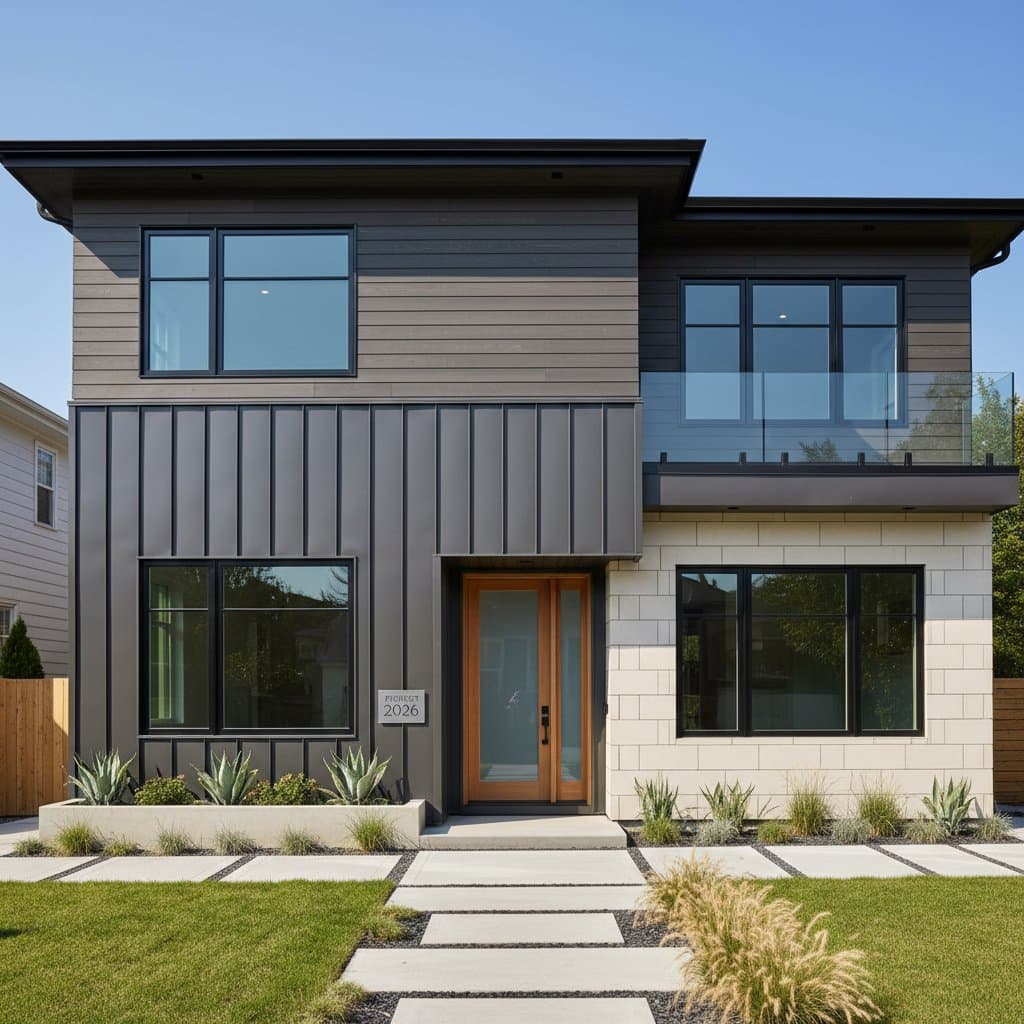
Mixed Siding: Unlock Top ROI Gains by 2026
Homeowners increasingly select mixed siding systems to enhance curb appeal and increase resale value. These systems combine materials like fiber cement, engineered wood, and metal panels to introduce visual depth while simplifying maintenance routines. A properly executed hybrid siding installation yields substantial return on investment, minimizes ongoing care requirements, and produces a harmonious exterior that enhances property photographs for real estate listings.
Cost, ROI, and Impact Factors
The expense for a mixed siding upgrade on an average-sized home ranges from 18,000 to 42,000 dollars. Return on investment typically reaches 65 to 85 percent, influenced by material quality, color selections, and installation accuracy. Factors such as regional labor rates and home size also play key roles in determining final costs and benefits.
Cost Drivers
Several elements contribute to the overall project budget:
- Removal and disposal: Handling heavier materials or multiple existing layers extends labor hours and increases expenses.
- Complexity: Managing transitions at corners, edges, and trim areas demands additional cutting, flashing, and sealing efforts.
- Stories and access: Homes with two or more stories necessitate scaffolding, lifts, and enhanced safety measures, elevating costs.
- Trim scope: Incorporating wider or ornate trim elements raises material and labor demands, though it elevates the home's perceived quality.
- Site conditions: Limited access, nearby trees, or uneven terrain complicates staging equipment and debris management.
Scale Examples
Project size varies based on scope:
- Small project: Focusing on an accent wall or partial resurfacing costs 6,000 to 11,000 dollars and suits targeted updates.
- Mid project: Covering the full front elevation with mixed materials ranges from 14,000 to 25,000 dollars, balancing impact and budget.
- Large project: Encompassing all elevations with two or three material types exceeds 30,000 dollars, ideal for comprehensive transformations.
Takeaway
To maximize ROI, select combinations that provide balanced contrast and enduring durability, ensuring the design aligns with local architectural standards and avoids excessive customization.
Design for Curb Appeal
Effective mixed siding designs highlight the home's architecture without creating visual clutter. Start planning from the foundation level, maintaining uniform proportions and seamless material shifts throughout.
Design Basics
Key principles guide successful implementations:
- Massing: Position darker or textured materials at the base to create a stable, grounded appearance.
- Contrast: Combine smooth surfaces with subtle patterns, such as lap siding or shakes, to play with light and shadow effectively.
- Color: Select shades within the same undertone family, like warm grays or cool taupes, for cohesive harmony.
- Entry Emphasis: Apply vertical siding or metal accents around doorways and porches to draw attention and define focal points.
- Details: Ensure alignment of house numbers, lighting fixtures, and trim lines for crisp, professional sightlines.
Incorporate these elements thoughtfully to elevate the home's street presence. For instance, using fiber cement on lower sections paired with lighter engineered wood above fosters a sense of height and openness.
Takeaway
Prioritizing proportion and subtle contrasts enhances perceived value far more than dramatic color shifts or mismatched patterns.
Maintenance and Longevity
Regular upkeep ensures mixed siding remains functional and visually appealing over time. Address potential issues promptly to extend the system's lifespan and preserve investment value.
Maintenance Checklist
Follow this schedule for optimal care:
- Every 12 months: Clean surfaces using mild soap and a soft-bristle brush to remove dirt and pollen buildup.
- Every 24 months: Examine caulk joints for wear; touch up paint on fiber cement or wood components as required.
- After storms: Inspect for damage including dents, cracks, or loose trim pieces, repairing immediately to prevent water intrusion.
- Every 5 to 10 years: Reapply sealants or protective coatings according to manufacturer specifications.
Employ low-pressure rinsing to avoid damaging finishes, and steer clear of abrasive chemicals. Maintain clearance around the home by trimming vegetation, which promotes ventilation and reduces moisture retention behind panels.
Takeaway
Consistent, straightforward maintenance safeguards protective layers and averts expensive overhauls, supporting long-term performance.
Achieving Lasting Value Through Mixed Siding
A thoughtfully designed mixed siding installation delivers aesthetic appeal alongside tangible financial advantages. It shortens repaint intervals, bolsters insulation efficiency, and improves listing photography quality. Homeowners benefit most by aligning expenditures with strategic design decisions, coordinating elements for unity, and committing to yearly inspections. Treat every material junction as an opportunity for precision, resulting in an exterior that endures and appreciates through 2026 and beyond.