
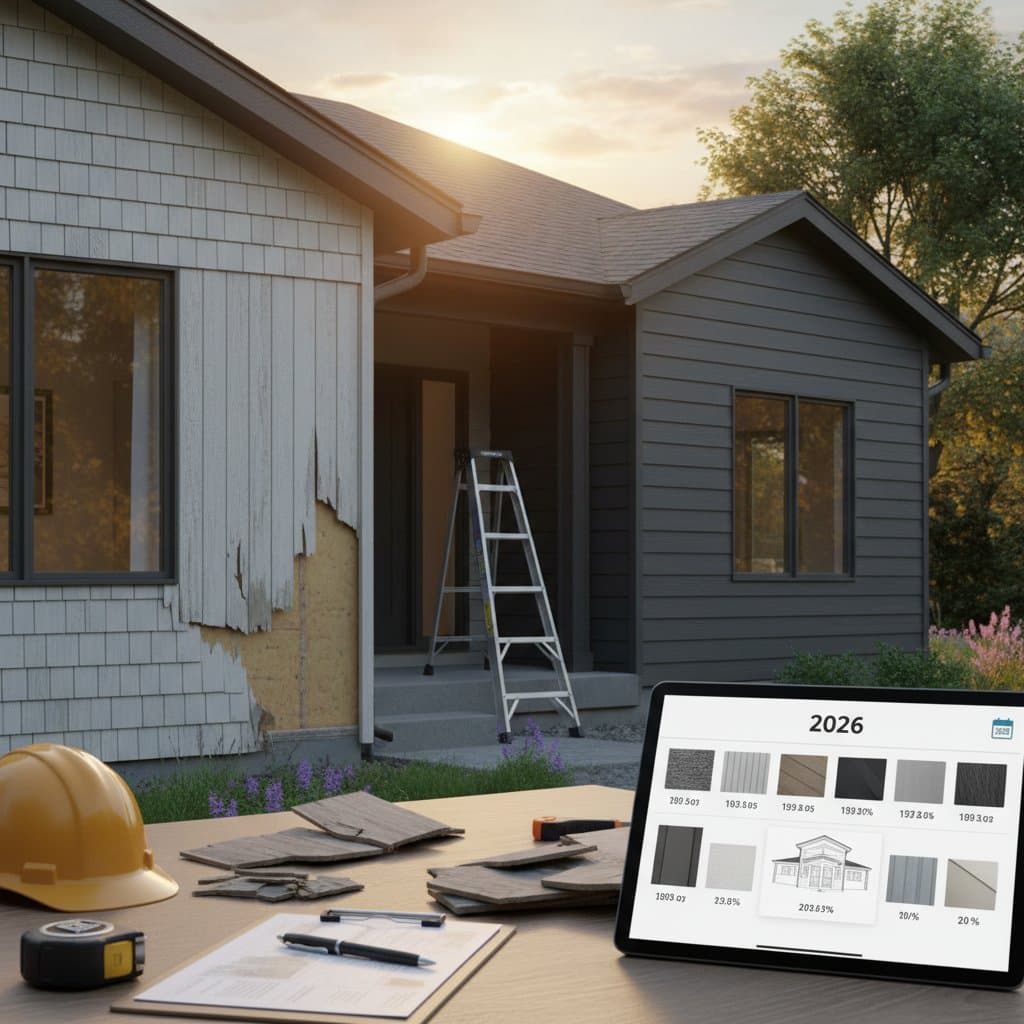
Deciding Between Siding Repair and Full Replacement
Homeowners often encounter the dilemma of siding maintenance as materials weather over time. The choice between targeted repairs and a complete overhaul hinges on the extent of damage, exposure to moisture, and your long-term ownership intentions. This analysis outlines how each approach influences property value, ongoing expenses, and structural integrity.
Breaking Down Costs, ROI, and Key Influences
Siding repair and replacement costs fluctuate based on several variables, including the project's scale, building height, chosen materials, and site accessibility. Understanding these elements helps in budgeting accurately for 2026 projects.
Estimated project costs:
- Minor repairs (less than 200 square feet): $1,500 to $3,500, covering patch work on isolated sections.
- Partial replacements (one wall or elevation): $6,000 to $14,000, suitable for damage confined to specific areas.
- Complete replacements (entire exterior): $15,000 to $48,000, addressing widespread deterioration.
Primary cost factors:
- Demolition and waste removal: Handling older materials like lead-based wood or secured fiber cement demands extra labor and disposal fees.
- Site challenges: Features such as sloped roofs, dormers, or intricate trim require additional cutting, fitting, and material waste.
- Height and scaffolding: Access to upper levels elevates expenses due to equipment rental and safety protocols.
- Additional elements: Incorporating fresh trim, soffits, or window casings can increase the budget by 15 to 25 percent.
- Material specifications: Dense options like fiber cement or stone veneer necessitate reinforced framing and advanced installation techniques.
Return on investment projections:
Full siding replacements typically recoup 65 to 80 percent of costs upon resale, according to industry benchmarks. Repairs yield 40 to 55 percent ROI, particularly if patches create visible inconsistencies or color discrepancies.
Effects on property valuation:
- Opt for repairs: Ideal for limited damage where the underlying structure remains sound, especially if you intend to reside in the home for five or more years. This approach conserves immediate funds, though it risks noticeable seams or uneven aging.
- Choose replacement: Enhances visual appeal and reassures potential buyers about the home's weatherproofing, often reflected in stronger market positioning.
Practical guidance:
Pursue repairs when damage affects under 20 percent of the surface and seamless color integration proves feasible. Opt for replacement if rot, warping, or moisture infiltration spans multiple sections, or if surface treatments fail to conceal flaws effectively.
Enhancing Curb Appeal Through Thoughtful Design
Effective siding design contributes to the overall harmony of your home's facade, capturing attention from prospective buyers in mere moments. Prioritizing balance and cohesion elevates the property's aesthetic and perceived quality.
Essential design principles:
- Scale and balance: Employ horizontal siding patterns on expansive walls to mitigate vertical dominance and create a grounded appearance.
- Visual contrast: Pair darker siding with lighter trim accents, or the reverse, to define architectural features sharply.
- Consistent proportions: Maintain uniform lap exposures, such as a 6-inch reveal for two-story structures, or broader panels for single-level homes to align with the building's profile.
Selecting colors and undertones:
Harmonize siding choices with permanent features like roofing or brickwork. For instance, a cool-toned gray siding against warm beige shingles may clash under natural light; test samples outdoors across various lighting conditions to ensure compatibility.
Focusing on the entryway:
A well-defined front entrance, featuring precise trim, symmetrical lighting, and prominent numbering, can boost buyer valuations by thousands. Position porch supports, hardware, and siding alignments to guide the viewer's gaze toward the doorway seamlessly.
Practical guidance:
Simplify transitions in color and texture across the home's elevations. Uniformity not only improves photographic appeal but also conveys diligent upkeep to potential purchasers.
Ensuring Longevity Through Proper Maintenance
Proactive maintenance routines safeguard siding investments by addressing minor concerns before they escalate.
Recommended cleaning practices:
- Employ a standard garden hose or gentle pressure washer, operating from the ground up.
- Steer clear of abrasive cleaners that erode protective finishes.
- Direct water flow from the top downward to avoid residue lines.
Appropriate tools and techniques:
Select soft-bristled brushes, diluted soap solutions, and non-scratch pads to preserve surface integrity. Refrain from forceful scraping of paint or sealant layers.
Scheduled inspections:
- Annual checks: Examine sealant joints, attachment points, and coating adherence for early signs of wear.
- Biennial reviews: Look for pest activity, fungal growth, or shifting panels that could indicate underlying issues.
- Five-year intervals: Apply fresh coats of paint or sealant based on the material's specific needs.
Preventive measures:
Address sealant cracks without delay and refresh paint on any bare edges. Maintain a clearance of at least six inches between landscaping and walls to minimize dampness accumulation.
Warranty compliance:
Most manufacturers stipulate documented installation and care records for coverage validation. Retain all invoices, professional contacts, and assessment records, as incomplete paperwork frequently invalidates claims unrelated to product quality.
Practical guidance:
Adopt a documented maintenance schedule. Consistent monitoring and prompt interventions uphold warranty terms while sustaining the home's market worth.
Maximizing Benefits After Your Decision
The selected approach to siding will shape daily livability and future sale outcomes for an extended period.
Scenarios favoring repairs:
- When affected areas are small and the substructure shows no moisture damage.
- If existing siding allows for precise color blending.
- For properties slated for comprehensive exterior updates within a decade.
Circumstances justifying replacement:
- Widespread evidence of expansion, decay, or discoloration across elevations.
- Rapid failure of recent paint applications.
- Market feedback highlighting the exterior as a drawback.
Achieving seamless appearance:
Partial projects demand matching reveal heights, edge treatments, and joint sealing to avoid a disjointed effect, which might suggest neglect to inspectors.
Efficiency improvements:
A total replacement enables integration of thermal barriers or vapor retarders, potentially reducing energy use by 10 to 15 percent. Such enhancements prove impractical in localized fixes.
Practical guidance:
Evaluate choices based on lifetime expenses rather than upfront outlays. Integrated systems with robust flashing, insulation, and sealing deliver sustained savings and elevated appeal over fragmented solutions.
Essential Maintenance Checklist
| Task | Frequency | Purpose |
|---|---|---|
| Clean siding using mild detergent | Annually | Eliminate buildup and inhibit mold growth |
| Examine sealant and coatings | Yearly | Block water infiltration paths |
| Apply new paint or sealant | Every 5 to 10 years | Preserve appearance and shielding |
| Verify attachments and edges | Biennially | Avoid shifting or detachment |
| Record all activities and records | Continuously | Support warranty and value retention |
Quick Answers to Common Questions
1. How can I distinguish cosmetic from structural siding damage?
Use a screwdriver to test the affected zone. Soft or yielding substrate indicates sheathing involvement, typically necessitating replacement. Surface-level fissures or punctures often suffice with repairs.
2. Will new siding boost resale value right away?
Indeed, quality installations project future reliability. Valuation experts frequently increase assessments for exteriors refreshed in the past ten years.
3. Is it feasible to replace only one house side?
Certainly, though achieving color uniformity poses challenges. Variations in fading occur even within product batches; if street-visible, plan to recoat all surfaces for cohesion.
Sustaining Your Siding Investment
Long-term care ensures your siding choice delivers enduring protection and aesthetic returns. Regular adherence to these strategies minimizes future interventions and maximizes home equity.