
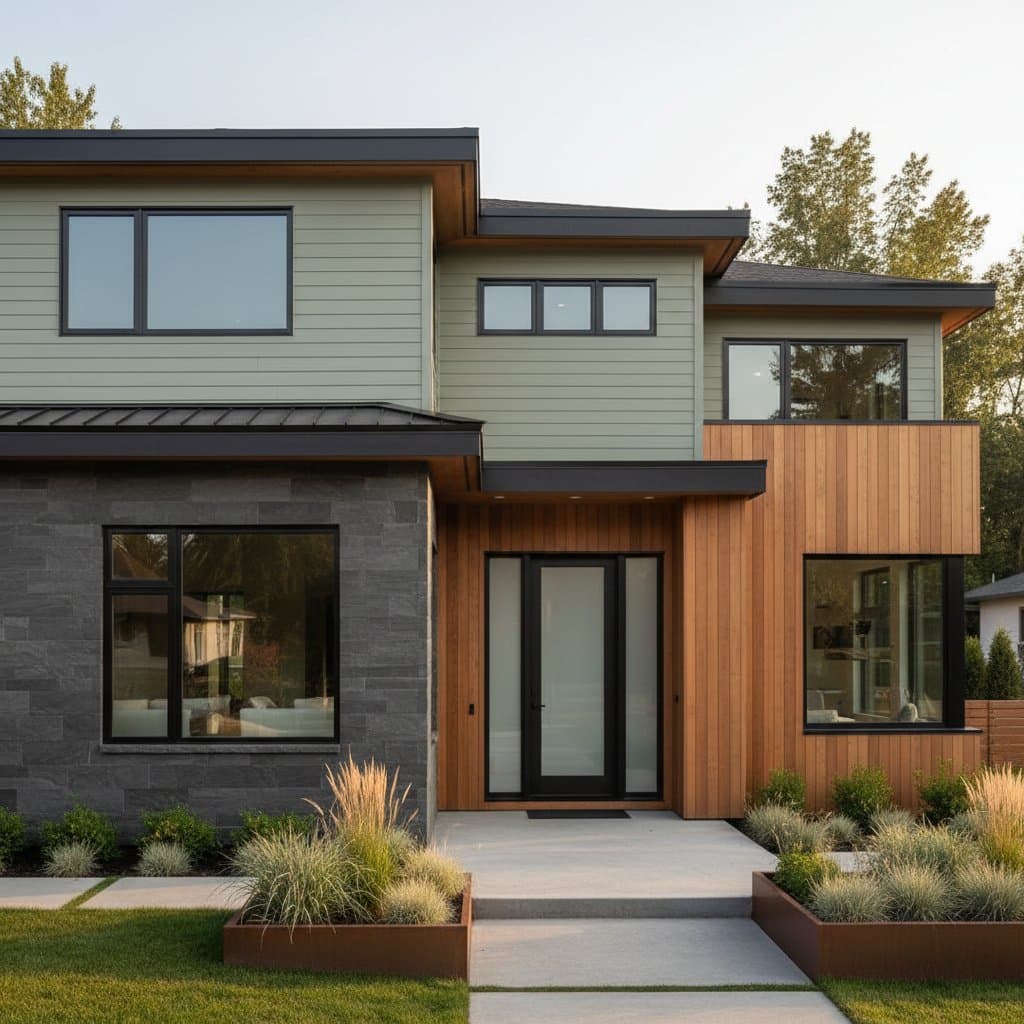
Mixed Siding Combinations That Increase Home Value
Homeowners increasingly combine various siding materials to add depth, contrast, and enhanced curb appeal to their properties. A thoughtfully executed mixed siding design elevates resale value, prolongs the lifespan of the exterior, and distinguishes the home in its neighborhood. Success depends on strategic coordination, precise detailing, and a well-defined project scope to manage expenses effectively.
A) Cost and Planning Guide
Define the Scope of Work
Mixed siding projects typically integrate two or more materials across different elevations or sections of the home. Popular pairings include fiber cement lap siding with stone veneer accents or engineered wood panels alongside vertical board-and-batten elements. Clearly outline coverage areas, transition points, trim selections, and finishing options such as paint or stain. Professional drawings prevent misinterpretations by installation teams, ensuring consistent aesthetics and predictable budgeting.
Total Range and Typical Figures
Installed costs for mixed siding generally range from 8 to 20 dollars per square foot. Basic combinations, such as horizontal lap siding with shake accents on gables, fall toward the lower end of this spectrum. Incorporating natural stone, custom millwork, or extensive wall heights pushes expenses higher. Factors like elevated scaffolding needs, restricted site access, and multiple color divisions extend labor requirements and overall project costs.
Cost Drivers and Examples
- Material Type: Fiber cement and vinyl options prove more affordable than natural wood or stone alternatives.
- Removal and Prep: Stripping existing siding adds 1 to 3 dollars per square foot to the total.
- Trim and Flashing: Additional corners, material transitions, and ornamental bands increase both material and installation expenses.
- Paint or Finish: Pre-finished materials carry a higher initial price but reduce long-term painting labor.
- Access and Weather: Challenging site conditions, such as narrow driveways or sloped terrain, prolong installation and elevate crew hours.
Timeline from Bid to Punch List
Initial planning, bidding, and permitting phases span one to two weeks. Material procurement and color coordination extend this by another week. Actual installation requires one to three weeks, varying with home dimensions and weather conditions. The process concludes with final inspections and minor touch-ups to achieve a seamless finish.
Permits, Inspections, and Site Access
Exterior modifications like mixed siding often necessitate reviews for aesthetic compliance and verification of weatherproofing elements. Inspectors focus on proper flashing at material junctions and adherence to fastener guidelines. Ensure unobstructed ground areas for scaffolding and material delivery; obstacles such as vehicles or overgrown landscaping hinder efficient daily operations.
Budget Controls and Change Order Traps
Secure a fixed labor rate for each siding material to avoid unexpected charges during execution. Specify responsibility for additional trim or fasteners in accent areas. Insist on written documentation for all change orders, including detailed square footage and per-unit pricing, to maintain financial transparency.
Repair vs Replace
For homes with durable siding in lower sections but weathered appearances higher up, targeted replacement offers cost savings. Introduce a contrasting material on upper walls to refresh the facade without disturbing functional lower areas. Confirm compatibility in weather barriers and flashing systems between old and new materials to ensure long-term integrity.
B) Design and Style Principles
Selecting Complementary Materials
Choose materials that harmonize in scale, texture, and color palette to avoid visual discord. Pair smooth fiber cement with rugged stone for balanced contrast, or combine sleek metal panels with warm wood tones for modern appeal. Consider the home's architectural style: Craftsman homes benefit from wood and shingle mixes, while contemporary designs suit metal and composite pairings.
Coordinating Textures and Proportions
Distribute materials proportionally across the facade; limit accents to 20-30 percent of the total surface to prevent overwhelming the design. Align horizontal laps with vertical elements at key sight lines, such as corners or windows, for cohesive flow. Test samples under natural lighting to verify how textures interact throughout the day.
Color and Finish Strategies
Select a unified color scheme with subtle variations for depth; earth tones ground mixed materials, while neutrals provide versatility. Apply consistent finishes, such as semi-gloss on trim, to unify disparate elements. Avoid stark contrasts that highlight installation flaws; instead, use tonal shifts to enhance architectural features like dormers or entryways.
Common Layout Examples
- Two-Story Contrast: Apply lap siding to the lower level and board-and-batten to the upper for vertical emphasis.
- Accent Bands: Incorporate stone veneer around the foundation and garage doors, paired with vinyl shakes on gables.
- Focal Points: Use metal panels on a prominent wall to draw attention, complemented by fiber cement elsewhere.
Professional Consultation
Engage an architect or designer early to sketch elevations and material mockups. This step identifies potential issues like shadow lines or proportion imbalances before commitment. Review local design guidelines to align the project with neighborhood standards and boost marketability.
C) Durability and Safety Brief
Weather Risks and Regional Factors
Siding combinations must withstand local environmental challenges, including wind loads, precipitation, and thermal fluctuations. In high-humidity areas, install ventilated rain screens behind wood or fiber cement to promote airflow and reduce mold risk. Arid regions demand lighter-colored finishes to minimize expansion and contraction stresses; adhere strictly to manufacturer specifications for clearances and attachments.
Fire, Moisture, and Impact Performance
- Fire: Materials like fiber cement and metal exhibit low flame spread, potentially qualifying for reduced insurance premiums.
- Moisture: Protect all edges and seams with sealants; integrate backer flashing at every material shift to block water penetration.
- Impact: Opt for impact-resistant variants of vinyl or engineered wood in hail-prone zones to prevent damage from debris.
Envelope Details that Prevent Failures
Install a continuous weather-resistive barrier behind every siding layer to form a robust moisture shield. Employ metal Z-flashings or tape at vertical transitions to direct water away from vulnerable joints. Rely on vented starters and weep holes to facilitate drainage and ventilation, thereby extending the system's service life.
Care Schedule and Safe Cleaning Methods
- Every 12 months: Clean surfaces using mild detergent and a soft-bristle brush to remove dirt buildup.
- Every 24 months: Examine caulk lines and apply fresh sealant or repaint as required.
- After storms: Inspect for displaced trim or fractured panels and address promptly.
Steer clear of pressure washing on vinyl or wood surfaces, as intense streams may drive moisture into seams and cause hidden damage.
Warranty Basics and Owner Responsibilities
Manufacturers typically warrant against material defects, excluding installation errors. Retain documentation of purchases and images of critical details like flashing for claim support. Periodic repainting or restaining upholds warranty terms; employing unauthorized cleaning agents risks nullifying coverage.
Maintaining Your Mixed Siding Investment
A meticulously planned mixed siding installation merges aesthetic appeal with enduring performance. Regular, gentle upkeep preserves the facade's vibrancy and structural soundness. By addressing wear proactively and adhering to care protocols, homeowners secure a striking exterior that enhances property value for years to come.