
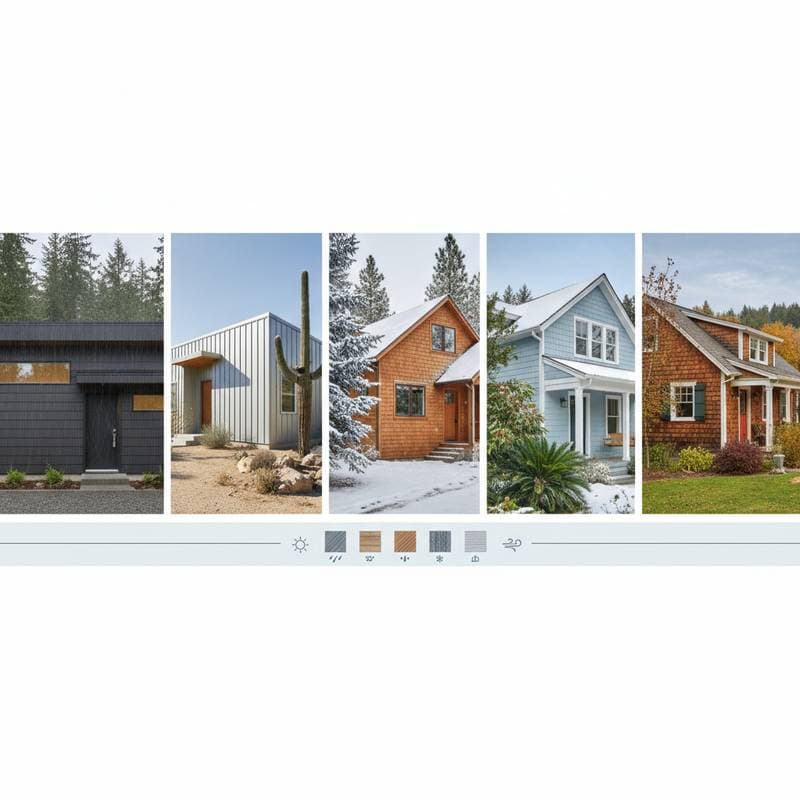
Selecting Weather-Resistant Siding for Your Climate Zone
Selecting siding that aligns with your local climate proves essential for long-term performance. Materials exposed to mismatched conditions often suffer from premature swelling, cracking, or fading, which shortens their lifespan and increases repair costs. In contrast, climate-appropriate choices maintain structural integrity, enhance energy efficiency, and preserve aesthetic appeal for decades. This guide examines key materials, profiles, and installation practices to help you make informed decisions.
Understanding Siding Profiles and Styles
Siding profiles influence both visual harmony and functional performance. Homeowners should consider how each option integrates with their architecture while addressing environmental demands.
Common Profile Types
- Lap siding: Horizontal planks overlap for a classic, streamlined appearance suitable for most residential structures.
- Board and batten: Vertical boards paired with narrow battens create a rustic or modern vertical emphasis, ideal for taller walls or farmhouse designs.
- Shingle or shake: Textured, overlapping pieces add dimension to gables, dormers, or accent areas, mimicking natural stone or wood.
- Panels: Seamless or jointed sheets, often in metal or composite, support contemporary or large-scale applications with minimal seams.
Material Comparison for Climate Compatibility
Each material offers unique advantages and constraints. The table below outlines strengths, limitations, and optimal climate matches to guide your selection.
| Material | Strengths | Limitations | Best Climate Fit |
|---|---|---|---|
| Vinyl | Affordable, retains color, lightweight | Becomes brittle in extreme cold, warps in intense heat | Temperate or variable regions |
| Fiber cement | Resistant to fire, dimensionally stable, accepts paint | Requires specialized tools for cutting, heavier weight | Humid, hot, or fire-risk areas |
| Engineered wood | Authentic wood aesthetics, pre-finished options | Exposed cut edges demand sealing | Moderate to cool environments |
| Metal (steel or aluminum) | Incombustible, excellent water shedding | Prone to denting, potential fading from salt | Windy coastal or marine zones |
| Natural wood | Natural warmth, sustainable source | Demands regular upkeep, susceptible to decay | Arid or low-humidity cold areas |
Guidelines for Combining Materials
Achieving a cohesive facade requires thoughtful mixing. Limit combinations to two primary textures to prevent visual clutter. Ensure trim elements match in thickness for consistent reveals. Position darker shades at the base transitioning to lighter tones above for a grounded appearance. Always test samples on-site under natural light to evaluate scale and shadow effects before full implementation.
Practical Application Examples
- Coastal residence: Opt for pre-finished fiber cement lap siding paired with corrosion-resistant metal trim to withstand salt spray and gale-force winds.
- Mountain retreat: Engineered wood in board and batten configuration provides rustic charm while enduring repeated freeze-thaw cycles.
- Urban development: Metal panels installed over a rainscreen system effectively control thermal expansion and direct moisture away from the structure.
- Suburban home: Insulated vinyl lap siding delivers cost-effective thermal benefits in regions with moderate temperature swings.
Evaluating Durability and Safety Features
Durability hinges on how well siding counters regional hazards like moisture, fire, and impact. Proper selection and installation mitigate these risks, safeguarding both the home and its occupants.
Regional Weather Challenges
- Humid or rainy zones: Prioritize materials with drainage properties and breathability. Install fiber cement or vinyl over a ventilated rainscreen to facilitate airflow and prevent mold growth.
- Arid or fire-vulnerable areas: Choose ignition-resistant options like fiber cement or metal to reduce flame spread and ember ignition.
- Freezing climates: Select engineered wood or insulated vinyl formulations that flex without fracturing during temperature fluctuations.
- Storm-prone coastal regions: Employ siding with reinforced mechanical fasteners and edge seals to resist uplift forces and water intrusion from driving rains.
Performance Against Key Threats
- Fire resistance: Fiber cement achieves superior ratings with low smoke emission, making it suitable for high-risk zones.
- Thermal conductivity: Metal siding requires separation via furring strips to avoid heat transfer to interior framing during intense sun exposure.
- Flame exposure: Vinyl may deform under direct heat, so position it away from potential ignition sources like outdoor appliances.
- Moisture and decay: Engineered wood incorporates treated cores for fungal resistance, yet demands thorough sealing on all cut surfaces.
Essential Building Envelope Practices
Prevent common failures through meticulous detailing:
- Apply continuous housewrap, sealing all seams with compatible tape.
- Install flashing that extends above and below window and door openings.
- Use kickout flashing at roof-wall junctions to divert water from siding.
- Align starter strips precisely to promote even water shedding.
- Incorporate vented rainscreen gaps behind siding in moisture-heavy climates to promote drying.
Maintenance Routine
Regular upkeep extends siding lifespan and preserves warranties. Follow this schedule for optimal results.
| Frequency | Activity | Considerations |
|---|---|---|
| Biannual | Hose off accumulated dirt and debris | Steer clear of high-pressure methods that force water into seams |
| Biennial to triennial | Examine sealants; repaint applicable surfaces | Select flexible acrylic latex paints for expansion tolerance |
| Post-storm | Assess for loosened fasteners, damage, or debris | Promptly repair any identified issues to avert water penetration |
Understanding Warranties
Vinyl and fiber cement typically offer 25- to 50-year material warranties, though labor coverage often spans only one year. Engineered wood warranties frequently include provisions for moisture protection, contingent on documented maintenance. Retain records such as dated photographs and receipts to support claims, as lapses in care may invalidate protection.
Preparing for a Successful Siding Installation
Thorough preparation ensures a seamless project outcome. Follow these steps to align expectations, secure quality work, and minimize disruptions.
1. Establish Project Objectives
Clarify priorities, such as aesthetic continuity, energy upgrades, or style refresh. Calculate total surface area and note trim specifics to enable accurate bid comparisons.
2. Vet Contractors and Review Proposals
Seek contractors with verified insurance, client references, and experience in your climate. Evaluate bids based on detailed line items—including underlayment, flashing specifications, and finishing options—beyond mere totals.
3. Review Samples and Secure Approvals
Examine physical material samples for texture and color accuracy. Erect a small on-site mockup to assess proportion and light interaction. Verify compliance with local building codes regarding fire resistance and wind resistance.
4. Prepare the Site
Remove vegetation and relocate outdoor items at least five feet from the work area. Anticipate noise and temporary exposure of interior walls; time the project for favorable weather to avoid complications.
5. Conduct Milestone Inspections
Monitor progress at key stages:
- Ensure initial courses level accurately before proceeding.
- Confirm flashing overlaps protect underlying layers.
- Verify fastener penetration: secure without excessive force.
- Inspect sealant applications for even, consistent beads.
- Perform a final walkthrough to confirm debris removal and unobstructed ventilation paths.
Maximizing Long-Term Benefits of Climate-Adapted Siding
Investing in climate-matched siding yields enduring advantages, from reduced maintenance demands to enhanced property value. Homeowners enjoy a resilient exterior that withstands seasonal extremes, supports efficient insulation, and requires minimal intervention. By integrating these strategies, your home remains protected, visually appealing, and energy-smart for generations.