
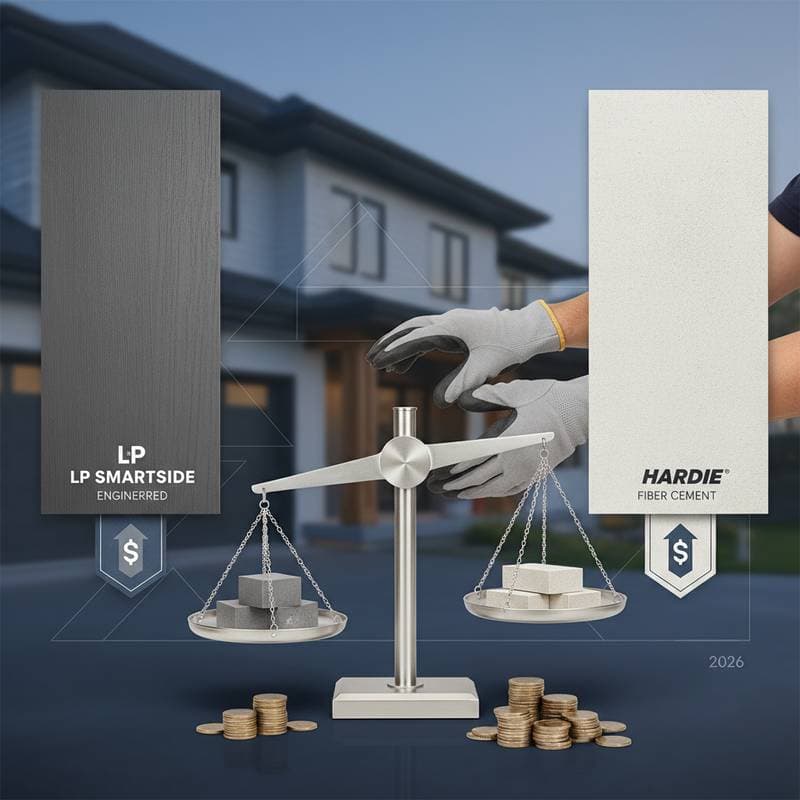
LP SmartSide vs Hardie: 2026 Cost Comparison
Homeowners often compare LP SmartSide and Hardie siding options when selecting materials for exterior upgrades. Engineered wood from LP SmartSide offers a natural appearance and lighter weight, while fiber cement from Hardie provides exceptional durability in harsh conditions. This analysis details installation costs, key factors influencing expenses, and practical guidance to inform your decision.
Cost Breakdown and Planning Essentials
Installed Price Ranges
A complete siding replacement includes removal of old materials, installation of house wrap, application of flashing, and addition of corner boards and trim. For LP SmartSide, expect costs of 9 to 13 dollars per square foot installed. Hardie siding typically ranges from 11 to 16 dollars per square foot. These estimates apply to a two-story home with standard trim and accessible ground-level work.
Smaller repair projects increase the per-square-foot cost due to fixed expenses for setup and waste disposal. Request detailed quotes that separate materials, labor, disposal fees, and permits to understand the full scope.
Factors Influencing Total Expenses
- Building Height and Site Access: Working on upper levels or sloped terrain requires scaffolding or lifts, which add rental and labor charges.
- Removal of Existing Siding: Handling wood or asbestos-containing materials extends project time and incurs specialized disposal costs.
- Trim and Detailing: Elaborate elements like wide fascia boards or custom window surrounds demand additional finishing work.
- Regional Climate: Areas with extreme cold or high humidity necessitate enhanced flashing and sealants to protect against moisture intrusion.
- Finish Options: Prefinished panels from the factory raise initial costs but eliminate the need for on-site painting.
Project Timeline Overview
Bidding and contract finalization generally take one to two weeks. Materials arrive shortly after order placement, often within days. Installation spans five to ten working days for single-story homes and extends to three weeks for larger structures. Account for potential delays from weather or required inspections.
Permit and Inspection Requirements
Local authorities usually mandate permits to verify the integrity of the building envelope. Inspectors examine house wrap overlaps, flashing around openings, and compliance with fire codes near outdoor features like decks. Schedule a final inspection to close the permit, which supports future home resale.
Managing Budget and Modifications
Allocate ten percent of the total estimate for unforeseen issues, such as rot near windows or deck attachments. Insist on written documentation for any change orders prior to proceeding. This practice maintains transparency and avoids payment conflicts.
Deciding Between Repair and Full Replacement
Sectional repairs suit situations where less than twenty percent of the siding exhibits issues like swelling, cracking, or peeling paint, potentially extending its life by several years. Opt for complete replacement when gaps appear along joints or fasteners loosen across walls, as this approach proves more cost-effective over time.
Durability, Safety, and Maintenance Insights
Resistance to Weather and Impacts
LP SmartSide performs reliably in freeze-thaw environments when joints receive proper sealing and painting. Hardie fiber cement maintains stability across broad temperature variations and withstands hail or physical impacts better owing to its higher density.
In high-humidity areas, seal all cuts on engineered wood panels during installation to avoid expansion. Fiber cement resists water absorption effectively but risks cracking if fasteners drive too near edges.
Fire Ratings and Moisture Management
Hardie earns a non-combustible classification, making it ideal for wildfire-risk zones. LP SmartSide receives treatment against decay but lacks fire resistance; ensure adequate defensible space and consult local regulations in prone areas.
Installation Practices to Avoid Common Failures
- Position continuous flashing above windows and doors to direct water away.
- Maintain a one-inch gap between bottom edges and flashing to block capillary action.
- Select nails resistant to corrosion and drive them without over-tightening.
- Apply primer and paint to all cut edges prior to mounting panels.
Annual Cleaning and Upkeep Routines
Clean siding annually using mild detergent and a soft-bristle brush to remove dirt buildup. Steer clear of pressure washers, which may drive water into seams. Refresh paint around fasteners and joints as needed. Schedule repaints for engineered wood every seven to ten years and for fiber cement every ten to fifteen years, based on sun and weather exposure.
Warranty Compliance Essentials
Manufacturers for both products insist on documented proper installation and ongoing maintenance. Retain receipts, photographs of painting, and caulking applications. Neglecting cut sealing or clearance maintenance may invalidate warranty claims.
Preparing for Your Siding Project
1. Establish Project Objectives
Determine priorities such as initial cost savings versus extended intervals between repaints. Measure wall surfaces and document trim configurations. Assess for underlying damage like rot or sheathing issues before soliciting bids.
2. Select Qualified Installers
Prioritize contractors certified in the chosen product line. Review portfolios of recent projects in your vicinity. Evaluate bids based on itemized breakdowns rather than total figures alone.
3. Review Material Samples
Request color swatches and profile examples from suppliers. Test a small mockup section to evaluate nail patterns, caulk shades, and joint alignments before committing to the full job.
4. Prepare the Site
Clear the work area of obstacles like furniture or landscaping to facilitate access. Protect interior spaces with plastic sheeting over openings. Coordinate with the contractor on temporary power and water needs for the crew.
5. Conduct Quality Verifications
- Ensure house wrap overlaps in a shingle fashion for water shedding.
- Check flashing installation at every penetration point.
- Examine caulk application in joints prior to final painting.
- Perform a walkthrough at project end to identify and address any touch-up items.
Selecting the Right Siding for Long-Term Value
LP SmartSide emerges as the cost leader for 2026, offering savings of 10 to 20 percent on total installation while easing labor demands through its lighter profile. It suits preferences for quick setup and a wood-like aesthetic. Hardie excels in scenarios requiring fire safety and reduced maintenance over extended periods. Both options enhance home exteriors when paired with skilled installation and routine care.