
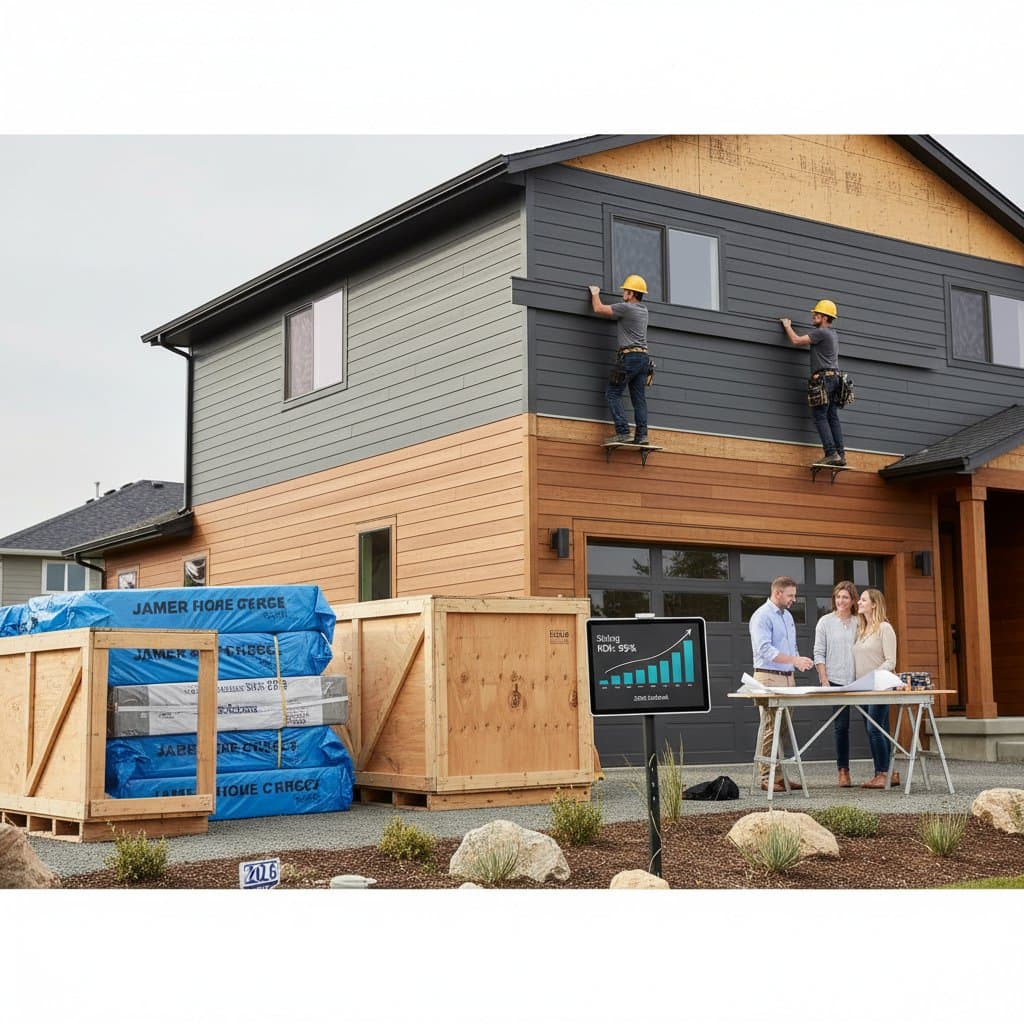
Fiber Cement Shortage Boosts Siding ROI to 95 Percent
A national shortage of fiber cement siding presents homeowners with an unusual opportunity for exterior upgrades. Limited availability meets consistent demand, which elevates return on investment close to 95 percent for resale value. These projects, previously considered moderate in financial return, now emerge as top-tier exterior improvements. Homeowners gain clarity on costs, timelines, and resale impacts by examining this market shift, which supports informed decisions that safeguard property value and future maintenance expenses.
Material and Profile Choices
Fiber cement siding consists of cement, sand, and cellulose fibers formed into planks, shingles, or panels. This composition provides superior resistance to fire, insects, and moisture compared to wood or engineered wood alternatives. Common profiles offer varied aesthetic options for different architectural styles.
| Profile Type | Typical Look | Pros | Cons | Maintenance Need |
|---|---|---|---|---|
| Lap plank | Traditional horizontal | Familiar style, fits most homes | Heavier than vinyl | Repaint every 12 to 15 years |
| Panel with battens | Modern or farmhouse | Clean lines, easy color contrast | Needs precise trim layout | Check caulk joints yearly |
| Staggered shingle | Craftsman | Strong texture and shadow | Higher labor time | Repaint every 10 to 12 years |
Most fiber cement products achieve a Class A fire rating and withstand wind-driven rain with proper flashing. Failures related to moisture often stem from unsealed gaps or cut ends rather than the material core. In regions with high humidity, factory-primed finishes paired with breathable housewraps minimize the chance of moisture buildup.
Homeowners seeking design variety might combine smooth and wood-grain textures thoughtfully. Balance remains essential: apply one texture across major wall surfaces and reserve contrasting accents for gables or porch undersides. Limit combinations to no more than two finishes per elevation to avoid overwhelming the eye.
Actionable takeaway: Select a single primary profile for visual unity, and restrict accent materials to targeted areas. Verify that all components originate from the same manufacturer to preserve full warranty terms.
Installation Quality and Risk Control
The performance of fiber cement siding depends heavily on precise envelope detailing. Water penetration behind panels represents the primary failure mode. Essential safeguards include a continuous weather barrier over the entire substrate, flashing at all horizontal joints and window or door openings, expansion gaps at butt joints, and sealing of cut ends plus fasteners.
Insufficient clearance from ground or decks poses another concern. Establish a minimum of six inches above soil grade and two inches over flat surfaces to block capillary action. Contractors must employ carbide-tipped tools for cutting and implement dust extraction systems, as fiber cement generates hazardous silica particles during fabrication.
Site management tips:
- Position materials on stable, level surfaces and protect them with permeable tarps.
- Remove waste each day to avoid harming surrounding vegetation.
- Inform adjacent residents in advance about noise from cutting and measures for dust containment.
Actionable takeaway: Insist on a detailed written installation protocol from the contractor. Rigorous oversight at the outset averts costly rework and potential warranty challenges down the line.
Contractor Selection and Bidding
As demand outpaces supply, skilled installers schedule projects well in advance, often months out. A comprehensive written specification shields both homeowner and professional from misunderstandings. Every bid proposal should detail the following elements:
- Specific material brand, profile type, and plank thickness.
- Types of trim and flashing materials.
- Specifications for weather barriers and added insulation.
- Protocols for waste disposal and site cleanup.
- Requirements for permits and required inspections.
Obtain bids from at least three qualified providers. Evaluate cost per square foot solely among proposals with identical scopes and finish standards. Structure payments to align with project phases, such as demolition completion, weather barrier installation, and final walkthrough, instead of calendar deadlines.
To expand on bidding strategy, consider seasonal factors: bids submitted in off-peak months like winter may yield lower rates due to reduced competition. Review contractor credentials through local building associations or online portfolios of completed fiber cement jobs. Prioritize those with certifications in sustainable building practices, as these often correlate with higher-quality outcomes.
Actionable takeaway: Beyond price, assess contractor experience with fiber cement specifically. Request references from recent projects in similar climates to gauge reliability.
Maximizing Long-Term Value Through Maintenance
This fiber cement shortage transforms siding replacements into high-yield investments with exceptional resale potential. Properties featuring meticulous installations and harmonious color schemes capture attention in real estate photos and valuation reports. Homeowners realize extended lifespan beyond typical claddings when they combine prudent financial planning with routine upkeep.
Establish a maintenance calendar early: inspect caulk and paint integrity annually, and address minor issues promptly to prevent escalation. In coastal or rainy areas, enhance protection with UV-resistant coatings applied during repainting cycles. Track all service records to bolster warranty claims and appeal to future buyers during showings.
Pair siding upgrades with complementary enhancements, such as energy-efficient windows or updated landscaping, to amplify overall curb appeal. These combinations can push ROI beyond 95 percent in competitive markets. Consult local real estate trends to time projects for peak buyer interest, ensuring maximum financial return.
Actionable takeaway: Integrate siding maintenance into your home care routine, and document improvements to highlight value in resale listings.