
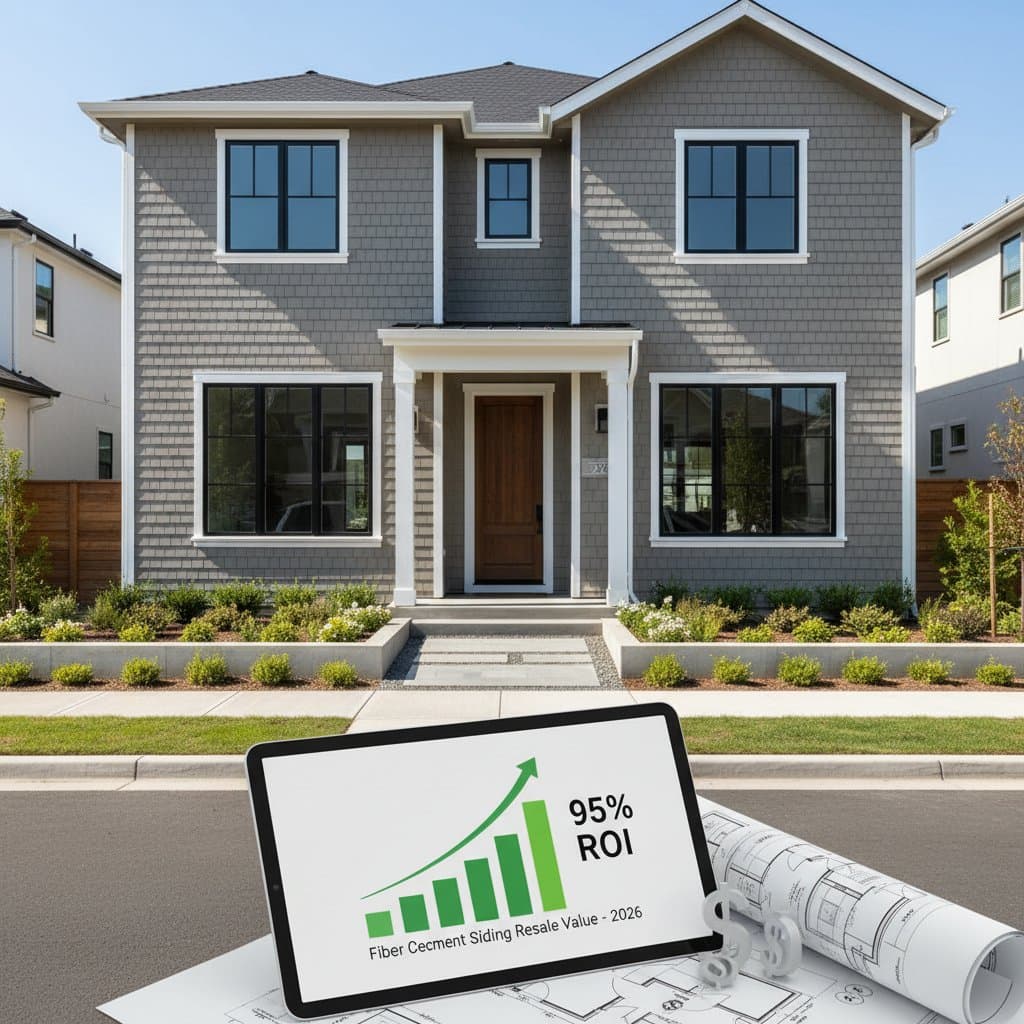
Fiber Cement Siding Achieves Strong Resale Returns in 2026
Homeowners preparing to sell seek exterior upgrades that deliver measurable value. Fiber cement lap siding stands out by recouping approximately 95 percent of its installation cost at resale. Buyers value its durability, low maintenance needs, and classic appearance. This overview covers costs, planning steps, and design decisions that enhance both appeal and return on investment.
Understanding Material Profiles
Fiber cement siding is available in lap, shingle, and panel forms. Lap siding provides the traditional horizontal look suitable for most homes. Shingle styles work well for cottages. Panels with battens offer a modern aesthetic for contemporary designs.
Comparing Siding Options
| Material | Strengths | Weak Points | Typical ROI |
|---|---|---|---|
| Fiber Cement | Fire, rot, and pest resistant. Holds paint well. | Heavy, needs precise installation. | 90-95% |
| Vinyl | Low cost, quick install, wide colors. | Prone to warping in heat, limited impact resistance. | 75-80% |
| Engineered Wood | Warm texture, lighter than fiber cement. | Requires sealing and careful moisture control. | 80-85% |
| Natural Wood | Classic look, easy to cut and repair. | High maintenance and shorter repaint cycle. | 60-70% |
| Metal (Steel or Aluminum) | Fire resistant, recyclable, modern appeal. | Prone to denting and costly to replace panels. | 70-80% |
A balanced facade combines one dominant texture with one accent. Use lap siding on the main body and shingle or board-and-batten on gables or dormers. Keep trim widths consistent across windows and corners. Avoid more than two materials on one elevation to maintain resale appeal.
Selecting Trim and Accents
Trim protects joints where water and debris collect. Fiber cement trim pairs best with fiber cement siding for consistent expansion rates. Use factory-coated metal for drip edges and horizontal transitions. Accents like shutters or stone bases should not cover flashing or weep paths.
Matching Scenarios to Home Types
- Suburban two-story homes suit smooth lap siding with 6- or 7-inch exposure in light neutral tones and white trim.
- Coastal cottages benefit from fiber cement shingles in soft gray finishes with stainless fasteners to resist salt air.
- Modern infill projects work with board-and-batten panels in dark factory colors and minimal trim lines.
Each scenario keeps resale in mind by using neutral palettes and durable finishes that appeal to a wide buyer range.
Preparing for the Project
Define Goals and Scope
Decide if the goal is resale value or long-term ownership. For resale, stick to neutral colors and standard profiles. For personal use, custom textures or bolder tones remain options. Measure all wall sections and include gables, bump-outs, and soffit returns in the takeoff.
Select and Compare Contractors
Interview at least three licensed contractors with fiber cement experience. Request proof of training from the product manufacturer. Compare bids line by line, not just totals. The lowest price can hide shortcuts such as skipping flashing or using incorrect nails.
Review Samples and Mockups
Order one box of siding and trim to test fit and color in daylight. Lay out a three-board mockup against the house before final approval. This step avoids surprises once full delivery arrives.
Prepare the Site and Routine
Clear shrubs and move outdoor furniture at least five feet from walls. Provide power and hose access. Good contractors stage materials on level ground, tarp landscaping, and clean up daily.
Conduct Quality Checks
Inspect sheathing and framing for rot after tear-off. Confirm overlap and tape seal after the moisture barrier. Review nail pattern and reveal spacing after the first wall. Walk through with a flashlight on the final day to check gaps, caulk, and paint touch-ups.
Maintaining Value After Installation
Once installed, fiber cement siding behaves more like masonry than wood. It expands and contracts minimally, keeps a stable paint film, and resists pests. Maintain clean gutters and splash blocks so water never runs down the face. Trim back vegetation that touches walls. The near 95 percent cost recoup rate makes this upgrade one of the most reliable exterior investments for homeowners planning to sell soon.