
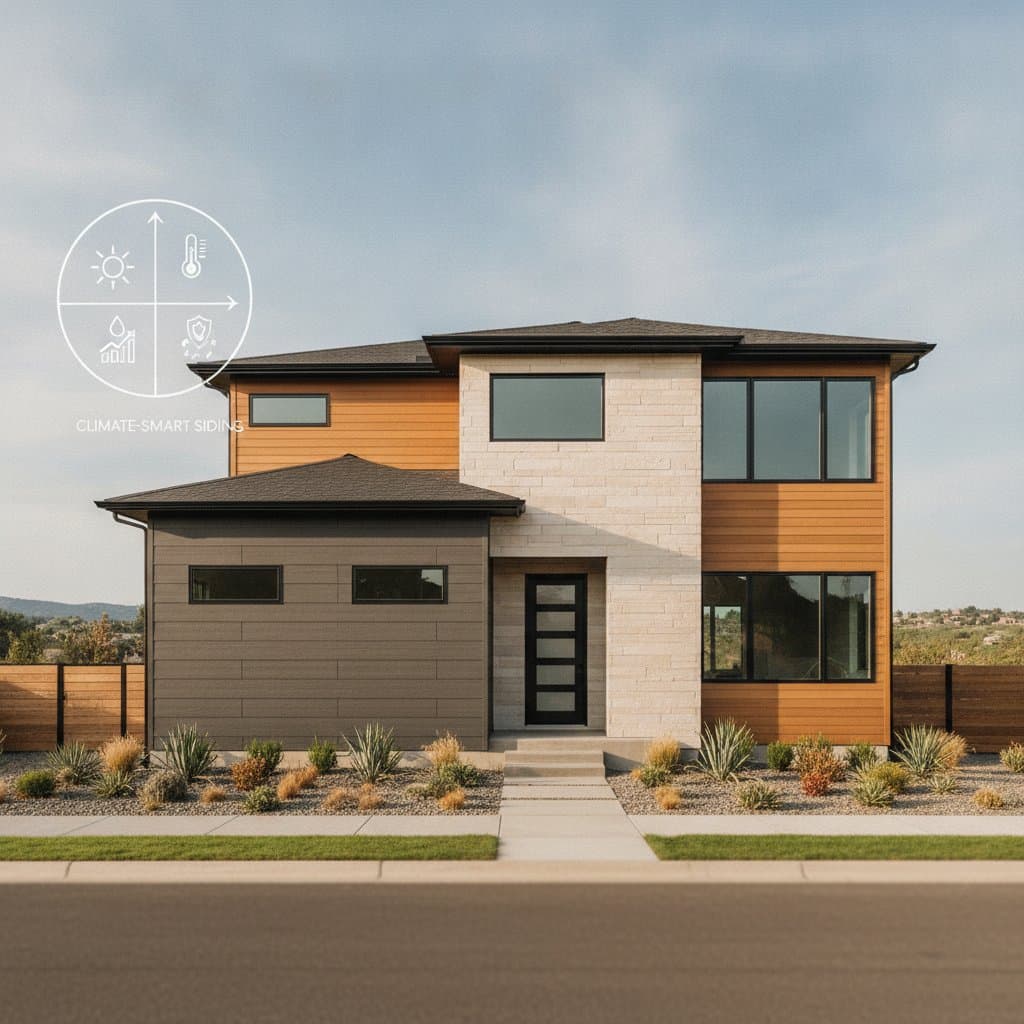
Discover Siding Built to Survive Your Local Weather
Homeowners know that siding does more than define style. It shields the structure, influences energy performance, and signals quality to buyers. The right material choice depends on how well it stands up to local weather.
Siding that performs well in one climate can fail quickly in another. Understanding how cost, durability, and appearance connect helps protect both comfort and resale value.
Material and Profile Choices
Core options and performance
| Material Type | Pros | Cons | Maintenance | Fire and Moisture Resistance |
|---|---|---|---|---|
| Fiber Cement | Resists insects and rot, stable in high humidity | Heavier to install, requires repainting every 10 to 15 years | Wash annually, inspect caulk joints | Excellent fire rating, strong moisture tolerance |
| Vinyl | Lowest cost, wide color range | Can crack in extreme cold, fades under high UV | Wash twice yearly | Moderate fire resistance, sheds rain effectively |
| Engineered Wood | Warm look, factory finishes | Needs edge sealing if cut | Clean gently, recoat as needed | Treated for moisture, moderate fire resistance |
| Metal (Steel or Aluminum) | Long lifespan, recyclable | Prone to denting | Rinse as needed | Excellent fire resistance, resists mold |
| Composite or PVC | Dimensionally stable, minimal painting | Higher upfront cost | Wash annually | High moisture resistance, moderate fire rating |
Mixing textures without clutter
Combining materials can add depth but must be restrained. Use one dominant siding type and one accent, such as fiber cement lap with a small section of board and batten. Keep trim color consistent to maintain visual order.
Match your material to the local climate first, not trend photos. Durability and service intervals matter more than novelty.
Installation Quality and Risk Control
Envelope protection
Moisture entry at joints and trim is the top cause of siding failure. Proper flashing, house wrap overlap, and vented clearances prevent trapped water. Your contract should specify fastener type, spacing, and sealants approved by the siding manufacturer.
Common failure points
- Bottom edges near decks or driveways
- Window head flashing that directs water behind panels
- Inside corners without backing strips
- Missing weep holes or drainage paths
Site and neighbor care
Request daily cleanup, safe material storage, and dust control. Warn neighbors before removal begins to manage noise expectations.
Quality installation prevents callbacks and protects warranties, saving more than any short term cost cut.
Contractor Selection and Bidding
Scope checklist
- Material type, thickness, and manufacturer specification
- Weather barrier, flashing, and insulation upgrades
- Trim, soffit, and fascia coverage
- Debris disposal, permits, and safety compliance
- Paint or finish details if field applied
Comparing bids
Request line item pricing for labor and materials. Review warranties and confirm that installers are certified for the product used. The lowest price often omits critical details like moisture barriers or trim painting.
Payment schedules
Tie payments to clear milestones. Provide a deposit at contract signing, a mid payment after material delivery, and final payment after inspection and cleanup.
Consistent documentation and milestone payments keep the project transparent and on schedule.
Benefits of Climate Matched Siding
Siding built for local weather reduces repair costs, stabilizes indoor comfort, and maintains curb appeal for decades. Fiber cement resists fire and humidity. Vinyl handles moderate climates with low maintenance. Metal or composite options thrive in harsh or coastal environments.
By aligning material, installation quality, and care habits with your region, you create a durable exterior that protects both structure and value. The right siding is weather resistant and future ready for the way you live.