
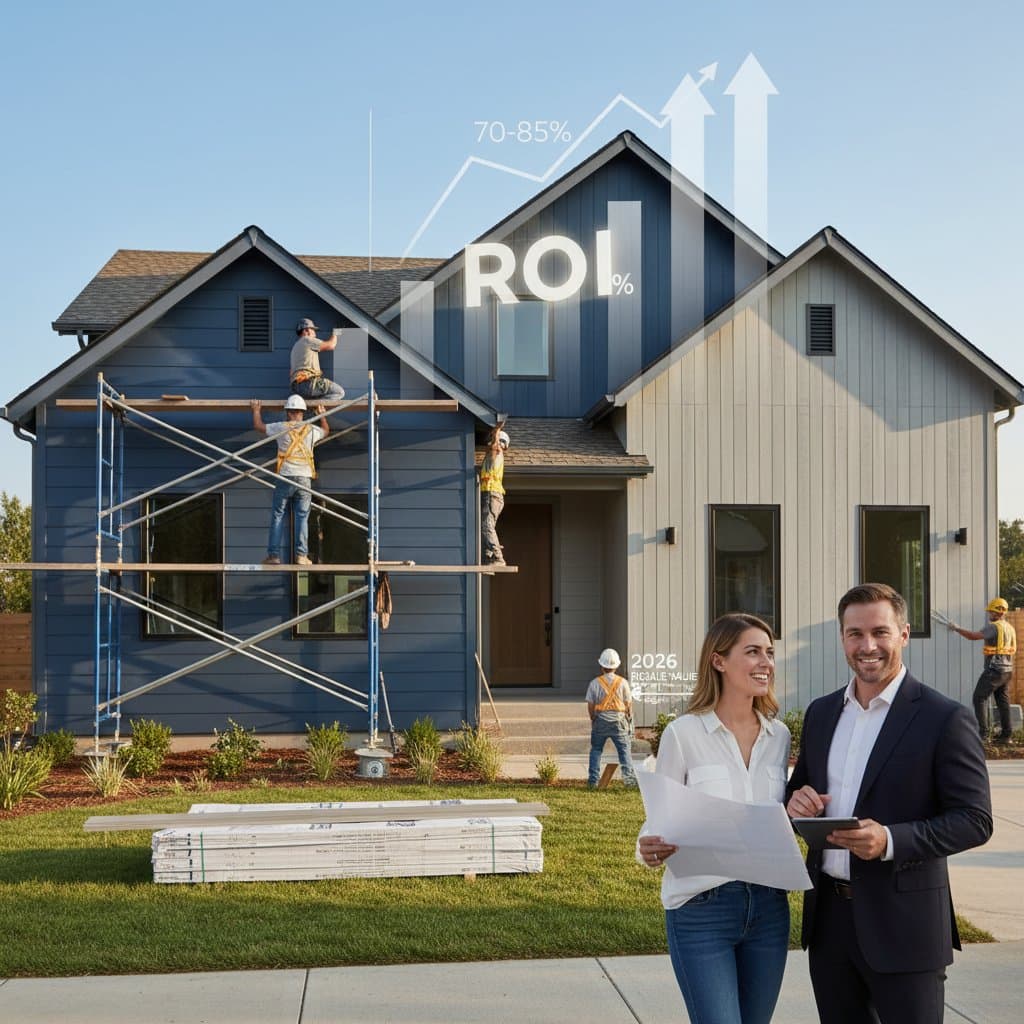
Siding Replacement Returns Strong Value at Resale
- Assess local climate demands before selecting any material
- Compare total ownership costs across a twenty year span
- Verify contractor experience with your chosen siding type
- Confirm that weather barriers and flashing meet code standards
- Request references from recent projects in your neighborhood
Homeowners often overlook the role siding plays in resale value. Siding shapes the initial impression of any property. It also influences insulation performance and ongoing maintenance expenses. Proper material selection increases buyer interest while lowering long term ownership costs.
Material and Profile Choices
The following table outlines performance differences among common siding options.
| Material Type | Pros | Cons | Maintenance Level | Durability |
|---|---|---|---|---|
| Vinyl | Affordable, fade resistant, wide color range | Can warp under heat, limited repair options | Low | 25-40 years |
| Fiber Cement | Fire and moisture resistant, strong resale value | Heavy, higher install cost | Moderate | 40-50 years |
| Engineered Wood | Warm appearance, renewable fiber base | Needs repainting, can swell if unsealed | Moderate | 30-40 years |
| Metal (Steel or Aluminum) | Pest proof, recyclable, modern look | Can dent, limited color warmth | Low | 40+ years |
Fiber cement performs well at resale because it resists fire, rot, and insects while holding crisp edges over decades. Vinyl offers the lowest upkeep for budget conscious owners. Engineered wood suits buyers who prefer natural texture, yet it requires consistent upkeep. Metal siding draws modern design buyers and holds up in severe weather.
Use one dominant texture with a single accent to avoid visual clutter. Smooth fiber cement on primary walls paired with cedar look panels in gables creates depth without excess.
Match material to climate conditions, personal maintenance tolerance, and expected buyer preferences. Exotic profiles seldom recover their added cost.
Installation Quality and Risk Control
Poor installation cancels the advantages of premium materials. Wall protection requires a continuous weather barrier, proper flashing at every joint, and breathable underlayment. Gaps larger than one quarter inch must receive appropriate sealing to prevent trapped moisture. Nail schedules should permit slight movement for expansion and contraction.
Protect landscaping and coordinate with neighbors before work starts. Require daily debris removal to avoid damage to driveways or lawns. Specify in the contract that installers follow manufacturer fastening and clearance rules exactly. Warranty coverage depends on documented compliance.
Contractor Selection and Bidding
A complete bid lists material quantities, weather barrier specifications, flashing details, trim profiles, disposal procedures, and permit responsibilities. Obtain three written estimates based on identical specifications for accurate comparison.
Link payments to defined milestones. Provide a deposit at signing, a progress payment after delivery, and final payment only after final inspection. Require proof of insurance and recent local references before signing.
Protecting Your Investment Over Time
Well chosen siding improves comfort, shields the structure, and communicates care to future buyers. Retain all product documentation and warranty papers to demonstrate that the exterior represents a lasting investment.