
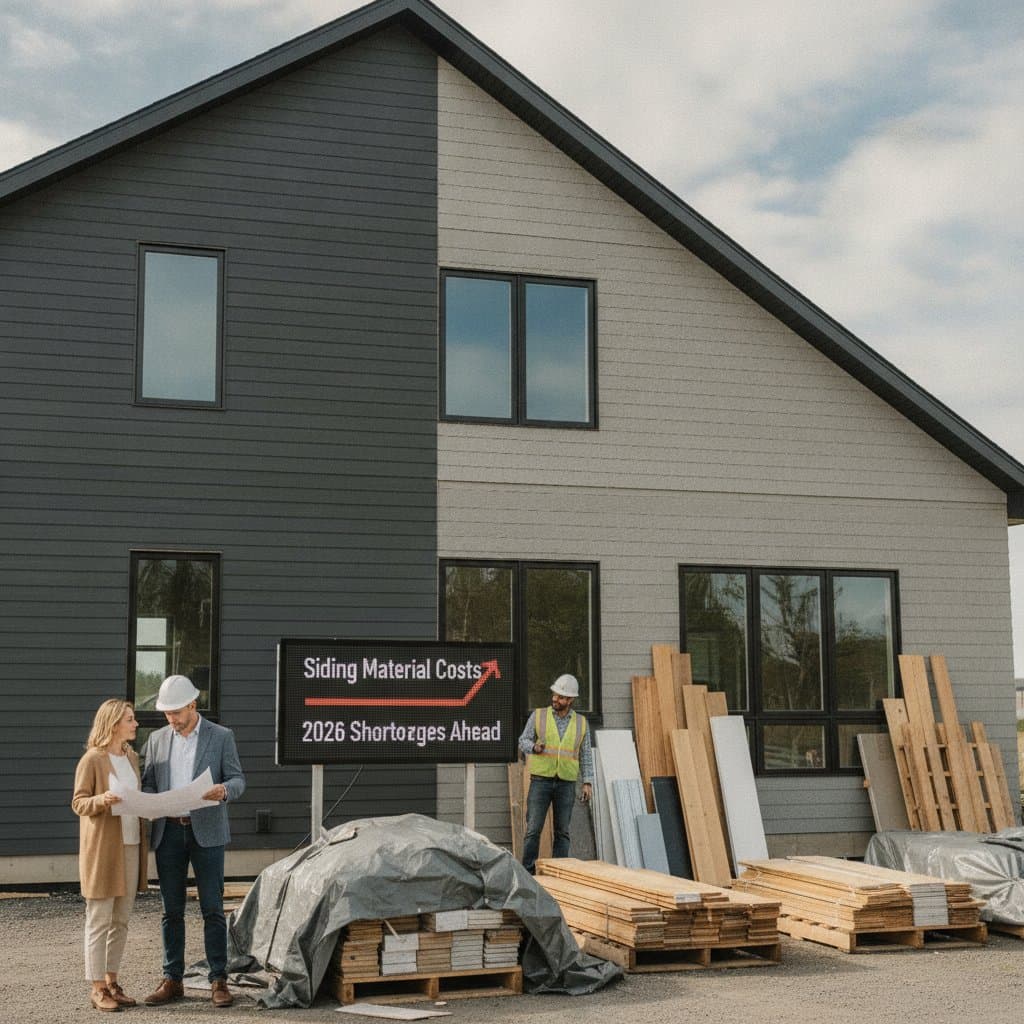
Siding Costs Jump 30% as 2026 Shortages Loom
Homeowners planning exterior renovations should prepare for siding prices to rise sharply. Material shortages and production slowdowns are expected within the next few years. Supply chain strain, raw material limits, and higher freight costs already drive bids upward. Current estimates point to a 30 percent average increase across major siding categories once supply tightens further.
Understanding how these changes affect cost, return on investment, and long-term value helps you plan smartly. This approach avoids panic decisions and protects your home resale appeal.
Material and Profile Choices
Core Options
| Material Type | Pros | Cons | Maintenance Level | Durability |
|---|---|---|---|---|
| Vinyl | Affordable, wide color variety, minimal painting | Can warp under heat, limited repair flexibility | Low | 20 to 40 years |
| Fiber Cement | Fire resistant, strong texture options | Heavy, requires repainting every 10 to 15 years | Medium | 30 to 50 years |
| Engineered Wood | Natural look, easy to cut | Needs sealing at joints, vulnerable to impact | Medium | 25 to 40 years |
| Metal (steel or aluminum) | Fireproof, recyclable, resists insects | Can dent, limited color warmth | Low | 40 to 60 years |
| Natural Wood | Classic style, renewable resource | High maintenance, prone to rot | High | 20 to 35 years |
Fire and Moisture Resistance
Fiber cement and metal outperform other materials for fire safety. Engineered wood performs well when factory primed and sealed. It loses strength if water wicks into joints. Vinyl resists moisture but can melt near grills or strong heat sources. Home inspectors often note moisture management as a resale factor. Choosing a water tolerant product improves both safety and value perception.
Mixing Textures Without Clutter
Combining lap siding with board and batten or shake accents adds dimension. The key is restraint. Limit accent areas to gables or entry walls. Keep trim width consistent and repeat one color across changes in texture. Buyers respond best to cohesive layouts that photograph cleanly.
Material Selection Takeaway
Material selection influences more than price. Durability, maintenance, and insurance costs all hinge on what you choose. Favor options that balance look, lifespan, and upkeep rather than chasing the lowest bid.
Installation Quality and Risk Control
Envelope Details
Proper water management starts with flashing and house wrap. Overlapping seams, taping horizontal joints, and fitting corner caps tightly prevent leaks that lead to callbacks. Installers must leave expansion gaps where manufacturers specify. Skipping these details shortens lifespan and voids warranties.
Common Failure Points
- Window trim joints where caulk fails from UV exposure
- Bottom edges where splashback rot begins
- Roof to wall intersections where flashing misalignment allows seepage
Site Prep and Neighbor Considerations
A professional crew should establish a staging area, protect landscaping, and manage debris daily. Communicate start times and noise expectations with neighbors to avoid complaints. Good site management reflects on both installer reputation and homeowner courtesy.
Installation Takeaway
A perfect product can fail with poor installation. Always confirm that your contractor follows the manufacturer instructions and uses approved fasteners and wraps.
Contractor Selection and Bidding
Scope Checklist
Before requesting bids, prepare a written scope that includes:
- Material type and thickness
- Insulation or moisture barrier requirements
- Trim, soffit, and fascia details
- Old siding removal and disposal plan
- Permit responsibility and inspection timing
A clear scope eliminates guesswork and helps you compare bids fairly.
Apples to Apples Comparison
Request itemized estimates showing labor, materials, disposal, and overhead separately. Ask each contractor to quote identical specifications. If one bid seems too low, verify that it includes underlayment, flashing, and trim painting. Missing items often surface as costly change orders later.
Payment Schedules
Tie payments to milestones, not calendar dates. A standard structure is:
- Deposit of 10 to 20 percent at contract signing
- Midpoint payment after tear off and material delivery
- Final payment after walkthrough and punch list completion
Hold the final payment until all work passes inspection and debris is cleared. This keeps quality control in your hands.
Contractor Takeaway
A detailed contract protects both parties. Clarity on materials, payment, and cleanup reduces risk during a period of volatile pricing and supply shortages.
Protecting Your Investment
Siding prices are entering a cycle of higher material and freight costs. Expect roughly 30 percent more expense once shortages fully affect the market. The smartest response is preparation, not delay. If your siding is failing now, replace before the next supply squeeze to avoid inflated bids and limited color availability. If your siding is sound, plan maintenance carefully and budget future funds with the expected increase in mind.