
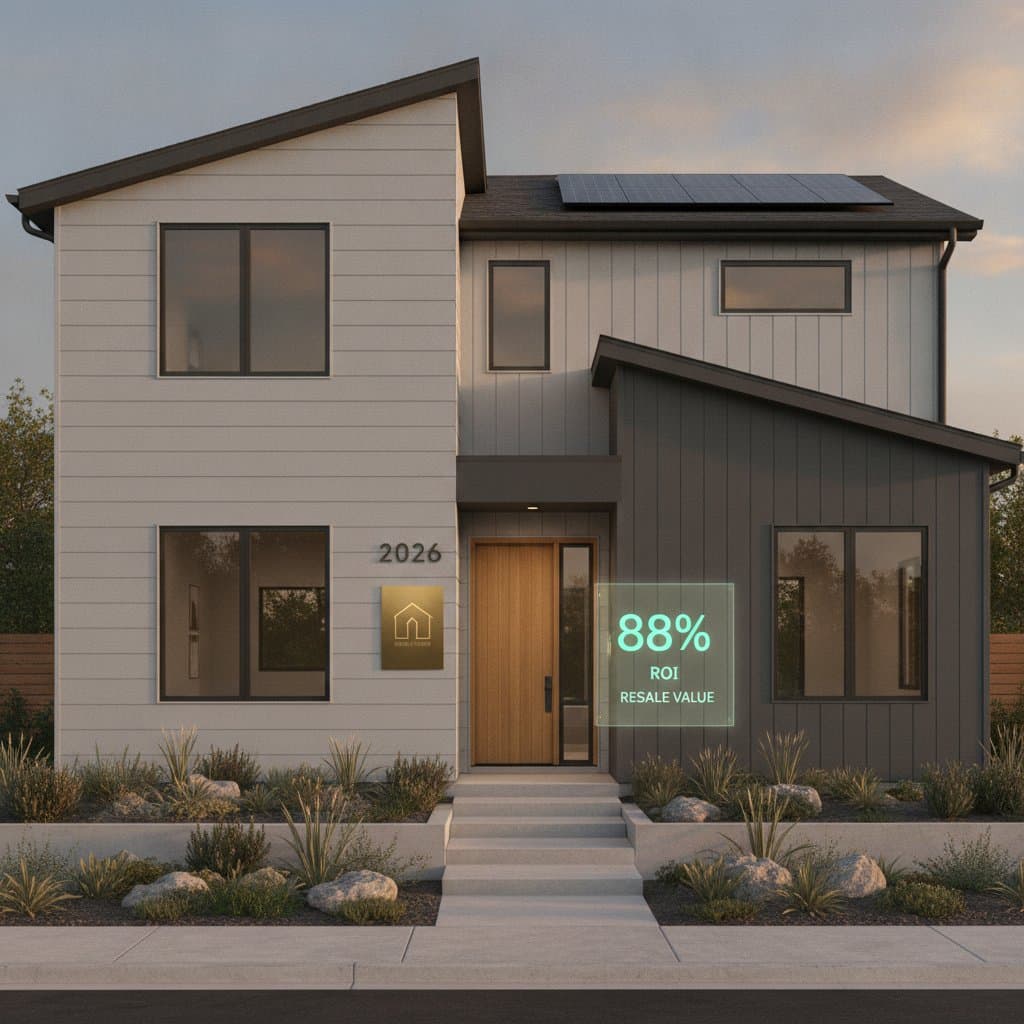
Homeowners See 88 Percent ROI With Fiber Cement Siding
Fiber cement siding continues to rank among the strongest exterior upgrades for homeowners who value both appearance and financial return. With an average resale return near 88 percent, the material delivers curb appeal, resilience, and low maintenance that few alternatives match. This guide explains cost drivers, profile options, and installation practices that protect long term value.
Material and Profile Choices
Fiber cement contains sand, cellulose fiber, and cement binder formed into boards or panels. The result is a dense, stable, and noncombustible product that offers strong fire resistance and minimal expansion.
| Profile Type | Typical Use | Pros | Cons | Estimated Lifespan |
|---|---|---|---|---|
| Lap siding | Most residential exteriors | Classic look, good water shedding | Requires careful joint flashing | 40 to 50 years |
| Board and batten | Modern or farmhouse styles | Vertical emphasis, fewer seams | Higher labor time | 40 to 50 years |
| Smooth panel | Contemporary designs | Clean lines, minimal texture | Exposes alignment errors | 40 to 50 years |
Durability and Maintenance
Fiber cement resists rot, pests, and flame spread. It manages moisture better than wood and holds paint up to twice as long. Factory finished boards often include 15 year color warranties, while raw panels need paint every 10 years.
Combine horizontal lap on main walls with vertical panels in gables for contrast. Limit color shifts to one or two tones to avoid visual clutter.
Choose profiles that match the home architecture and climate exposure. Keep color variation minimal to maintain a cohesive appearance that supports resale value.
Installation Quality and Risk Control
Fiber cement performs only as well as its installation. Moisture management remains critical because trapped water can cause swelling or paint failure.
Common Failure Points and Prevention
- Improper flashing at roof lines leads to leaks when kick out flashing is missing.
- Overdriven nails produce cracked boards or loose panels.
- Unsealed vertical joints allow water intrusion.
Quality Control Steps
- Confirm a continuous weather resistant barrier behind all siding.
- Maintain a minimum 6 inch clearance from grade and 2 inches above roofing or decks.
- Inspect caulking and paint coverage before final payment.
Hire crews that follow manufacturer spacing and flashing guidelines. Proper installation protects both performance and warranty coverage.
Contractor Selection and Bidding
A clear scope of work supports accurate bid comparisons and prevents cost surprises.
Scope Checklist
- Material brand and thickness
- Trim dimensions and corner style
- Weather barrier type
- Paint or factory finish plan
- Waste disposal and permit costs
- Warranty terms in writing
Bid Comparison
Request line item pricing for tear off, materials, labor, and trim. Evaluate references and photos of past fiber cement projects for straight lines, tight joints, and clean flashing.
Payment Schedule
Link payments to milestones:
- Deposit on contract signing
- Progress payment at tear off completion
- Final payment after walkthrough and punch list approval
Consistent bid structures and milestone payments protect both parties and keep the project on track.
Protecting Performance After Installation
Fiber cement siding resists fire, insects, and moisture while maintaining color stability that attracts buyers. Regular inspections of joints and paint, combined with prompt repairs, keep ownership costs low and preserve the 88 percent resale return over decades.