
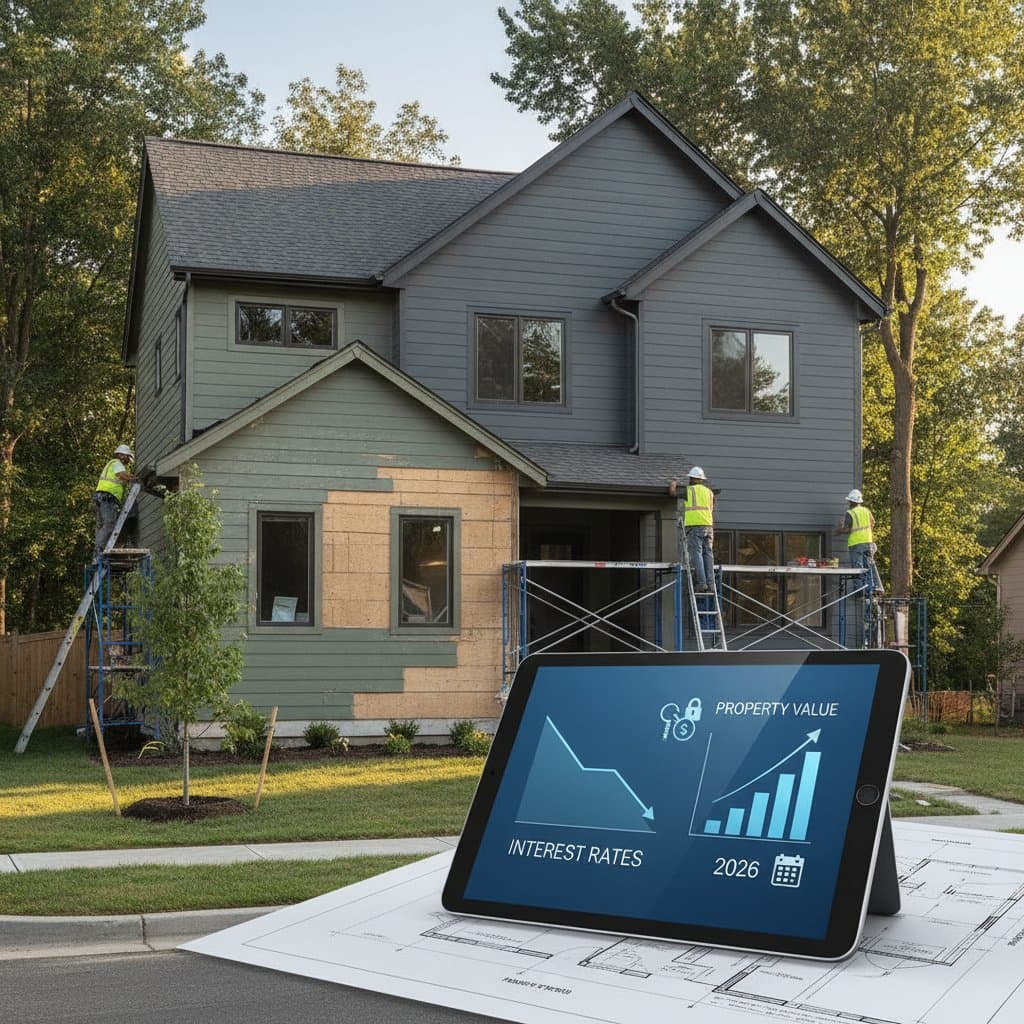
Smart Timing for Siding Replacement When Rates Drop in 2026
Homeowners often delay major exterior renovations until financing conditions improve. When borrowing costs fall, exterior projects like siding replacement become more affordable. Competition among contractors typically increases at the same time. Knowing how to time a siding project to align with better rates can protect your budget and help capture more resale value.
The following guide explains how to plan siding work around lower financing rates. It covers how costs translate to return on investment. It also shows how to choose materials and contractors wisely. The goal is to show how timing and preparation can deliver stronger value without overspending.
Cost, ROI, and Impact Factors
Siding replacement affects both perceived value and energy performance. Buyers often see new siding as a sign of general upkeep. This perception can raise offers and shorten listing times. When financing costs fall, more homeowners can move forward with large exterior projects. Higher demand can briefly raise material and labor prices.
Cost drivers include the following items. Removal and disposal of old siding can add 1 to 3 dollars per square foot. Complexity from multiple stories, gables, and trim details raises labor time. Access challenges such as tight lot lines, landscaping, or overhead lines slow crews. Material choice matters because fiber cement and engineered wood cost more upfront yet last longer.
Scale examples provide a useful reference. A small project of 1,200 square feet typically ranges from 14,000 to 18,000 dollars. A mid-size project of 2,000 square feet falls between 22,000 and 30,000 dollars. A large project of 3,000 square feet or more runs from 35,000 to 55,000 dollars.
When interest rates drop, the total project budget can stretch further. A lower loan rate might reduce monthly payments by hundreds of dollars. This change frees funds for upgraded trim or better insulation. The return on investment improves when quality materials pair with professional installation that prevents moisture issues.
Plan ahead to lock in financing before demand peaks. Start design and material selection early so bids are ready when borrowing becomes cheaper.
Design for Curb Appeal
Curb appeal depends on proportion, contrast, and color placement. Siding that fits the house scale and complements trim lines photographs better. It also reads as higher quality to potential buyers.
Key design points deserve attention. Break up tall walls with horizontal trim or window banding to balance height. Use light siding with dark trim to define edges and improve photo clarity. Keep vertical and horizontal lines consistent from front to side elevations. Choose mid-tone neutrals that hide dust and fade less than very dark colors. Focus on the entry with clean lighting, visible house numbers, and aligned trim.
When rates drop and more homeowners start projects, selecting colors early helps avoid delays from out-of-stock finishes. Order samples and confirm undertones in both sunlight and shade before committing.
Finalize design decisions before financing conditions improve. When rates fall, production capacity tightens. Ready-to-go designs secure better scheduling priority.
Maintenance and Longevity
Once the project is complete, maintenance protects both appearance and resale value. Buyers often ask how much upkeep siding requires. Lower ongoing costs make a property more attractive.
Follow this maintenance checklist. Clean the surface with mild detergent and a soft brush every 12 months. Inspect caulk joints and perform repaint touch-ups every 24 months. Check flashing and fasteners every 5 years. Tighten or replace items if loose. Inspect for impact dents or loose edges after storms.
Avoid pressure washers that can force water behind panels. Keep vegetation trimmed back to allow air circulation. Document maintenance in a simple log to show future buyers the siding care history.
Most materials carry limited warranties that require professional installation and regular cleaning. Failure to maintain can void coverage. Keep all receipts and photos for proof of compliance.
Consistent upkeep preserves both finish and warranty. Buyers pay more for siding that looks cared for.
Execute the Project at the Right Moment
Timing siding replacement around falling rates can save thousands over the life of a loan. It can also yield higher resale value. The best results come from pairing favorable financing with disciplined planning. Begin material research and contractor interviews now to move quickly when rates decline.