
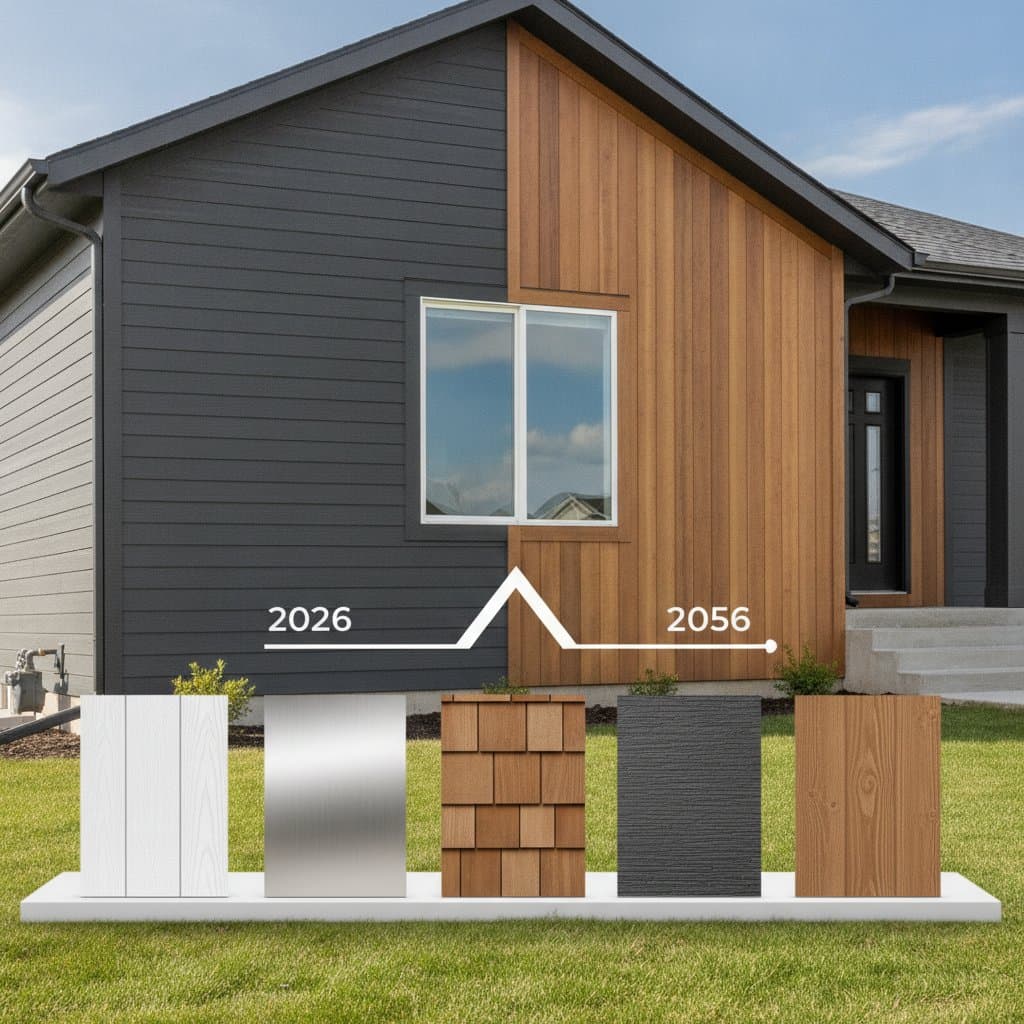
Which Siding Material Pays Off Over 30 Years?
Choosing siding ranks among the most visible and expensive exterior decisions a homeowner makes. The right material protects the structure, defines style, and shapes resale conversations for decades. Over a 30-year period, differences in maintenance, durability, and appearance translate directly into ownership costs and buyer confidence.
The following guide breaks down cost ranges, return on investment, and performance data. It helps you decide which siding materials hold value the longest.
Cost, ROI, and Impact Factors
Siding contributes to both market value and perceived value. Market value reflects what buyers pay. Perceived value relates to curb appeal and condition. Total cost of ownership covers cleaning, repainting, and repair cycles.
Average Project Ranges
- Small homes (1,500 sq ft): $12,000 to $25,000
- Mid-size homes (2,500 sq ft): $20,000 to $45,000
- Large homes (4,000 sq ft): $35,000 to $70,000
Primary Cost Drivers
- Removal and disposal adds $1 to $2 per square foot when existing siding requires full tear-off.
- Material weight and thickness increase labor time for heavier or thicker products.
- Trim detail and story count raise costs on two-story homes or complex trim through added scaffolding.
- Access and site conditions on tight lots or steep grades increase costs by up to 15 percent.
ROI Benchmarks
Industry data shows most siding replacements return 65 to 85 percent of installed cost at resale. Fiber cement and engineered wood typically lead, with vinyl close behind. Metal and natural wood perform best in markets where architectural style or sustainability preferences drive demand.
Compare total installation cost with expected repaint or repair cycles. A siding that costs more upfront but lasts twice as long without repainting often yields higher 30-year savings.
Design for Curb Appeal
A siding upgrade can raise perceived value before the first open house. Buyers respond to clean lines, balanced contrast, and clear entry definition.
Massing and Proportion
Keep horizontal lines consistent. Trim should frame windows and doors evenly. Corner boards must stay proportional to siding width. Simple, repeated courses read better in photographs than complex angles.
Color and Undertone
Mid-tone neutrals with a light-to-dark contrast ratio around 60 percent typically show best on listings. Warm undertones suit wooded lots. Cooler grays and whites reflect light in open settings. Compare color samples outdoors at different times of day to confirm tone stability.
Entry Emphasis
A contrasting front door color, wider casing, and balanced lighting fixtures guide the eye. Replace faded house numbers. Ensure fixtures align with trim centers for a clean composition.
Design choices that simplify lines and highlight the entry often boost resale appeal more than ornate details that add cost without clarity.
Maintenance and Longevity
Routine care keeps siding from aging prematurely. Ignoring basic upkeep shortens life expectancy by as much as 30 percent.
Maintenance Checklist
- Wash surfaces annually with mild soap and a soft brush, then inspect caulking.
- Repaint fiber cement or engineered wood every 5 years if fading begins.
- Refinish natural wood with stain or sealer every 10 years.
- Check for dents, cracks, or loose boards after storms.
Safe Cleaning Tools
Avoid pressure washers above 1,500 psi. Use garden hoses, soft bristle brushes, and non-abrasive cleaners to prevent surface erosion.
Warranty Responsibilities
Most manufacturers require proof of regular maintenance. Keep dated records of washing or repainting to preserve coverage.
Set a recurring reminder for inspection and cleaning. Consistency prevents costly repairs later and preserves resale credibility.
Living With Your Choice
Over three decades, siding performance depends as much on care as on material selection. Vinyl and metal deliver the lowest maintenance. Fiber cement and engineered wood balance realism with durability. Natural wood rewards attention with timeless character. The best long-term payoff comes from materials that maintain integrity with minimal repainting and protect the structure from moisture.
Keep documentation organized. Schedule periodic cleanings. Review caulking or paint every few years. These habits sustain both the look and the value of your home.