
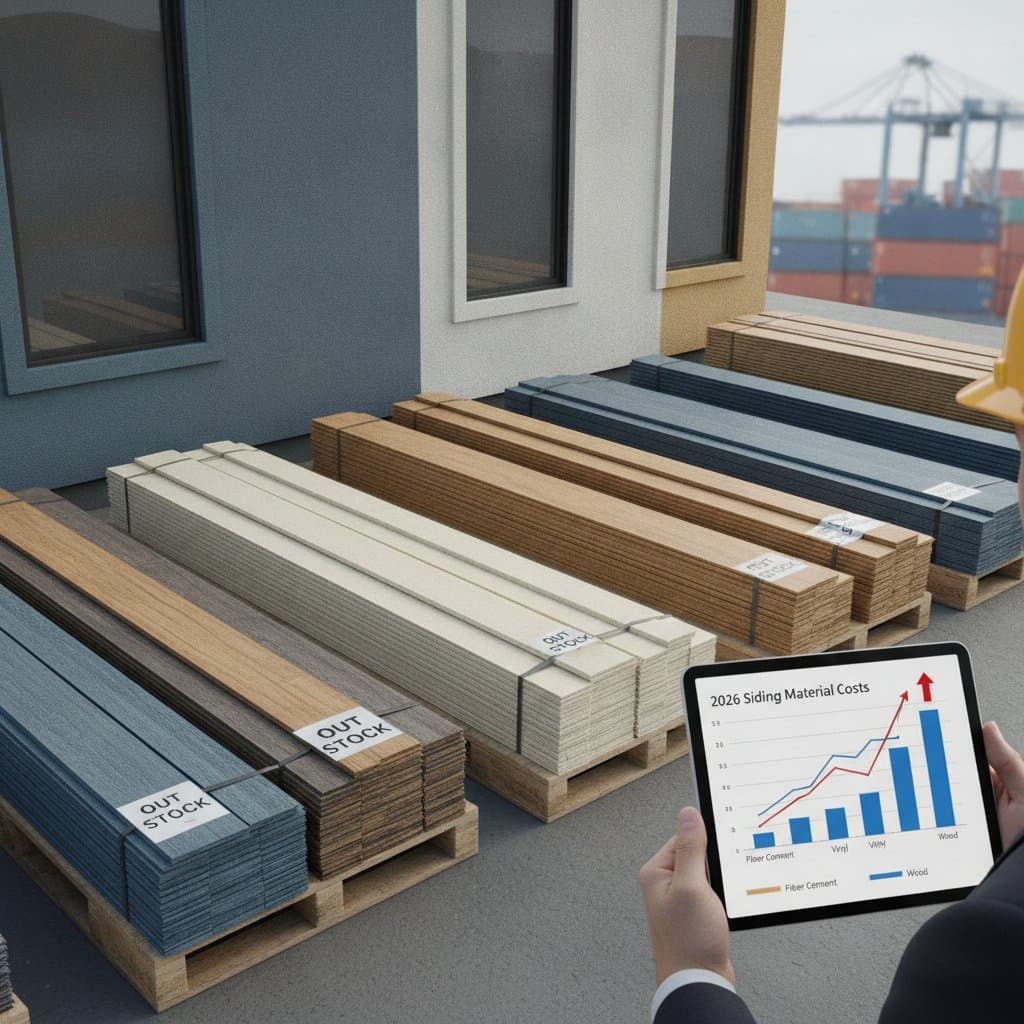
2026 Siding Shortage: Which Materials Cost More Now
Homeowners planning exterior renovations face a tight siding market. Material shortages and freight constraints have pushed certain products into higher price ranges. Others remain relatively stable. Understanding these shifts helps you plan realistic budgets, avoid project delays, and select materials that protect long-term value.
This guide breaks down current cost patterns, the reasons behind them, and how to manage risk when sourcing siding materials.
Material and Profile Choices
Choosing the right siding material now requires balancing appearance, availability, and maintenance. Some products face short supply due to fiber feedstock limits. Others remain accessible through domestic production.
| Material Type | Strengths | Drawbacks | Durability | Maintenance |
|---|---|---|---|---|
| Vinyl | Affordable, wide color selection, moisture resistant | Prone to cracking in extreme cold, limited heat tolerance | 20 to 40 years | Wash annually, inspect joints |
| Fiber Cement | Fire resistant, strong return on resale, stable color with paint | Heavy, higher labor cost | 30 to 50 years | Repaint every 10 to 15 years |
| Engineered Wood | Real wood look, lighter than fiber cement | Needs consistent sealing, susceptible to moisture if unsealed | 25 to 40 years | Seal edges, inspect yearly |
| Metal (Steel/Aluminum) | Fireproof, highly durable, recyclable | Prone to denting, color fade if uncoated | 40 to 60 years | Rinse annually, touch up finish |
| Natural Wood | Warm texture, customizable | High upkeep, fire risk | 20 to 35 years | Stain or paint every 3 to 5 years |
Fire and Moisture Resistance
Fiber cement and metal rate highest for fire resistance. They often qualify for insurance discounts. Vinyl offers good moisture resistance but melts under direct flame. Engineered and natural wood require fire-retardant coatings for higher ratings.
Texture and Profile Mixing
Mixing textures can elevate curb appeal. Overuse creates clutter. Use one main profile and one accent material to define gables or entryways. Maintain consistent reveal lines and trim widths across elevations to preserve visual balance.
Availability First
Select materials by availability first, then by finish preference. Fiber cement and engineered wood may face spot shortages. Confirm supplier stock before committing to colors or profiles.
Installation Quality and Risk Control
Material shortages increase the temptation to rush or substitute products. Quality control protects resale value and warranty coverage.
Envelope Protection
A proper water-resistive barrier behind siding prevents leaks and mold. Overlap seams by at least six inches horizontally. Apply flashing tape around openings. Never rely on caulk alone to seal penetrations.
Common Failure Points
- Overdriven nails crack vinyl and fiber cement.
- Missing head flashing causes vertical streaking and rot.
- Unsupported seams lead to buckling.
- Gaps at trim joints allow wind-driven rain.
Site Preparation
Clear vegetation 24 inches from walls for safe ladder setup. Use magnetic rollers to recover nails and screws. Communicate work hours with neighbors to reduce disruption.
Contract Requirements
Insist on detailed installation steps in the contract. Quality control during install saves more than any material discount can.
Contractor Selection and Bidding
Selecting the right installer matters as much as choosing the right material. During shortages, some crews take on unfamiliar products without proper training.
Scope Checklist
Before requesting bids, prepare a detailed scope that includes material type, color, and profile. Specify underlayment or water-resistive barrier type. List trim materials and widths. Define flashing and sealant specifications. Outline disposal and cleanup expectations. Assign permit and inspection responsibilities.
Providing a clear scope ensures comparable bids. Vague proposals lead to cost overruns once work begins.
Comparing Bids
Request at least three detailed estimates. Compare them item by item for material cost per square foot, labor cost per hour or per square foot, trim and accessory pricing, warranty terms, and schedule duration. Reject estimates that lump all costs into one figure without breakdowns. Transparent pricing helps you judge whether a contractor is absorbing or passing along shortage-related costs.
Payment Schedules
Tie payments to milestones, not calendar dates. Require a deposit of 10 to 20 percent at contract signing. Schedule a midpoint payment after material delivery and completion of one elevation. Release final payment only after full inspection and debris removal. Avoid paying for materials before they are on site. Supply-chain delays can stretch delivery times, but your funds should remain protected.
Bidding Discipline
A disciplined bidding process offsets price spikes by ensuring you pay for verified labor and materials only. Well-written contracts prevent disputes during material shortages.
Managing Ongoing Supply Challenges
Material shortages may continue to shape siding costs. Smart planning keeps projects on track. Verify supply early. Confirm installation quality. Maintain your siding regularly. Whether you choose vinyl for affordability or fiber cement for durability, the best return on investment comes from consistent upkeep and clear communication with your contractor.
Focus on the total cost of ownership instead of short-term price swings. Homeowners preserve both equity and peace of mind. When supply catches up again, those who managed their projects with precision will find their exteriors still performing and attractive.