
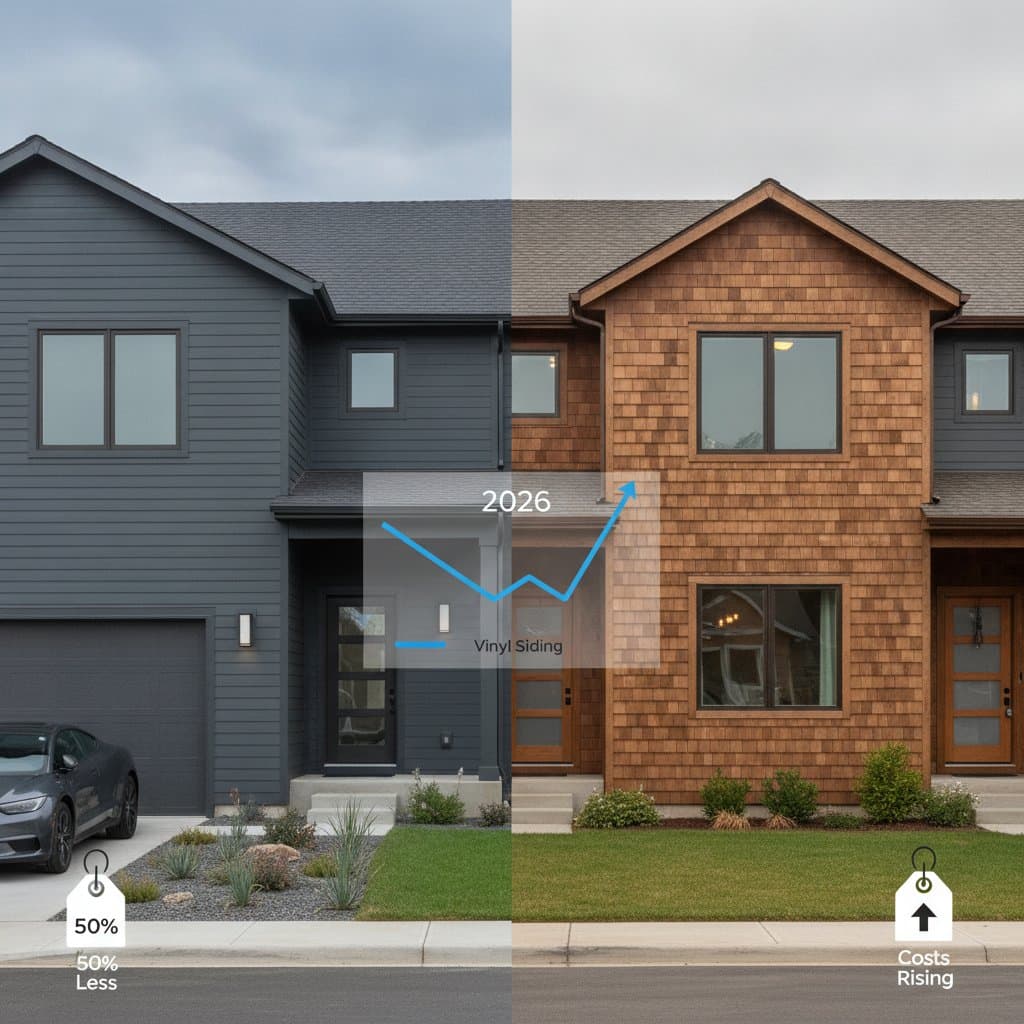
Vinyl Siding Prices Drop 12 Percent as Wood Costs Surge
Homeowners planning exterior updates notice a clear price shift. Vinyl siding costs have dropped around twelve percent compared to prior averages. Wood siding prices continue to climb. This reversal affects project planning, resale value, and long term maintenance budgets.
Vinyl affordability now creates a stronger return window for mid range renovations. Wood higher cost narrows its value gap unless buyers prioritize authenticity or local material sourcing.
Before choosing between these materials, define value in three ways. Market value means resale price impact. Perceived value covers how buyers respond to curb appeal and finish quality. Total cost of ownership includes purchase, installation, maintenance, and energy performance over time. The sections below break down cost ranges, design results, and practical maintenance steps.
Material and Profile Choices
Vinyl siding comes in horizontal, vertical, and shingle style profiles. It resists moisture and insects. It never needs painting and carries fade resistant finishes. Quality tiers differ by thickness, typically from 0.040 to 0.046 inches. Thicker panels resist warping and hide wall irregularities better.
Wood siding offers unmatched texture and natural grain. It depends heavily on sealing and repainting. Cedar and redwood outperform pine for decay resistance but cost more. Engineered wood products lower price while keeping a wood like appearance. They still need regular coatings.
| Material Type | Average Cost (per sq. ft. installed) | Durability | Maintenance | Fire & Moisture Resistance | Visual Appeal |
|---|---|---|---|---|---|
| Vinyl | $4.25–$8.00 | High | Low | Excellent moisture, moderate fire | Clean, uniform |
| Wood (Cedar/Redwood) | $8.50–$15.00 | Moderate | High | Moderate moisture, poor fire | Natural, warm |
| Engineered Wood | $6.00–$10.00 | Good | Moderate | Improved moisture, moderate fire | Textured, variable |
Mixing textures requires one dominant profile and one accent. Combining horizontal vinyl with vertical board and batten panels can break up large walls. Avoid more than two materials per elevation to prevent clutter.
Installation Quality and Risk Control
Proper installation protects both value and warranty. Poor fastening or flashing leads to warping, leaks, and callbacks within a few seasons.
Critical envelope details include maintaining a continuous weather barrier behind panels. Flash windows, doors, and transitions with compatible tape and head flashing. Leave expansion gaps of one quarter inch at trim to prevent buckling. Secure panels into studs, not sheathing alone.
Common failure points include improper nailing where nails driven too tight restrict movement. Unsealed joints allow water intrusion when sealant is missing at penetrations. Inconsistent wall prep causes visible ripples from uneven sheathing.
Site control checklist covers protecting landscaping with ground tarps. Arrange debris bins before removal starts. Coordinate with neighbors on access if scaffolding crosses property lines.
Contractor Selection and Bidding
A clear bid protects against change order surprises. Require written scopes that include all materials, barriers, trim, and disposal.
Scope checklist includes material type, thickness, and color. It covers house wrap and flashing materials. Trim treatment around openings belongs here. Soffit and fascia inclusion is necessary. Debris removal and site cleanup complete the list. Permit handling finishes the requirements.
Bid comparison tips involve reviewing per square foot pricing on equal material grades. Ask for references showing similar installations. Confirm insurance and warranty transfer terms.
Payment schedules link payments to milestones such as delivery, completion of one elevation, and final inspection. Avoid large deposits before material delivery.
Evaluating Ownership Duration
The current market shift favors vinyl for cost control and durability. Wood remains the right choice for homeowners prioritizing authenticity and regional fit. Its rising price and maintenance load require commitment.
Owners updating for sale within several years gain more predictable return on investment from vinyl. Those settled long term and willing to maintain finishes can still enjoy the warmth of real wood.