
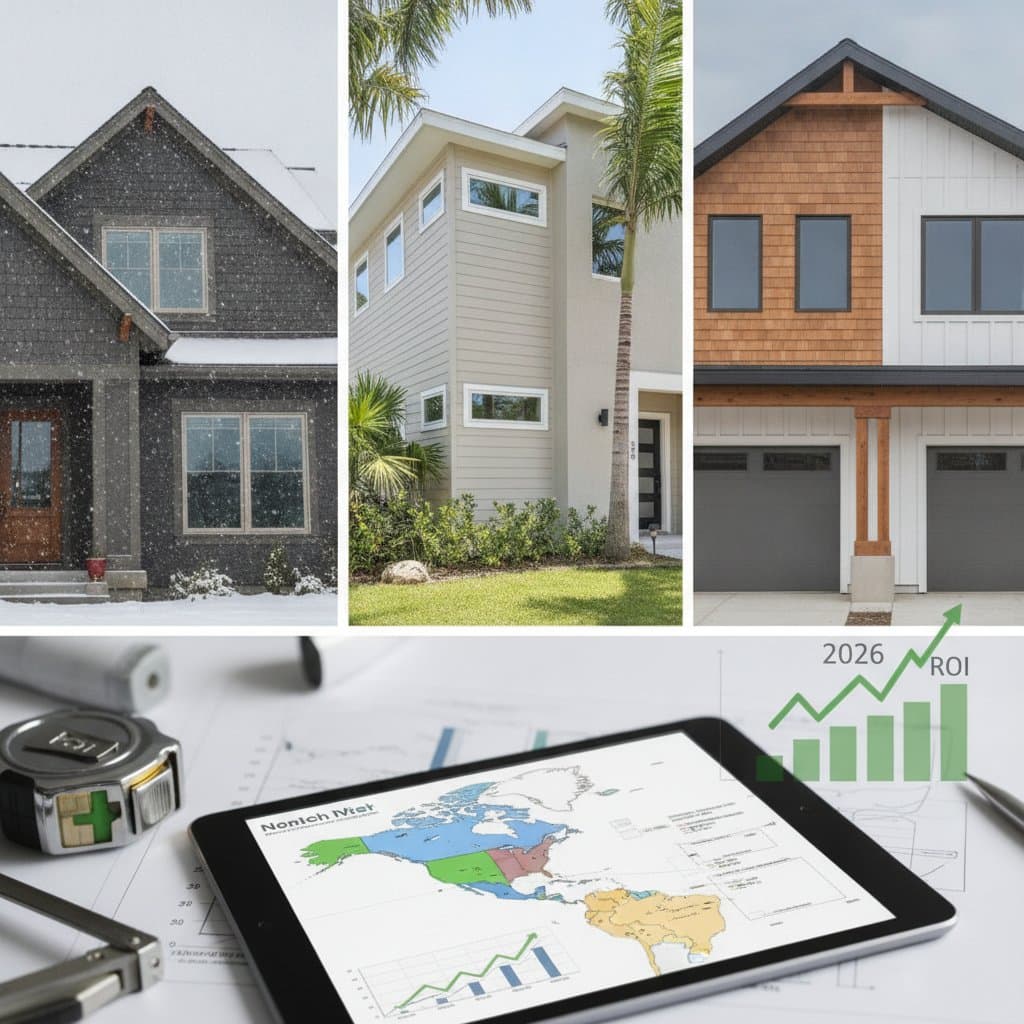
Regional Siding Choices That Maximize 2026 ROI
Choosing siding that delivers strong return on investment requires attention to local weather patterns, building codes, and ownership timeline. The right material protects the structure, controls energy costs, and improves curb appeal. A mismatched selection can lead to early failure or reduced property value. This guide outlines material performance by region along with practical planning steps.
Core Profiles and Material Options
Lap siding suits most architectural styles and promotes drainage on steep walls. Board and batten creates vertical rhythm suited to farmhouses and modern designs. Shingle or shake profiles work well as accents on coastal and cottage homes. Panel systems deliver clean lines for contemporary facades.
Material performance varies by climate and budget.
- Vinyl offers low initial cost and minimal upkeep yet fades over time with limited repair options.
- Fiber cement resists fire and impact while holding paint lines sharply, though its weight requires careful handling during installation.
- Engineered wood provides a natural appearance and dimensional stability when cuts receive proper sealing.
- Real cedar delivers classic appeal but demands frequent maintenance.
- Metal lasts for decades and repels pests, though it can dent under impact.
Limit any facade to one dominant texture. Reserve accent profiles for gables or entry walls. Match trim colors to window frames and roof fascia. Avoid combining more than three materials on a single elevation.
Climate Specific Recommendations
Coastal homes benefit from fiber cement or metal that withstands salt spray and heavy rain. Cold northern sites gain from insulated vinyl or engineered wood that reduces heat loss. Arid or wildfire zones require metal or fire rated fiber cement. Humid southern climates perform best with vinyl or treated wood paired with deep overhangs and vented rainscreens.
Durability and Safety Considerations
Moisture remains the primary threat to siding integrity. Wind driven rain and freeze thaw cycles stress joints and fasteners. In storm prone areas, secure panels with stainless or galvanized nails and apply full flashing at every termination.
Fiber cement and metal are noncombustible. Engineered wood carries coatings that slow ignition. Verify all labeling meets local fire code requirements. Vinyl can crack under hail or impact while unsealed wood attracts termites. Fiber cement supplies the strongest combination of impact and pest resistance for most locations.
Install a continuous weather barrier with back flashing at windows. Set starter strips level to maintain drainage planes. Keep siding at least six inches above soil to block moisture wicking.
Maintenance Schedule
- Wash siding once per year using a garden hose and mild detergent.
- Inspect caulk each spring and reapply elastomeric sealant at any gaps.
- Repaint fiber cement or wood every eight to ten years with acrylic exterior coatings.
- Check fasteners every two years and tighten or replace loosened nails or screws.
Most vinyl and fiber cement products carry 25 to 50 year limited warranties against material defects. Coverage excludes damage from improper installation or pressure washing. Retain receipts, color codes, and installation records to support future claims.
Project Preparation Steps
- Define goals around resale appeal, energy savings, or maintenance reduction.
- Shortlist contractors and verify license, insurance, and recent references along with manufacturer training credentials.
- Compare itemized bids that detail tear off, disposal, materials, trim, and paint.
- Review full size samples on site in daylight rather than relying on color chips alone.
- Clear driveways and landscaping while providing power and hose access.
- Confirm daily start times, protection measures for windows and plants, and cleanup procedures.
- Inspect moisture barrier overlap, trim flashing, and nail spacing before panels are installed.
- Conduct a final walk through to verify straight lines, sealed joints, and touch up paint before releasing final payment.
Regional ROI Patterns
Northeast winters and mixed moisture reward dense materials. Fiber cement delivers top returns through fire safety and paint stability. Expect 70 to 80 percent cost recovery at resale when paired with proper trim and flashing.
Southeast humidity and insects favor vinyl and treated engineered wood. Returns stay strong when panels receive rear ventilation and seams are sealed with UV stable caulk.
Midwest temperature swings and snow load favor insulated fiber cement or engineered wood. Proper installation yields 65 to 75 percent recovery at resale.
Southwest sun exposure and fire risk suit metal or rated fiber cement. These selections often return 75 percent or more when matched to local codes.
Coastal West salt air and wind demand corrosion resistant fiber cement or metal. Adequate ventilation supports longevity and value recovery near 70 percent.
Planning for Long Term Performance
Match material selection to regional demands from the start. Follow the preparation sequence to control costs and avoid rework. Consistent maintenance preserves both appearance and warranty coverage. These steps position homeowners to capture maximum return while protecting the home for years ahead.