
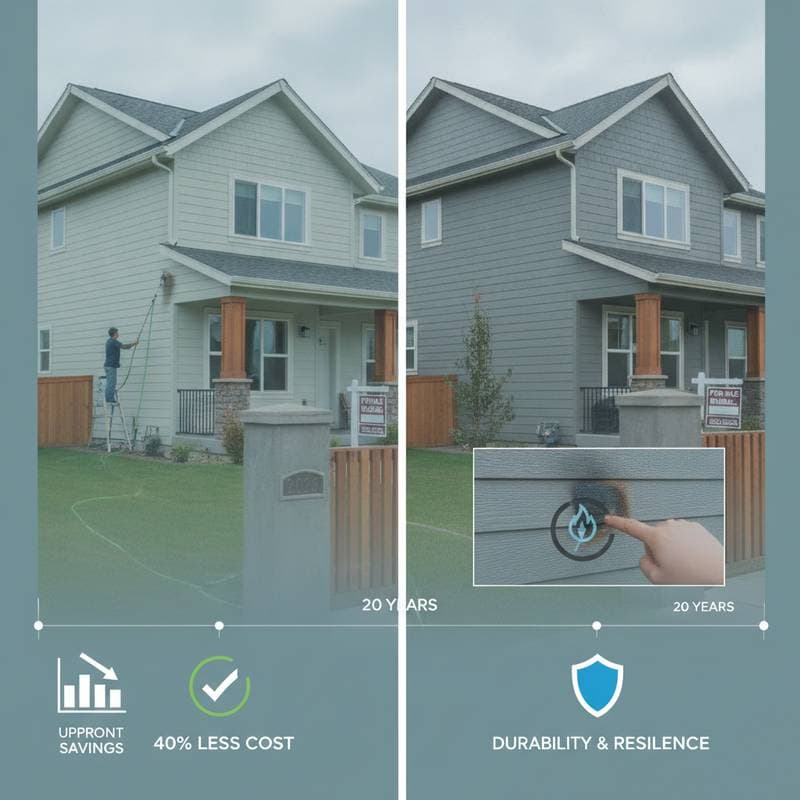
True 20-Year Costs: Vinyl vs Fiber Cement Siding
Homeowners comparing vinyl and fiber cement siding often focus on upfront price. Lasting value depends on total ownership cost over time. That includes material, installation, upkeep, and potential resale impact. The right choice balances appearance, protection, and predictable maintenance across two decades.
At-a-Glance Project Box
- Scope: Full siding replacement on a single-family home
- Duration: One to two weeks of active installation
- Difficulty: Moderate, professional installation recommended
- Typical Cost Range: Vinyl $6.50 to $10.00 per square foot, Fiber cement $9.00 to $14.00 per square foot
Material and Profile Choices
Vinyl
Vinyl offers an affordable entry point with color molded through the panels. This feature reduces the need for repainting. Installation proceeds quickly across a wide color range. Panels can warp under high heat and may crack in impact zones. Sound resistance remains lower than alternatives. Rinse the surface twice a year with mild detergent and inspect seams after storms. Lifespan reaches two decades with basic cleaning.
Fiber Cement
Fiber cement provides strong fire and moisture resistance. It holds paint effectively and delivers a solid feel similar to wood. Resale perception improves with this material. Heavier panels require skilled labor. Paint finish needs renewal every 10 to 15 years. Wash the surface annually and inspect caulking and paint film. Service life often exceeds two decades before major refinishing.
| Material | Fire Resistance | Moisture Resistance | Paint Retention | Impact Resistance | Maintenance Interval |
|---|---|---|---|---|---|
| Vinyl | Moderate | Good if properly vented | Color molded-in | Fair | Wash twice yearly |
| Fiber Cement | Excellent | Excellent | High | Very good | Repaint every 10-15 years |
Use consistent horizontal lap profiles for main walls. Limit accent textures such as board and batten or shakes to gables or entries. Keep trim color lighter or darker than the field siding to define edges without visual noise. Material choice sets the tone for perceived quality. Fiber cement signals higher craftsmanship while vinyl supports predictable upkeep for lower budgets.
Installation Quality and Risk Control
Both materials depend on proper moisture control behind the siding. Errors here cause swelling, rot, or mold. Such issues shorten service life and void warranties.
Common Failure Points
- Flashing at windows and doors must extend beyond trim to shed water.
- Bottom course clearance requires panels to sit at least one inch above grade.
- Fiber cement joints need back flashing or approved sealant.
- Fastener placement must follow manufacturer guidelines to prevent warping or cracking.
Plan debris disposal and noise windows before work begins. Protect neighboring yards with light sheeting during cutting or painting. Quality control during installation protects material warranties and long-term value. Lower-cost labor rarely saves money once repairs begin.
Contractor Selection and Bidding
Scope Checklist
- Material brand and thickness
- Underlayment or weather barrier type
- Trim and flashing plan
- Disposal and site cleanup
- Permit handling and inspection fees
Review line items side by side when comparing bids. A vinyl bid missing trim replacement or wrap layers may appear cheaper yet lead to callbacks. Fiber cement bids that include priming and caulking should list labor hours in detail. Use milestone payments tied to completion stages such as material delivery, installation halfway point, and final inspection. Avoid large deposits before work begins.
Living With Your Choice
True ownership cost over twenty years depends on upkeep discipline. Vinyl keeps budgets predictable with minimal painting. Fiber cement rewards those willing to repaint once or twice for higher resale and stronger weather resistance. Both materials deliver reliable protection when installed correctly and maintained on schedule.