
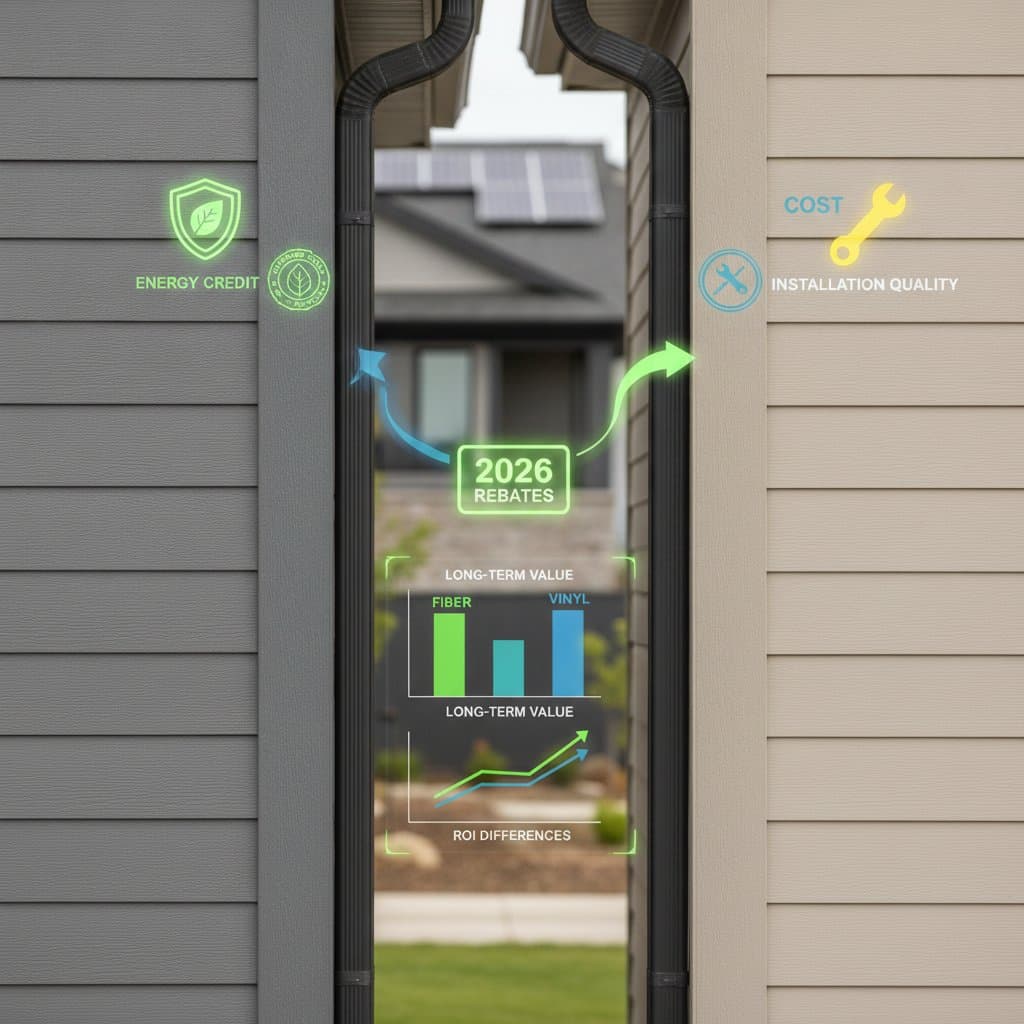
2026 Rebates Shift Fiber Cement vs Vinyl Savings
Homeowners weighing siding replacement soon will find that new rebate structures are changing the cost balance between fiber cement and vinyl. Both materials deliver good durability. The way rebate and credit programs now measure energy savings, sustainability, and lifecycle impact is reshaping the numbers behind each option.
This article breaks down how updated incentives affect total ownership cost, project return, and resale perception.
Material and Profile Choices
Both fiber cement and vinyl have matured into reliable options. They differ in composition, maintenance, and rebate qualification.
| Material | Pros | Cons | Typical Warranty | Fire & Moisture Resistance | Maintenance |
|---|---|---|---|---|---|
| Fiber Cement | Resists rot, insects, and fire. Accepts paint well. Looks like wood. | Heavier, higher labor cost. Requires cutting with respirator protection. | 30 to 50 years limited | Non-combustible, moisture-stable | Wash annually, repaint every 12 to 15 years |
| Vinyl | Affordable, low-maintenance, wide color range. | Can warp under high heat, less rigid feel. Lower fire rating. | 20 to 40 years limited | Flame spreads more readily, moisture-proof | Wash twice a year, avoid pressure washing close-up |
Durability and Fire Resistance
Fiber cement non-combustible composition often earns energy and safety credits. Vinyl resin base resists moisture but softens near high temperatures like grills or reflective windows. In rebate programs that reward fire-resilient materials, fiber cement gains a measurable edge.
Moisture and Maintenance
Vinyl resists water intrusion because panels float and drain. Fiber cement relies on a sealed paint layer and back flashing. Both require adequate ventilation behind the cladding. In humid climates, vinyl avoids swelling. In cold regions, fiber cement rigidity reduces cracking and oil canning.
Mixing Textures Without Clutter
Combining materials is common for curb appeal. Keep transitions clean and horizontal. Use fiber cement panels or shingles on feature walls and vinyl lap elsewhere. Limit texture changes to one or two per facade to avoid visual noise. Rebates usually apply to the dominant siding area, not accent sections.
Choose materials not only for appearance but also for how each surface contributes to rebate calculations. Document recycled content and insulation R-values during purchase to secure future credit claims.
Installation Quality and Risk Control
Rebates depend on verified installation quality as much as product type. Poor envelope detailing can void credits and warranties.
Envelope Protection
- House wrap continuity: Overlap seams by at least six inches and tape all joints.
- Flashing: Use metal or flexible flashing at windows, doors, and roof-wall intersections.
- Starter strips and vents: Align to promote drainage and air circulation.
- Fasteners: Use corrosion-resistant nails driven into studs, not sheathing only.
Common Failure Points
- Missing kick-out flashing near roof edges
- Caulked instead of flashed trim joints
- Overdriven nails that crack fiber cement
- Vinyl locked too tightly, preventing expansion
Correcting these mistakes later costs more than proper initial supervision. A certified installer can document compliance for rebate verification.
Site and Neighbor Considerations
Plan debris control before the project starts. Use magnet rollers to collect nails daily. Keep cut stations downwind and off shared driveways. Notify neighbors about expected noise and dumpster placement.
Quality control protects both your rebate claim and your home envelope. Request photo documentation of flashing and underlayment layers before siding covers them.
Contractor Selection and Bidding
The new rebate environment places more responsibility on contractors to document material sourcing and energy performance. Bids that ignore these details can disqualify the project from credits.
Scope Checklist
When collecting bids, require written confirmation of material brand and profile, vapor and weather barriers, trim, soffit, and flashing materials, disposal and recycling methods, permit and inspection responsibilities, and rebate documentation and post-installation verification.
Comparing Bids Fairly
Request itemized estimates that separate labor, materials, and disposal. Ask each contractor to specify the insulation value improvement expected from their assembly. This allows an apples-to-apples comparison. The cheapest bid can lose value if it omits rebate paperwork or uses uncertified materials.
Payment Schedules
Tie payments to milestones. Deposit 10 to 20 percent at contract signing. Material delivery covers 30 to 40 percent. Midpoint inspection covers 20 percent. Final payment covers the balance after cleanup and rebate documentation submission. Hold final payment until all warranty and rebate forms are signed.
Selecting a contractor who understands rebate paperwork can save weeks of processing and prevent missed credits. Documentation is part of the value chain now.
Living With Your Choice
Once installation is complete, the siding should deliver stable comfort, predictable maintenance, and solid resale appeal. Vinyl remains the lower-cost, lower-maintenance option. Fiber cement now competes strongly when rebates reward recycled mineral content and fire resistance. The best choice depends on climate, design goals, and the specific rebate formula in your region.
Practical Summary
- If you prioritize lowest upfront cost, vinyl with insulated backer panels may qualify for modest credits and provide consistent energy savings.
- If you prioritize long-term durability and fire safety, fiber cement can deliver higher rebates and longer lifespan, especially when painted in light, reflective shades.
- If your home has complex trim or multiple elevations, consider a hybrid approach using fiber cement on main facades and vinyl in less visible areas to balance appearance and cost.
Pro Tips for Success
- Confirm rebate rules before ordering materials. Small specification changes can make a project ineligible.
- Keep digital records of invoices, product labels, and before-and-after photos for rebate audits.
- Schedule a mid-project inspection to confirm proper flashing and weatherproofing before siding covers the sheathing.
- Avoid unnecessary upgrades like ornate trim that complicates maintenance and rarely improves resale value.
- Plan repainting or washing cycles to align with warranty terms, protecting both finish and rebate compliance.