
Matching Siding to Local Climate Conditions
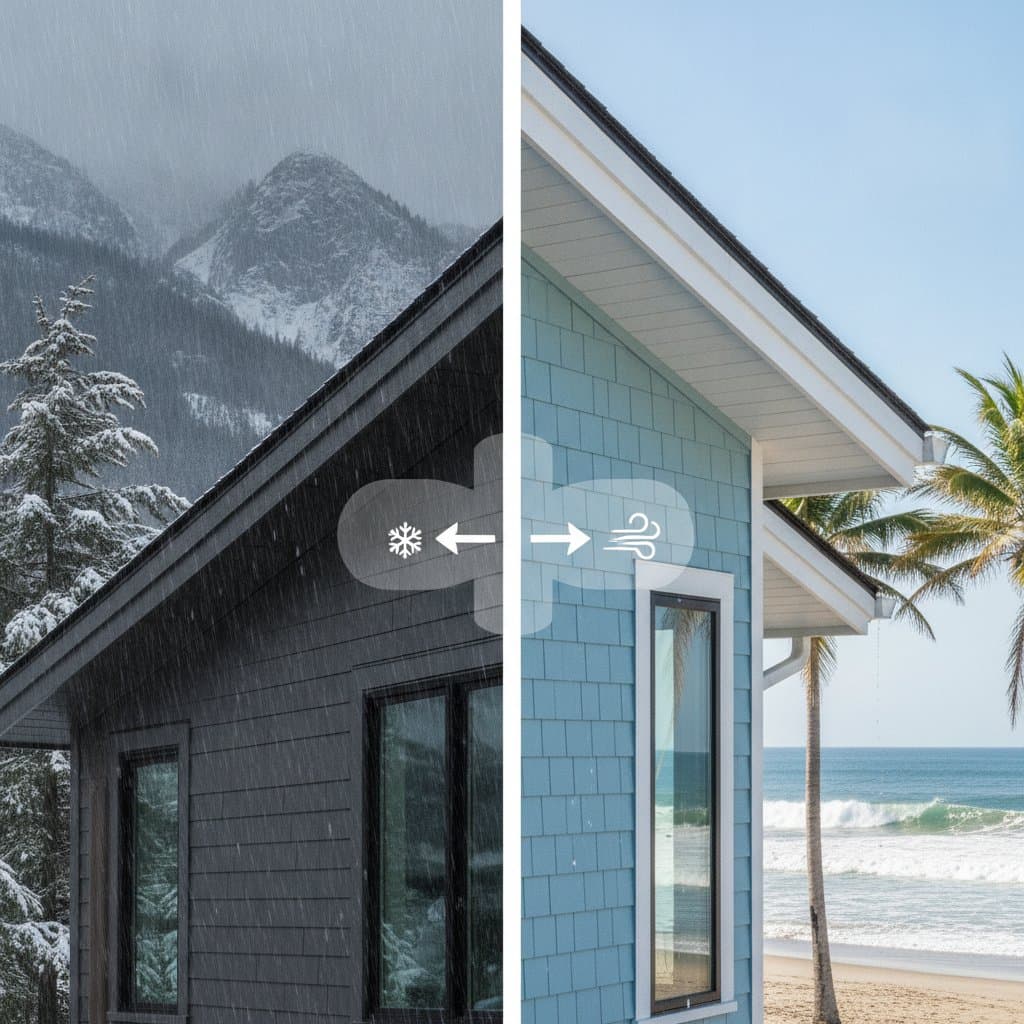
Homeowners select siding based on regional weather patterns that affect expansion, water resistance, and structural integrity. Fiber cement and vinyl each respond differently to temperature swings, humidity, wind loads, and sun exposure. This comparison outlines performance differences by climate zone along with practical installation considerations.
Material Composition and Performance Traits
Vinyl siding consists of PVC resin blended with color pigments. It tolerates moisture well in both dry and humid regions yet softens under direct flame. Fiber cement combines Portland cement, sand, and cellulose fibers. It remains noncombustible and holds up under high winds once fastened correctly.
The following table summarizes key differences:
| Feature | Vinyl | Fiber Cement |
|---|---|---|
| Base composition | PVC resin with color pigment | Portland cement, sand, and cellulose fiber |
| Finish | Integral color or applied coating | Factory paint or site-painted |
| Fire resistance | Moderate, melts under direct flame | Non-combustible, often used in fire-prone zones |
| Moisture tolerance | Excellent in dry or humid areas | Resistant but requires sealed edges and paint |
| Impact resistance | Fair to good | Very good once installed |
| Weight | Light | Heavy, needs two-person handling |
| Maintenance | Wash with mild soap | Repaint every 10 to 15 years |
| Lifespan | 25 to 40 years | 30 to 50 years or more with maintenance |
Profile Options and Placement Guidelines
Lap siding creates horizontal overlaps that produce clean shadow lines on most house styles. Board and batten uses vertical panels with raised strips and suits farmhouses or rustic designs. Shingle or shake profiles replicate cedar texture and work well as accents on gables.
Match profile width to building scale. Narrow laps suit small cottages while wider exposures complement taller facades. Mixing materials, such as fiber cement on lower levels and vinyl shakes above, lowers cost while protecting areas most exposed to rain.
Trim thickness should exceed the siding edge by at least one size. Pair fiber cement boards with PVC or fiber cement trim to preserve fire and moisture resistance. Vinyl installations require matching vinyl or aluminum trim that accommodates thermal movement.
Regional Application Examples
Coastal cottages benefit from fiber cement lap siding that withstands salt spray and wind. Vinyl performs better in lighter shades to reduce sun discoloration. Mountain cabins gain fire resistance from fiber cement board and batten. Vinyl remains suitable for outbuildings or phased budgets.
Suburban two story homes often use vinyl lap siding for faster installation and lower cost. Insulated vinyl panels add value in regions with extended winters. Urban infill projects favor fiber cement panels for crisp lines and compliance with fire codes near property lines.
Project Preparation Sequence
Define project scope as full replacement or partial re skinning. Record goals such as reduced maintenance, added insulation, or style updates before contacting contractors.
Obtain written bids from three installers who hold manufacturer training credentials. Compare allowances for wall repairs, flashing quality, and cleanup terms. Verify fastener and sealant compatibility with the chosen material.
Inspect full size samples outdoors in natural light. Confirm color consistency and texture on fiber cement. Check gloss level and profile thickness on vinyl. A small wall mockup helps verify joint layout before full installation.
Clear vegetation and relocate furniture at least five feet from walls. Supply power and water access for daily cleaning. Schedule material deliveries with adequate parking space.
Quality Verification Points
Inspect house wrap coverage before siding work begins. Confirm nail placement and spacing on the first completed wall. Review joint alignment and window caulking during progress checks. Approve trim paint and final touch ups prior to final payment.
Selecting Materials for Sustained Performance
Dry or moderate climates allow vinyl to deliver speed and minimal upkeep. Windy, wet, or fire sensitive areas justify fiber cement through greater stability and longevity. Proper planning and correct installation enable either material to maintain protection and energy efficiency for decades.