
Why Fiber Cement Delivers Strong Resale Value Compared to Vinyl
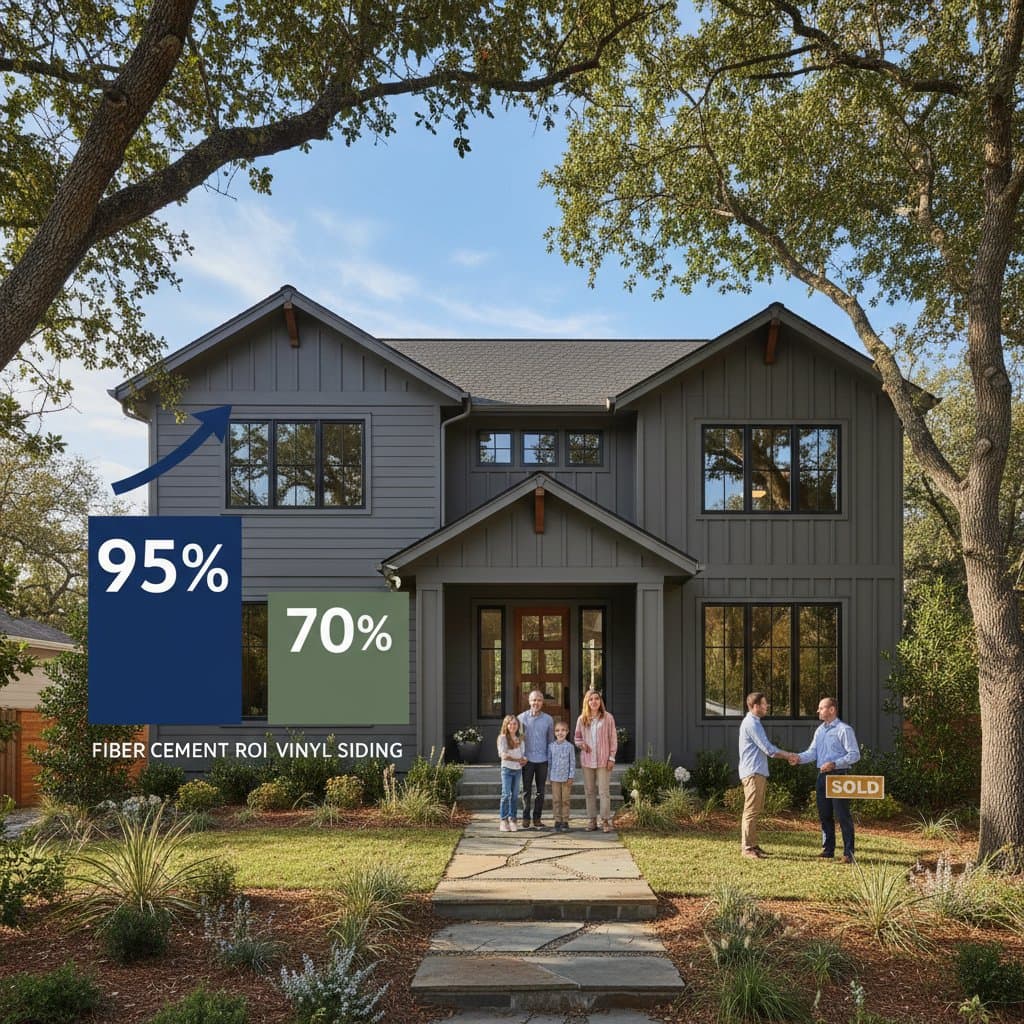
Homeowners comparing siding materials often focus on price per square foot. What really matters is the total value after installation. Fiber cement siding has gained a strong reputation for holding resale value. Vinyl remains a budget friendly option with faster installation. Data shows fiber cement delivering up to 95 percent return on investment. This figure reflects cost recovery along with higher buyer confidence in durability, appearance, and low maintenance.
This guide breaks down costs, design impact, and installation quality. Readers can see why the market rewards fiber cement more than vinyl.
Material and Profile Choices
Core Options
| Material | Durability | Maintenance | Fire/Moisture Resistance | Appearance | Cost Range (installed) |
|---|---|---|---|---|---|
| Vinyl | Moderate | Low cleaning only | Poor to fair | Uniform, limited depth | 6-9 dollars/sq.ft. |
| Fiber Cement | High | Repaint every 12-15 years | Excellent fire rating, stable in moisture | Deep grain, wood like texture | 10-15 dollars/sq.ft. |
| Engineered Wood | Medium | Repaint every 8-10 years | Moderate | Warm tone, natural look | 8-12 dollars/sq.ft. |
Fiber cement boards are made from cement, sand, and cellulose fibers pressed into planks or panels. This mix gives dimensional stability that vinyl cannot match. Vinyl expands with temperature changes and can warp near heat sources. Fiber cement keeps its shape and reduces visible seams along with joint movement.
Profile and Trim
Homeowners choose from lap siding, board and batten, or panel systems. Lap profiles work well for most homes. Panel styles fit modern designs. Trim boards made from the same material reduce maintenance mismatch. Aluminum or PVC trim around windows can still blend well when colors match factory finishes.
Mixing Textures
Mixing too many profiles on one elevation creates clutter. Limit texture changes to one accent wall or gable. Keep lap orientation consistent across visible sides for a cohesive appearance. Use smooth panels only where architectural style supports it.
Actionable Takeaway:
Select one primary profile and one accent texture at most. Match trim materials for uniform movement and paint cycles.
Installation Quality and Risk Control
Weather Barrier and Flashing
Proper installation protects the wall system. Fiber cement requires a moisture barrier, flashing at horizontal joints, and clearance above grade. Skipping these steps leads to trapped moisture and warranty loss. Vinyl sheds water through weep holes but cannot protect sheathing if water bypasses the barrier.
Common Failure Points
- Improper nailing overdriven nails crack fiber cement edges.
- Lack of gaps boards must have small expansion joints caulked or flashed.
- Ground contact siding should end at least six inches above soil.
- Window trim gaps sealant breaks cause leaks behind casings.
Site Prep and Debris
Contractors should stage materials on flat surfaces and keep cuts away from open windows. Dust from cutting cement boards requires masks and blades rated for fiber cement. Debris disposal should follow local rules since some waste contains silica dust.
Neighbor Impact
Noise and dust travel easily. Notify neighbors of work hours and cleanup plans. Controlling waste and keeping driveways clear improves goodwill and can help avoid complaints.
Actionable Takeaway:
Quality installation protects return value. Request written confirmation that crews follow manufacturer clearances and flashing details.
Contractor Selection and Bidding
Scope Checklist
Ask bidders to itemize the following:
- Removal and disposal of existing siding
- Weather barrier and flashing materials
- Trim boards and corner profiles
- Paint or factory finish details
- Waste handling, site protection, and permits
Each line item should specify brand or standard, not just as needed. This ensures consistency when comparing bids.
Comparing Bids Fairly
Gather at least three written estimates. Focus on scope alignment, not just price. A lower bid missing paint or trim allowances can rise later through change orders. Request per square foot rates and confirm labor warranty terms.
Payment Schedules
Link payments to milestones:
- Deposit 10 to 20 percent to secure materials.
- Midpoint after tear off and weather barrier complete.
- Completion after final inspection and cleanup.
Hold final payment until surface condition and paint touch ups are confirmed. Reliable contractors welcome this structure since it protects both sides.
Actionable Takeaway:
Use detailed scopes and milestone payments to control cost overruns and support warranty enforcement.
Long Term Care
Maintenance Checklist
| Task | Frequency | Purpose |
|---|---|---|
| Wash siding | Every 12 months | Remove dust and mildew |
| Inspect caulk joints | Every 12 months | Prevent leaks |
| Touch up paint | As needed | Seal cut edges |
| Repaint | Every 12-15 years | Maintain surface bond |
| Check flashing | Every 2 years | Stop water intrusion |
Following this schedule keeps warranties intact and preserves coating life. Fiber cement slow wear pattern means small repairs prevent large replacements later.
Actionable Takeaway:
Plan for minor upkeep annually rather than waiting for visible failure. Consistent attention keeps ROI near peak levels.
Protecting Your Investment Over Time
Homeowners who follow these steps see sustained performance from fiber cement siding. The material maintains its appearance and structural integrity for decades when installed and maintained correctly. This consistency translates directly into stronger offers at resale.