
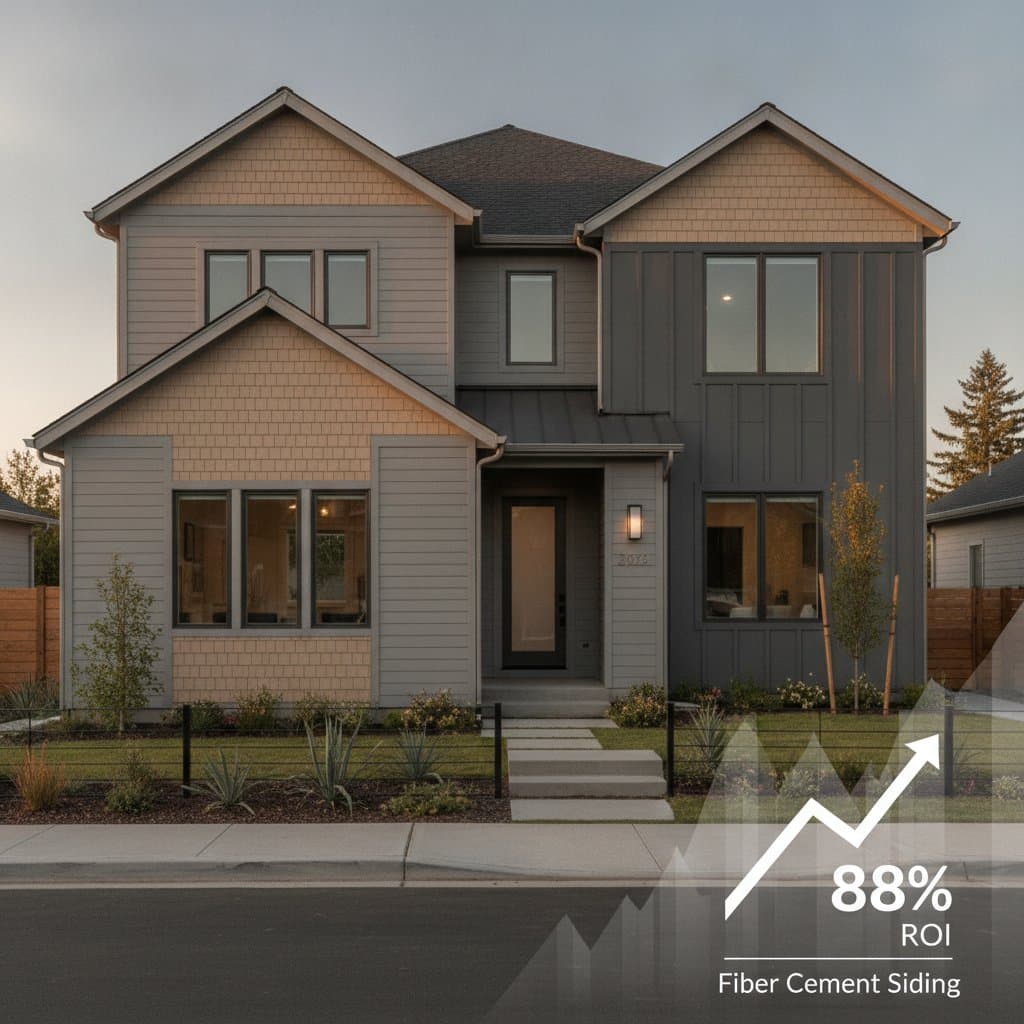
Fiber Cement Siding: When 88% ROI Makes Sense
Homeowners evaluate siding projects based on effects to resale value, upkeep demands, and total ownership costs. Fiber cement siding often delivers an average 88% return on investment according to industry data. The result holds value when homeowners consider time in the residence, existing siding condition, and installation standards. This guide examines costs, design options, and performance details to support informed choices.
Cost Ranges and Return Drivers
Typical fiber cement siding projects cost between 18,000 and 35,000 dollars for an average home. Smaller single story homes reach the lower end of that range. Larger homes with multiple stories and intricate trim move toward the higher end.
Primary Cost Influences
- Tear off and disposal of existing material adds 1 to 2 dollars per square foot.
- Complex corners, window surrounds, and roof transitions increase labor hours.
- Work on second or third stories requires scaffolding and raises total expense.
- Added elements such as soffits, fascia, and decorative panels contribute to both material and labor totals.
- Local labor rates reflect the weight and cutting needs of the product.
Resale studies that cite an 88% return assume sale occurs soon after completion. Longer occupancy periods allow owners to gain from reduced maintenance and improved weather protection during those years.
Project Scale Examples
- Small project of 1,200 square feet falls between 12,000 and 15,000 dollars.
- Mid size project of 2,000 square feet ranges from 18,000 to 25,000 dollars.
- Large project above 3,000 square feet reaches 28,000 to 40,000 dollars.
Repair current siding only when less than 15% of panels show damage. Full replacement recovers most costs at sale while lowering ongoing maintenance.
Design Choices That Support Curb Appeal
Curb appeal results from balanced proportions, color contrast, and attention to detail. Fiber cement provides clean edges and color stability that hold up in photographs and over time.
Proportion and Board Width
Select board widths that suit the scale of the facade. Wider boards reduce visual clutter on tall walls. Narrower boards maintain a lighter appearance on smaller homes.
Color Selection
Mid tone grays, earth neutrals, and soft greens pair well with most roof colors and support resale. Dark or saturated colors may fade under intense sun exposure. Verify UV resistant coatings before selecting bold shades.
Entry and Window Emphasis
Apply trim boards or contrasting color around the main door and windows. Position exterior lights to accent vertical lines without creating glare. Update house numbers for a finished appearance.
Photograph the home from the street before final color decisions. Align siding selections with existing roof tones and shadow patterns.
Maintenance Practices for Long Service Life
Fiber cement siding offers extended durability when owners follow basic care steps that protect appearance and warranty terms.
Routine Cleaning Steps
- Wash surfaces once each year using low pressure water and mild detergent.
- Skip high pressure equipment that can remove finish layers.
- Check caulk joints every two years and renew any gaps.
- Repaint factory finishes after 15 to 20 years or when fading covers more than 15% of the surface.
Scheduled Inspection Tasks
| Task | Frequency | Focus Areas |
|---|---|---|
| Visual check for cracks | Twice yearly | Corners and window trim |
| Caulk review | Every two years | Dry or separated joints |
| Paint assessment | Every five years | Early chip repairs |
| Fastener inspection | Every ten years | Lifted or loose nails |
Maintain records of cleaning and inspections. These documents support warranty claims and transfer coverage to future owners.
Project Timing Considerations
The near 90% return figure reflects buyer interest in durable materials and lower upkeep. Owners who remain in the home at least five years realize gains through consistent appearance and reduced repair needs. Sellers benefit from the visual strength and buyer perception of quality that fiber cement provides.