
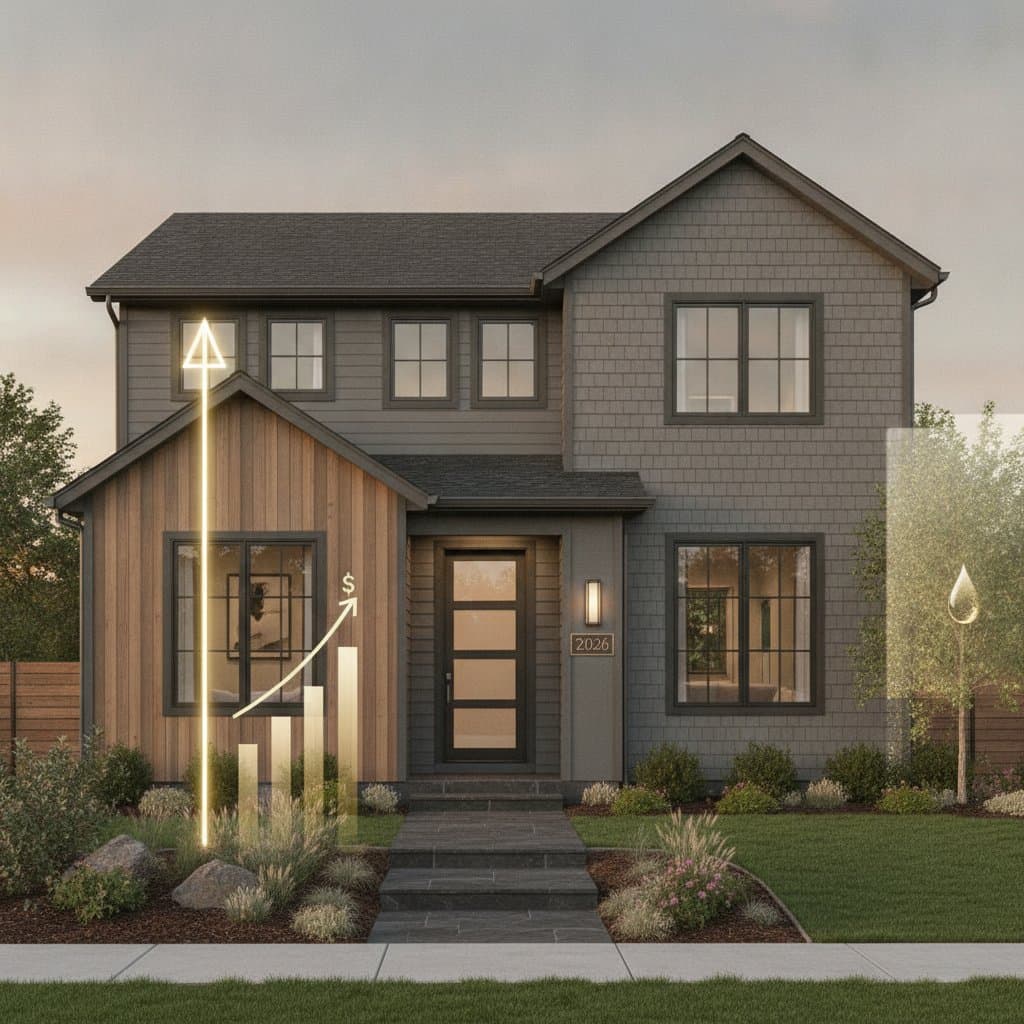
Why Fiber Cement Recoups More Than Vinyl at Resale
Homeowners evaluate siding choices based on upfront cost, long term durability, and effects on resale value. Fiber cement siding, composed of cement, sand, and cellulose fibers, consistently delivers stronger returns than vinyl. This advantage stems from its wood like appearance, resistance to fire and moisture, and sustained visual appeal.
Cost, ROI, and Impact Factors
Fiber cement siding typically costs twice as much as vinyl. It recoups a larger share of that investment at resale because buyers view it as a premium material. Vinyl reduces initial expenses yet often looks flatter and less substantial to potential purchasers.
Typical project scales:
- Small project: Compact single story home under 1,500 square feet, 12,000 to 18,000 dollars total.
- Mid size project: Two story home around 2,000 square feet, 20,000 to 28,000 dollars.
- Large project: Homes 3,000 square feet or more, 30,000 to 40,000 dollars or higher.
Key cost drivers:
- Removal and disposal of old siding adds 1 to 2 dollars per square foot.
- Complexity from multiple stories, detailed trim, and unique elevations increases labor hours.
- Access issues such as tight lot lines or landscaping obstacles slow production.
- Factory finishes raise material cost but reduce later painting labor.
Buyers assign higher perceived value to fiber cement because its thickness, texture, and shadow lines resemble real wood. Real estate agents note that improved first impressions and durability support higher listing prices.
Actionable takeaway:
If your home sits in a mid to upper price neighborhood, fiber cement usually returns more of its installation cost than vinyl, especially when factory finished boards are installed by certified contractors.
Design for Curb Appeal
Curb appeal relies on proportion, color balance, and visible craftsmanship. Fiber cement produces sharper edges and deeper profiles that create cleaner shadow lines than vinyl, which tends to look flat.
Design fundamentals:
- Keep horizontal lines consistent across all elevations.
- Use contrast between siding and trim to highlight window and door openings.
- Choose a darker body color with light trim to enhance perceived massing.
- Define entryways with balanced trim widths and lighting.
Color depth and undertone matter when selecting prefinished boards. Fiber cement holds paint better and supports deeper hues without fading. Vinyl color runs through the material yet can appear glossy and less natural.
Actionable takeaway:
For photography and walk up impressions, fiber cement produces a more solid architectural look that performs well in listing photos and open house visits.
Maintenance and Longevity
Fiber cement requires repainting every 15 to 20 years if site painted, while prefinished options last even longer. Vinyl never needs painting, yet it cannot be refinished once faded or cracked.
Maintenance checklist:
- Annually wash with mild soap and water using a soft brush.
- Every 2 years inspect caulk joints and repaint trim if needed.
- Every 5 years check fasteners and flashing for corrosion.
- As needed touch up chipped paint on factory finishes with matching kits.
Fiber cement resists pests and rot. Keeping gutters and downspouts clear prevents splash back staining. Warranty coverage often requires proof of proper cleaning and repainting intervals.
Actionable takeaway:
A small amount of routine maintenance preserves finish warranties and keeps resale value strong. Buyers appreciate documented upkeep records.
Weighing Long Term Performance
Fiber cement siding costs more upfront. The combination of durability, low upkeep, and strong buyer appeal makes it a sound investment for homeowners planning to stay long term or sell within the next market cycle. Vinyl remains a budget friendly option for quick refreshes but rarely boosts listing prices the same way.
When viewed through total cost of ownership, fiber cement delivers a higher resale return and a longer service life. For most homeowners seeking lasting value and a more substantial look, it outperforms vinyl on both performance and perception.