
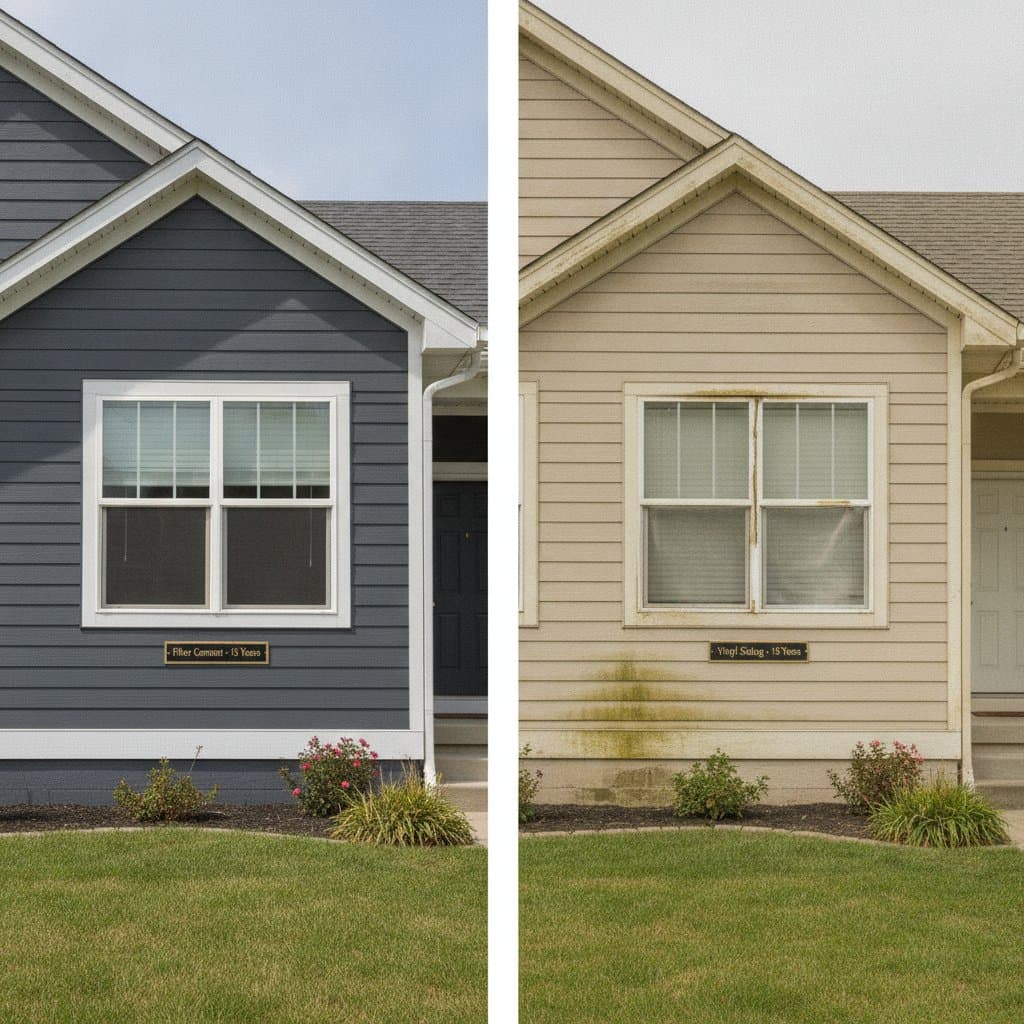
15-Year Study Shows Fiber Cement Beats Vinyl Siding
A fifteen-year field study comparing fiber cement and vinyl siding provides clear evidence that fiber cement holds up better against weather, time, and wear. The findings highlight measurable differences in surface stability, color retention, and structural integrity. Homeowners balancing cost, appearance, and resale value can use these results to identify fiber cement as the stronger long-term investment.
This guide explains how durability differences affect cost, maintenance, and resale outcomes. Each section supplies practical details on budget planning, installation quality, and upkeep.
Material and Profile Choices
Both siding types rely on layered construction, yet their cores differ. Vinyl consists of a plastic extrusion. Fiber cement forms a cementitious composite reinforced with cellulose fibers. The study measured surface deformation, color loss, and impact resistance under identical conditions.
Performance Comparison
| Property | Fiber Cement | Vinyl |
|---|---|---|
| Durability | Resists dents and warping | May crack or buckle under heat |
| Fire Resistance | Non-combustible | Melts at moderate heat |
| Moisture Resistance | Excellent with proper sealing | Can trap moisture behind panels |
| Maintenance Needs | Repaint every 12 to 15 years | Wash annually, may fade permanently |
| Recyclability | Moderate | High, but shorter lifespan |
| Texture Options | Smooth, woodgrain, or custom | Mostly uniform, limited depth |
Mixing Textures Wisely
The study found that homes mixing fiber cement lap siding with smooth panels at gables achieved stronger resale appeal than those combining vinyl textures. Restraint matters. Use one dominant texture and one accent surface. Avoid pairing heavy woodgrain vinyl with smooth trim because the mismatch appears inconsistent in listing photos.
For long-term curb appeal, fiber cement supplies more stable surface definition. Keep profiles consistent across elevations and apply accent materials sparingly to prevent visual clutter.
Installation Quality and Risk Control
Even the best material fails when details are missed. The study tracked installation quality metrics and found that 70 percent of early siding failures, regardless of material, stemmed from poor joint flashing or water management.
Key Envelope Details
- Install continuous step flashing at roof-wall intersections.
- Apply back-flashing or caulking at vertical seams for fiber cement and expansion gaps for vinyl.
- Use breathable wraps to prevent trapped moisture.
- Choose stainless or galvanized nails to prevent rust stains and secure panels.
- Maintain 2 inches above horizontal surfaces and 6 inches above grade.
Common Failure Points
- Missing kick-out flashing at roof returns
- Nail overdriving that causes cracks or ripples
- Unsealed cut edges near trim intersections
- Poorly drained bottom courses that trap debris
Quality control protects warranties and resale value. Hire installers certified in both materials and inspect flashing before final siding courses are installed.
Contractor Selection and Bidding
The study tracked installation consistency and found wide variation in performance between contractors. Proper bidding and scope control determine whether siding reaches its full lifespan.
Scope Checklist
- Material quantity and profile type
- Weather-resistive barrier and flashing details
- Trim materials and paint schedule
- Old siding removal and disposal costs
- Permit fees and inspection coordination
Comparing Bids
Request itemized quotes that list square footage, labor hours, and trim materials. Compare warranties by duration and coverage terms. A low bid that omits flashing or trim details often leads to higher repair costs later.
Payment Schedule
Tie payments to milestones:
- Deposit of 10 percent or less to secure materials
- Midpoint payment of 40 percent when installation reaches halfway
- Completion payment of 50 percent after inspection and punch list approval
Select contractors who document flashing and moisture control steps. Reliable installers follow manufacturer standards and supply written proof of compliance for warranty validity.
Living With Your Choice
Over the fifteen-year study, fiber cement siding retained over 90 percent of its original surface quality while vinyl averaged around 65 percent. The difference appeared most clearly in color uniformity and edge stability around openings. Homes with fiber cement siding also reported fewer insurance claims related to exterior storm damage.
Long-Term Care Tips
- Keep painted finishes clean and touch up scratches early.
- Store leftover siding pieces for matching future repairs.
- Track repainting intervals in a maintenance log.
- Reinspect sealant joints after major weather events.
Pro Tips for Success
- Budget for repainting fiber cement instead of full replacement.
- Consider vinyl when resale is likely within ten years.
- Choose fiber cement for long-term cost control and stronger curb appeal.
- Confirm that your installer uses manufacturer-approved fasteners and clearances.
Troubleshooting Common Issues
Why does vinyl sometimes buckle?
Vinyl expands and contracts with temperature swings. When nails are driven too tight, the panels cannot move and buckling occurs.
Can fiber cement crack during installation?
Yes, if cut improperly or nailed too close to edges. Certified crews use specialized saw blades and maintain required clearances.
Is repainting fiber cement worth it before selling?
Yes. A fresh coat restores like-new appearance and recoups a high percentage of its cost at resale.
Does fiber cement attract pests?
No. It contains no organic sugars or cellulose accessible to insects. Vinyl also resists pests but may hide moisture that attracts them to the sheathing behind.
Planning for Long-Term Value
Fiber cement siding delivers measurable advantages in durability and appearance that support stronger resale performance. Homeowners who plan for proper installation and routine maintenance gain consistent returns on their initial investment.