
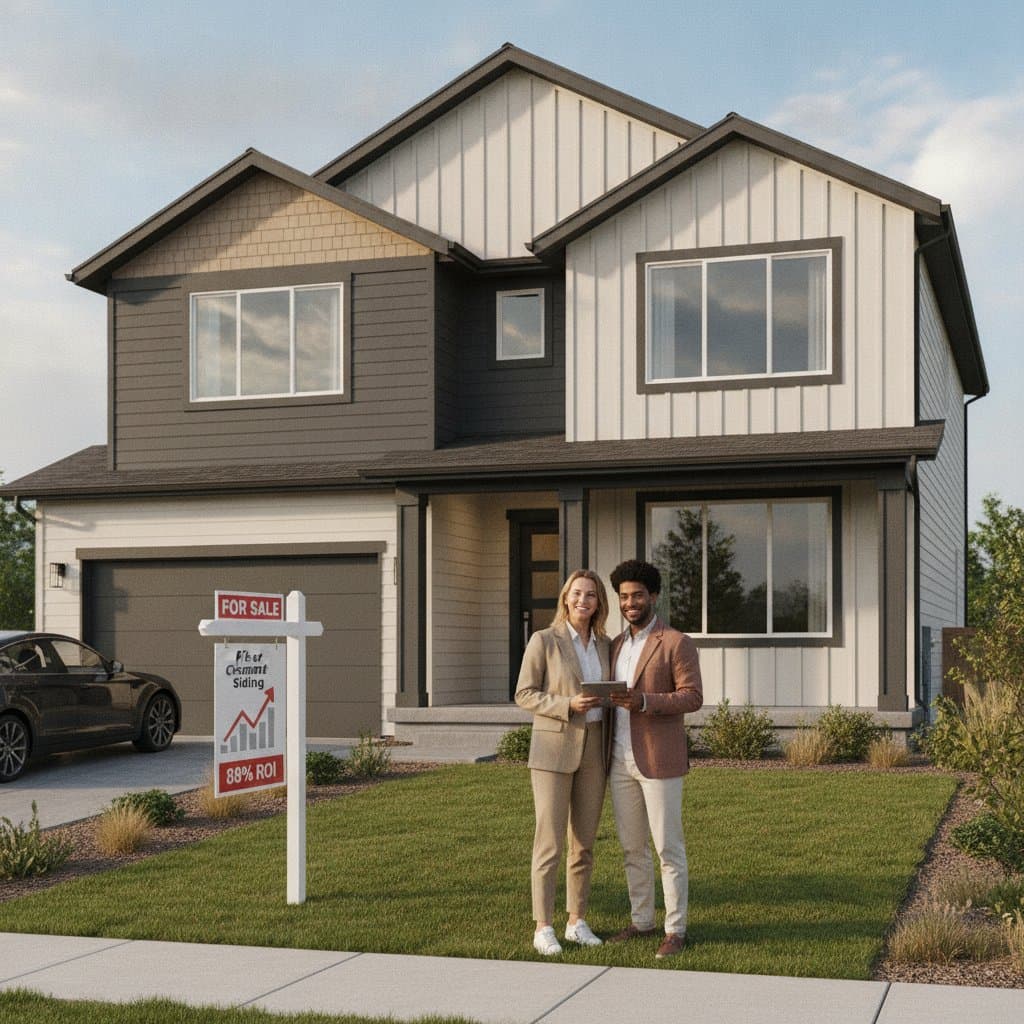
88 Percent ROI for Fiber Cement Siding in 2026
Homeowners planning exterior upgrades often ask which projects return the most value at resale. Fiber cement siding continues to rank near the top for return on investment, estimated at an average of 88 percent. That figure reflects both curb appeal and durability, which combine to make this material one of the most financially sound exterior choices available.
The following sections explain what drives that number, what to expect during installation, and how to maintain value for the long run.
Style and Selection
Core Profiles
Fiber cement comes in lap siding, panel and batten, shingle, and vertical sheet forms.
- Lap boards suit traditional homes and most neighborhoods.
- Panel and batten works on contemporary or farmhouse exteriors.
- Shingles fit cottages and coastal architecture.
Material Composition
Fiber cement is a composite of cement, sand, and cellulose fibers. It resists rot, termites, and most impacts better than wood. It also holds paint longer than vinyl or engineered wood. Weight and cutting dust remain key drawbacks, which means crews must use rated tools and respirators.
Mixing Guidelines
Many designers mix lap siding on main walls with panel or shingle accents in gables. Keep no more than two profiles visible on one elevation to maintain balance. Use trim widths that match the scale of the home and keep color transitions clean at corners.
Trim and Accent Choices
Use metal or fiber cement trim for fire resistance and low maintenance. PVC trim can work on small details but may expand in heat. Always seal cut edges and joints to preserve moisture protection.
Durability and Safety
Weather and Fire Resistance
Fiber cement handles wide temperature swings, high humidity, and wind exposure better than wood or vinyl. It carries a rated fire resistance that many insurers recognize. It will not ignite under direct flame, and it slows heat transfer, which protects framing.
Moisture and Impact Protection
Proper flashing and clearances remain critical. Keep panels at least one inch above decks and six inches above grade. If installed too low, trapped water can wick into boards and void warranties.
Care and Cleaning
Wash once a year with low pressure water and mild detergent. Avoid power washers that exceed 1500 psi, as they can strip finish.
Warranty Coverage
Most manufacturers offer 30 to 50 years of limited coverage on the base material and separate paint warranties of 10 to 15 years. Claims require proof of installation according to instructions and routine maintenance logs.
Project Preparation Steps
- Define goals. Decide whether the focus is resale value, insulation, or reduced painting cycles.
- Shortlist contractors. Choose firms with fiber cement certification and local references.
- Compare bids. Look for clear separation of materials, labor, and disposal.
- Review samples. Inspect color boards in sunlight to confirm tone and sheen.
- Confirm site readiness. Clear shrubs, move furniture, and provide power access.
- Check milestones. Inspect weather barrier, flashing, and fastener spacing before paint or finish.
Maximizing Long Term Performance
Homeowners who choose fiber cement gain both appearance and stability. The 88 percent ROI figure reflects that buyers see it as a premium upgrade with minimal upkeep. When installed correctly and maintained with basic cleaning and paint touch ups, it can perform for decades without major repairs. The key is steady care, thorough installation, and clear communication with contractors.