
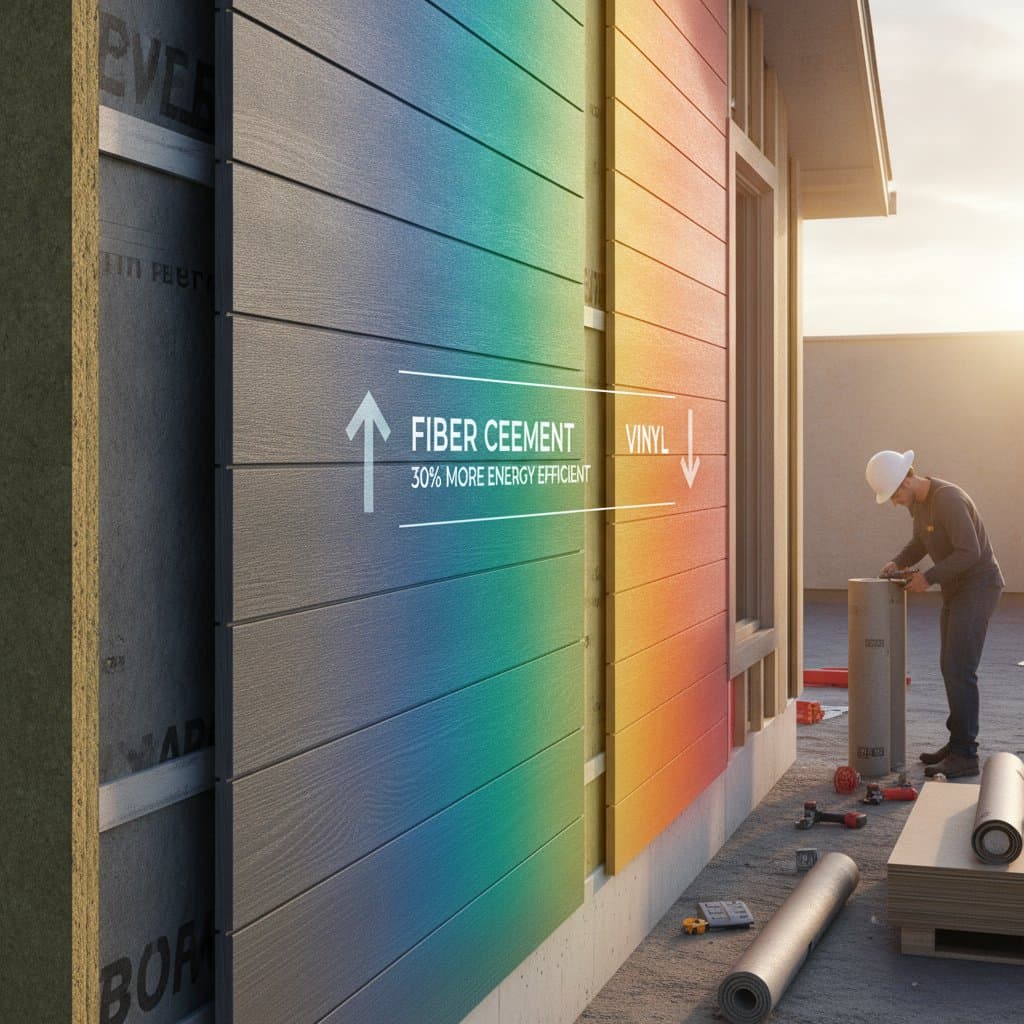
Fiber Cement Siding Delivers Superior Energy Performance Compared to Vinyl
Homeowners comparing siding options often focus on appearance and cost. Thermal performance also affects long term value. Fiber cement siding, when properly installed and sealed, delivers about 30 percent more energy savings than standard vinyl. That efficiency gain reduces heating and cooling costs while improving comfort and resale appeal.
At a Glance Project Box
- Scope: Full siding replacement, including trim and moisture barriers
- Duration: 10 to 14 workdays for an average single family home
- Difficulty: Moderate to high, requires skilled installation crew
- Typical Cost Range: 8 to 15 dollars per square foot installed
Material and Profile Choices
Fiber cement combines cement, sand, and cellulose fibers. It forms a dense, dimensionally stable board. Vinyl consists of polyvinyl chloride sheets that rely on air gaps for insulation. When tested for thermal resistance, fiber cement shows a higher R value per inch once paired with insulated backer or continuous sheathing.
| Material | Pros | Cons | Maintenance |
|---|---|---|---|
| Fiber Cement | High durability, fire resistant, dimensionally stable, realistic texture | Heavier, needs painting, higher labor cost | Repaint every 10 to 15 years |
| Vinyl | Low cost, simple installation, color through material | Can warp under heat, cracks under impact, lower insulation | Wash annually, replace cracked panels |
Moisture and fire resistance stand out as key differences. Fiber cement is noncombustible and resists rot, insects, and humidity. Vinyl softens near heat sources and may trap moisture behind poorly vented panels.
Design guidance suggests using smooth or wood grain fiber cement for main walls. Combine narrow lap profiles or vertical panels for accent areas. Avoid mixing too many textures that can dilute curb appeal.
Actionable takeaway: Choose one dominant profile and one accent zone. Keep color and texture transitions clean to preserve resale value.
Installation Quality and Risk Control
Energy efficiency depends as much on installation quality as on material choice. Fiber cement requires a weather resistive barrier, taped joints, and sealed penetrations to prevent leaks.
Key envelope details include the following steps. Flash all window heads and sills. Maintain 1 to 2 inch ground clearance. Seal butt joints with manufacturer approved caulk. Install starter strips level to prevent water pooling.
Common failure points involve missing flashing, overdriven fasteners, and unsealed trim joints. Each can cause moisture intrusion and reduce insulation performance.
Site and neighbor care matters during the project. Cutting fiber cement produces dust, so crews should use vacuum saws and control debris. Inform adjacent property owners before work begins to avoid disputes.
Actionable takeaway: Review installation checklists with your contractor before the first panel goes up.
Contractor Selection and Bidding
A precise scope keeps bids comparable and prevents cost overruns.
Scope checklist covers these items. Material brand, profile, and thickness. Weather barrier type and flashing materials. Trim and soffit details. Waste disposal and site cleanup. Permit responsibility.
Request at least three written bids with line item pricing. Ask each contractor to describe moisture management steps and confirm manufacturer certification.
Long Term Performance Benefits
Fiber cement siding rewards disciplined installation and steady care with measurable returns. The 30 percent energy savings remain consistent over time. The improved fire resistance, impact stability, and visual depth strengthen resale confidence.