
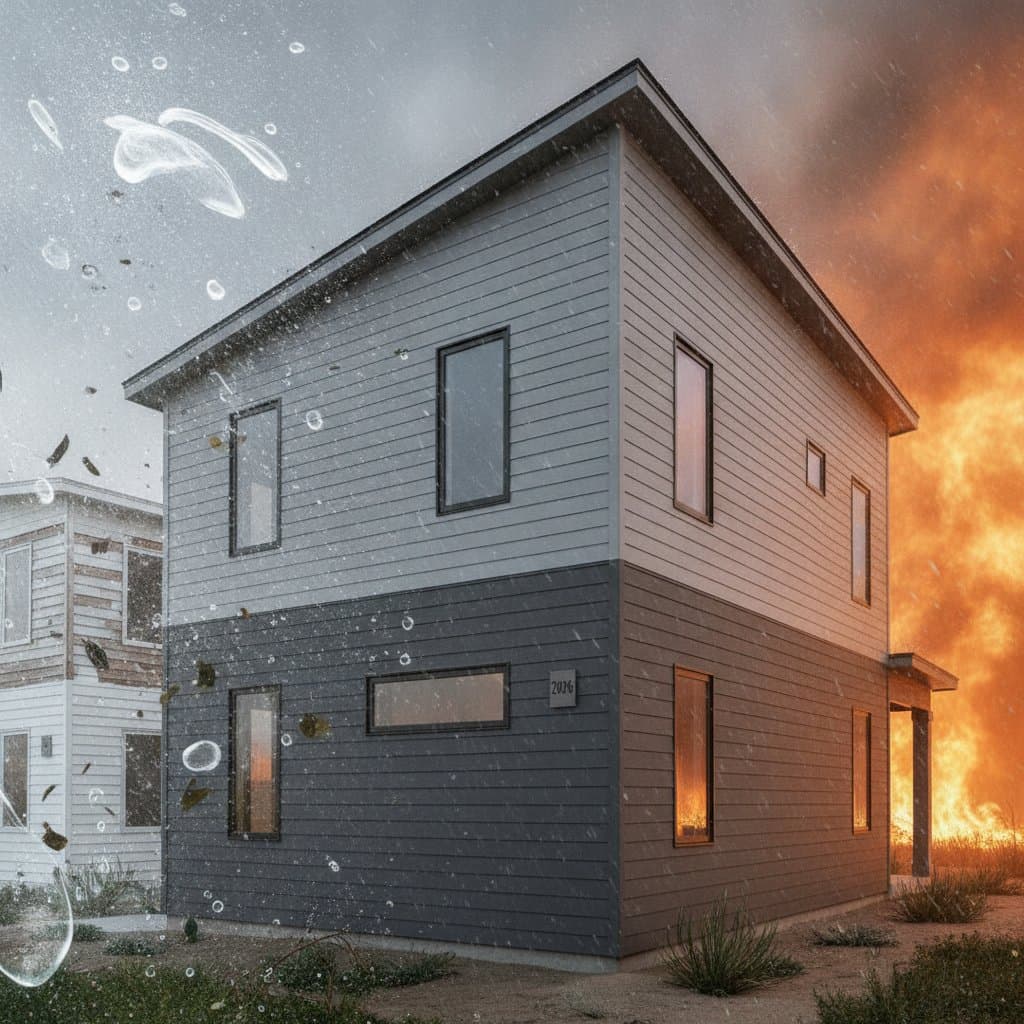
Fiber Cement Beats Vinyl in Harsh Climates
- Compare material composition and weather resistance before selecting siding.
- Review installation requirements and contractor qualifications for the chosen product.
- Calculate long term maintenance and replacement costs alongside initial pricing.
- Verify local building codes for impact and fire ratings in your region.
- Inspect sample panels for finish quality and color retention under UV exposure.
Harsh climates expose siding to repeated wind, rain, and temperature swings that test both materials and installation methods. Homeowners comparing fiber cement to vinyl often focus on price, but the real difference shows up in long term durability, repair frequency, and resale influence. Fiber cement consistently delivers higher resistance to weather extremes and holds its appearance longer.
Material and Profile Choices
Fiber cement consists of Portland cement, sand, and cellulose fibers. The result is a dense, rigid panel that resists warping, cracking, and flame spread. Vinyl consists of polyvinyl chloride, a lightweight plastic that expands and contracts with heat and cold.
| Material | Strengths | Weaknesses |
|---|---|---|
| Fiber Cement | Fire resistant, stable under heat, resists insects and rot | Heavier installation, requires painting or factory finish |
| Vinyl | Lightweight, lower cost, color integrated into material | Prone to cracking in cold, warping in heat, limited repair options |
Fiber cement holds paint up to twice as long as wood, and factory finishes can last 15 years before recoating. Vinyl color is built in, but fading can occur under high UV exposure. In hurricane zones, fiber cement rated for impact resistance can handle debris better than thin vinyl panels that may detach or puncture.
When combining materials, use fiber cement for wind facing elevations and vinyl on protected walls. Keep transitions clean with metal or PVC trim to prevent moisture intrusion.
Choose fiber cement for critical exposures or full wraps where strength and heat stability matter most.
Installation Quality and Risk Control
A strong material still fails if installed poorly. Fiber cement requires precise flashing, joint spacing, and backer wrap to prevent moisture infiltration. Vinyl needs expansion gaps and secure nailing to allow movement without buckling.
Common failure points include missing joint flashing or caulk gaps at penetrations, incorrect nailing pressure that fractures boards, incomplete house wrap coverage near soffits, and poorly sealed trim intersections.
Contractors should stage debris carefully and keep driveways clear for material loading. Neighbors appreciate advance notice of cutting noise and dust. Fiber cement dust contains silica, so crews should cut outdoors with dust collection tools.
Proper detailing and site control protect both structure and neighborhood relations while preventing callbacks.
Contractor Selection and Bidding
A clear written scope prevents disputes. Request bids that break out material costs, trim details, flashing, disposal, and permits.
Scope checklist includes full removal of old siding and nails, new weather barrier and flashing, trim, soffit, and corner boards included, paint or factory finish details specified, and waste removal and cleanup confirmed.
Performance in Daily Use
Homeowners in hurricane, coastal, or high heat regions gain measurable peace of mind from fiber cement siding. It resists swelling, melting, and splitting, and it maintains sharp lines that signal quality from the street. While vinyl may still fit mild climates or tight budgets, fiber cement proves its worth where conditions test every joint and fastener.