
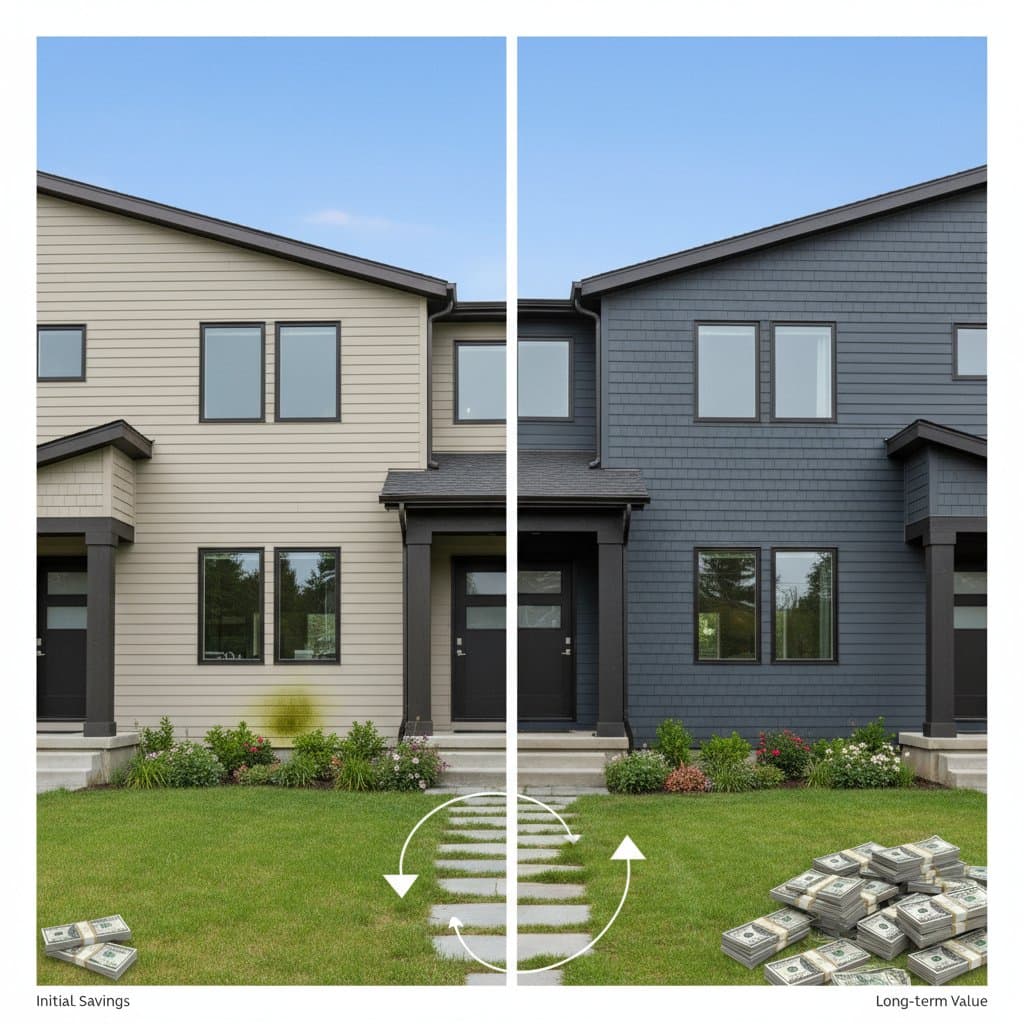
Fiber Cement Versus Vinyl Siding: Determining the 25-Year Cost Leader
Homeowners evaluating fiber cement and vinyl siding frequently focus on one core inquiry: which option proves more economical across the lifespan of a residence? The response extends beyond initial pricing to encompass installation expenses, routine maintenance, repair needs, and influences on resale value. This examination presents precise figures, material performance distinctions, and aesthetic considerations to illuminate the path to sustained financial benefits.
Evaluating Costs, Returns, and Influential Elements
Initial expenses per square foot provide a starting point, yet comprehensive ownership costs reveal the fuller picture. These totals incorporate material procurement, labor charges, periodic maintenance, and potential resale recoveries.
Standard Project Cost Estimates
-
Compact residence (1,500 square feet):
-
Vinyl: $9,000 to $16,000
-
Fiber cement: $13,500 to $22,500
-
Medium residence (2,000 square feet):
-
Vinyl: $12,000 to $22,000
-
Fiber cement: $18,000 to $30,000
-
Expansive residence (3,000 square feet):
-
Vinyl: $18,000 to $33,000
-
Fiber cement: $27,000 to $45,000
Primary Cost Influences
- Removal and disposal of existing siding contribute $1 to $3 per square foot.
- Trim and corner installations demand additional labor hours.
- Multi-story structures or scaffolding requirements elevate safety and access expenditures.
- Intricate wall configurations or dormers necessitate extra cutting and material waste.
- Variations in regional labor rates can alter overall figures by as much as 25 percent.
Regarding resale, data from national remodeling analyses indicate that fiber cement recoups approximately 65 to 75 percent of its investment upon sale, compared to 55 to 65 percent for vinyl. This disparity arises from perceptions of superior quality, authentic textures, and established durability.
25-Year Total Ownership Cost Analysis
To quantify long-term savings, consider a typical 2,000-square-foot home. Vinyl siding installation averages $17,000, with $5,000 in maintenance over 25 years and a full replacement at year 25 costing another $17,000 (adjusted for inflation). Resale recovery stands at 60 percent, or $10,200, yielding a net cost of $28,800.
Fiber cement installation averages $24,000, with lower maintenance at $3,000 over the period and no replacement needed within 25 years due to its 50-year lifespan. Resale recovery reaches 70 percent, or $16,800, resulting in a net cost of $10,200. The fiber cement option thus saves approximately $8,000 over 25 years, offsetting the higher upfront investment through durability and value retention.
Practical Insight: Select vinyl for minimal initial outlay. Opt for fiber cement when prioritizing extended lifespan, reduced replacements, and enhanced resale potential.
Enhancing Curb Appeal Through Design Choices
Siding forms the predominant visual element of a home, where proportions and contrasts hold equal importance to material selection.
Balancing Mass and Scale
- Employ wider board exposures on elevated walls to diminish perceived height.
- Apply narrower boards on compact homes to introduce texture without overwhelming the facade.
- Maintain uniform trim widths around windows to stabilize the overall composition.
Selecting Colors and Contrasts
Pair mid-tone primary colors with lighter trim accents when installing fiber cement. Its painted finish accommodates richer shades that resist fading over time. Vinyl's color integration proves sensitive to heat, favoring lighter tones for prolonged vibrancy.
Accentuating Entries and Illumination
A prominent front entrance elevates apparent worth. Position lighting elements flush with the siding surface, select balanced color temperatures, and ensure house numbers remain visible from the roadway. Precise alignments and even spacing enhance photographic appeal for real estate presentations.
Practical Insight: Integrate siding colors and trim elements cohesively. Prospective buyers first register proportions and shadow patterns, often overlooking the underlying material composition.
Ensuring Durability Through Maintenance Practices
Regular upkeep dictates whether siding achieves its maximum service life or deteriorates prematurely.
Cleaning and Surface Preservation
- Clean vinyl annually using mild soap and a soft brush.
- Examine fiber cement paint every few seasons for signs of chalking or peeling.
- Steer clear of pressure washers, which may drive moisture behind panels.
Recommended Inspection Schedule
| Interval | Recommended Task |
|---|---|
| Every 12 months | Examine caulked joints and apply touch-ups if separation occurs |
| Every 24 months | Rinse surfaces and check for mold or insect activity |
| Every 60 months | Assess paint integrity and address any chips immediately |
Managing Warranty Obligations
Manufacturer warranties typically address defects in production, excluding issues from improper installation or inadequate care. Retain documentation of all cleaning and repainting activities. Such records substantiate adherence during any claims process.
Practical Insight: Dedicate a few hours annually to maintenance to extend service life by decades. Prompt touch-ups on paint avert extensive moisture-related harm.
Realizing Lasting Value From Your Siding Decision
The choice between fiber cement and vinyl shapes not only financial outcomes but also daily living experiences. Fiber cement withstands harsh weather, minimizes repair interruptions, and elevates neighborhood standing through refined aesthetics. Vinyl delivers straightforward installation and effortless care, suiting budgets focused on present needs. By weighing these elements against personal priorities, homeowners secure a siding solution that aligns with both practical demands and future aspirations, ultimately fortifying the home's role as a sound investment.