
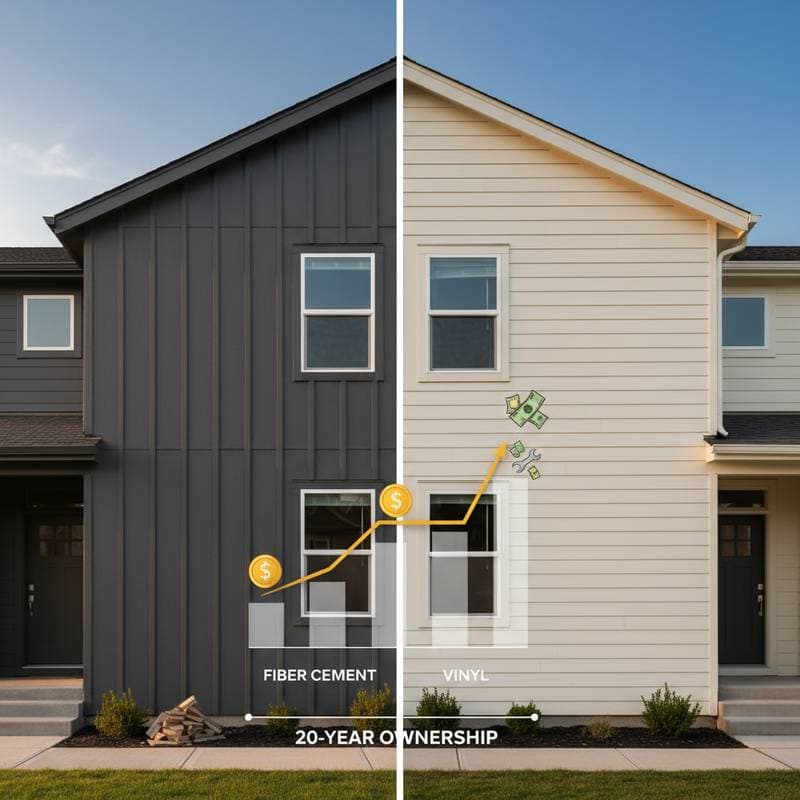
Selecting the Right Siding: Fiber Cement Versus Vinyl Over 20 Years
Homeowners face a significant decision when choosing exterior siding, as it influences aesthetics, financial commitments, long-term expenses, resale potential, and upkeep requirements. Fiber cement and vinyl dominate the market due to their durability and stylistic versatility. However, their overall ownership costs diverge considerably across two decades. This examination details performance in terms of expenses, maintenance, and value retention.
Initial Expenses, Return on Investment, and Influencing Elements
The price of siding extends beyond raw materials to encompass labor, finishing elements, site preparation, and debris management. A thorough comparison of fiber cement and vinyl requires evaluation of both starting investments and cumulative expenses over time.
Project Cost Estimates
-
For a 1,500-square-foot home:
-
Vinyl: $9,000 to $13,000
-
Fiber cement: $15,000 to $20,000
-
For a 2,000-square-foot home:
-
Vinyl: $12,000 to $18,000
-
Fiber cement: $18,000 to $26,000
-
For a 3,000-square-foot home:
-
Vinyl: $18,000 to $27,000
-
Fiber cement: $27,000 to $40,000
Elements That Drive Costs
- Removing existing siding contributes $1 to $2 per square foot.
- Homes with multiple levels demand additional labor for scaffolding and equipment.
- Intricate trim and corner work increase material quantities and precision cutting time.
- Limited site access impacts delivery logistics and waste disposal charges.
- Variations in local labor rates can alter the total by up to 20 percent.
Return on Investment and Market Perceptions
Research from the industry indicates that fiber cement siding recoups 65 to 75 percent of its cost upon resale, compared to 55 to 65 percent for vinyl. Prospective buyers view fiber cement as a high-end enhancement, appreciating its substantial texture and wood-like appearance. Vinyl attracts those prioritizing affordability and ease of care.
Key Insight: Although fiber cement involves a larger upfront expense, it frequently enhances resale attractiveness. Vinyl serves as the economical alternative with quicker recovery via reduced setup costs.
Enhancing Curb Appeal Through Design
Curb appeal shapes initial perceptions and bolsters resale prospects. Proper scale and color application allow both materials to achieve striking results.
Structural Balance and Scale
Maintain uniform horizontal lines across all sides of the home. Position window headers and trim alignments to highlight architectural features. The precise edges of fiber cement complement formal styles, whereas vinyl's adaptability fits contemporary or understated exteriors.
Color Selection and Subtle Tones
- Fiber Cement: Typically available factory-finished or primed for on-site painting. Richer shades endure effectively but might require refreshing after 10 to 15 years.
- Vinyl: Features embedded color, leading to gradual fading. Intense shades absorb solar heat, potentially causing distortion on exposed surfaces.
Emphasizing the Entrance and Illumination
A prominent entryway elevates the home's perceived worth. Apply greater contrast between siding and accents around doorways, incorporate contemporary numbering, and position lighting symmetrically. Streamlined profiles and clear pathways enhance listing photographs.
Key Insight: Strategic contrast and uniform trim elevate the effectiveness of either material. Thoughtful design amplifies the return on any siding expenditure.
Upkeep Requirements and Durability
Ongoing expenses hinge on consistent maintenance practices. Each material endures for many years, yet their preservation methods vary.
Routine Cleaning Procedures
- Fiber Cement: Perform an annual wash using gentle soap and a soft-bristle brush. Steer clear of high-pressure sprays near seams.
- Vinyl: Hose down the surface biannually or use low-pressure water. Apply a vinegar mixture to address mold growth.
Regular Assessments and Preventive Measures
Examine sealant lines, surface coatings, and attachments biennially for fiber cement. For vinyl, review panel connections and edging following severe weather. Swift interventions avert water penetration and material displacement.
Upkeep Schedule
| Task | Frequency | Objective |
|---|---|---|
| Exterior washing | 1-2 times annually | Avoid mold buildup and discoloration |
| Joint and trim review | Every 2 years | Identify separations or distortions early |
| Fiber cement repainting | 10-15 years | Preserve coating and safeguard integrity |
| Panel replacement | As required | Sustain visual quality |
| Gutter clearing | Twice yearly | Mitigate water runoff damage |
Warranty Obligations
Producers stipulate correct application and care for coverage eligibility. Retain documentation, images, and assessment records. Vinyl protections generally address color loss and fractures, excluding installation fees. Fiber cement guarantees focus on core strength, not surface refinishing.
Key Insight: Consistent washing and evaluations sustain performance for both options. Oversight leads to escalating repairs that undermine initial economies.
Experiencing the Selection Over Time
Across 20 years, the economic narrative of siding emerges from preservation efforts and aesthetic preservation, surpassing mere starting prices.
Prospects for Fiber Cement:
Anticipate one refinishing within the period and periodic sealant applications. Its firm composition withstands collisions and maintains form under thermal stress. Long-term residents value its authentic resonance and timber resemblance. The elevated setup expense balances through gradual wear and superior market recovery.
Prospects for Vinyl:
Care stays minimal, yet aesthetic decline may manifest earlier. Color diminution, secure point fractures, or thermal distortion could necessitate targeted substitutions. Nonetheless, vinyl's economical unit pricing moderates total outlays for those with brief tenures or investment properties.
Comparative Overview
| Aspect | Fiber Cement | Vinyl |
|---|---|---|
| Starting Expense | Elevated | Reduced |
| Expected Duration | 30 to 40 years | 20 to 30 years |
| 20-Year Upkeep Cost | Moderate | Minimal |
| Resale Influence | Substantial | Average |
| Aesthetic Retention | Gradual, renewable | Quicker, inherent |
| Fire and Thermal Durability | Superior | Adequate |
Addressing Frequent Concerns
Question 1: When does replacement supersede repair?
If over 20 percent of the surface exhibits fractures, discoloration, or bends, comprehensive renewal typically proves more cost-effective than isolated corrections.
Question 2: What leads to distortion or elevation in siding?
Inadequate attachment serves as the primary cause. Components require minimal play for expansion accommodation. Overly secure fasteners restrict motion, resulting in undulations.
Question 3: Is layering new siding over existing feasible?
This approach works only on level, moisture-free, stable bases. Most fiber cement providers mandate complete stripping to uphold guarantees.
Question 4: Do insulated vinyl options justify added expense?
They provide slight efficiency gains and rigidity, increasing costs by 20 to 30 percent. Recovery varies with regional climate demands.
Question 5: How frequently to check seals and flashing?
Biennially, or post-significant weather events. Timely identification averts substrate decay and internal harm.
Sustaining Protection for Decades
Fiber cement and vinyl both shield a residence effectively when properly applied and tended. The decision rests on weighing enduring style and market strength against economical entry and basic care. Fiber cement delivers upscale stature and resilience, whereas vinyl ensures accessibility and straightforwardness. Alignment with specific objectives and diligent preservation ensures optimal results.