
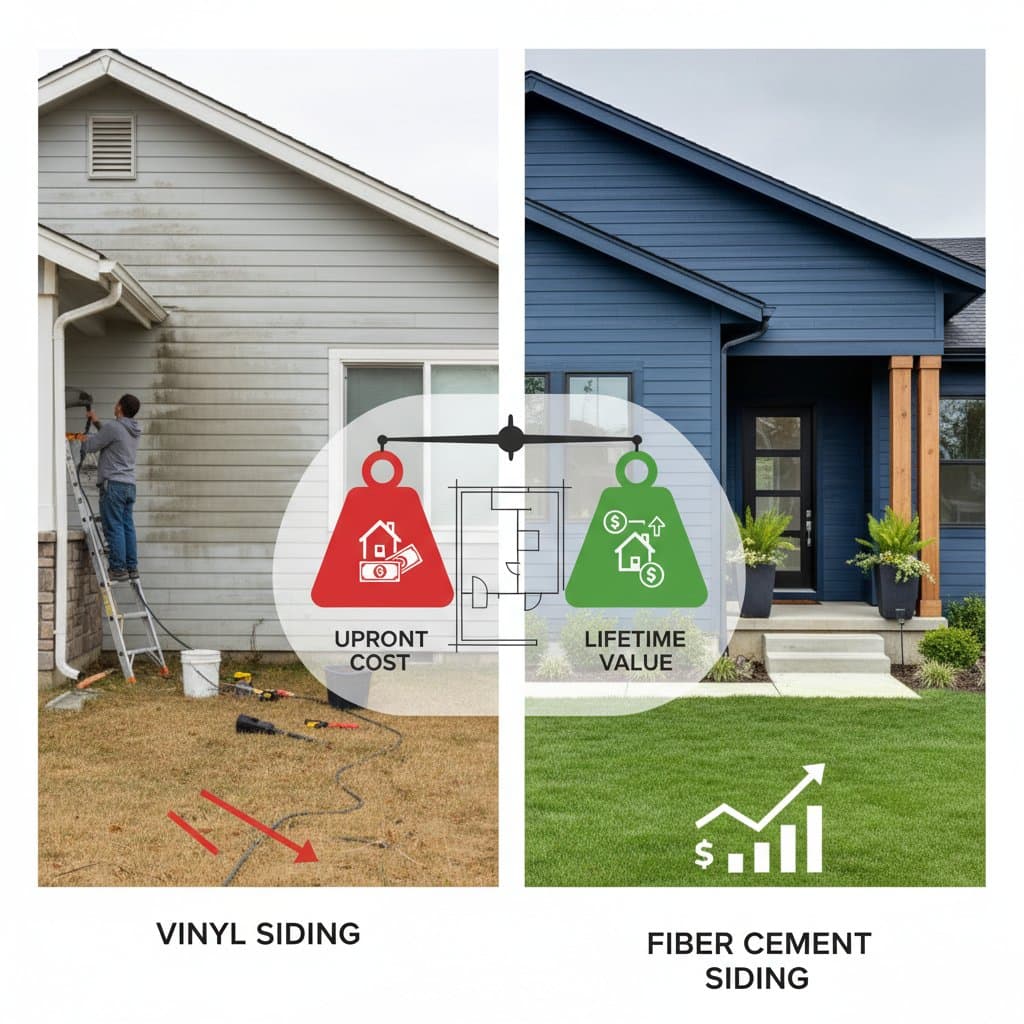
Fiber Cement vs Vinyl: Determining the 15-Year Cost Leader
Homeowners frequently evaluate fiber cement and vinyl siding as enduring exterior cladding options. Each material delivers on promises of durability and visual enhancement, yet they diverge significantly in expenses, care requirements, and long-term performance. This analysis dissects installation costs, maintenance routines, and effects on property value to identify the superior choice over 15 years. Readers gain insights into upfront investments alongside strategies that minimize total ownership costs and maximize financial returns.
Evaluating Costs, Returns, and Key Influences
Replacing siding ranks as one of the most noticeable exterior upgrades, influencing both property market value and cumulative expenses from installation through upkeep. Vinyl typically edges out in initial affordability, whereas fiber cement demonstrates advantages in endurance and buyer appeal at resale.
Project Cost Ranges by Scale
Consider these estimates for typical installations, which include labor and materials but exclude removal of old siding:
- Small-scale project (1,200 square feet): Vinyl ranges from $7,200 to $12,000; fiber cement from $10,800 to $18,000.
- Medium-scale project (2,000 square feet): Vinyl ranges from $12,000 to $20,000; fiber cement from $18,000 to $30,000.
- Large-scale project (3,000 square feet): Vinyl ranges from $18,000 to $30,000; fiber cement from $27,000 to $45,000.
Factors Driving Expenses
Several elements can elevate total project costs beyond base estimates:
- Siding Removal: Dismantling and disposing of existing materials adds $1,000 to $3,000, varying by site accessibility and waste volume.
- Architectural Complexity: Features such as gables, dormers, or elaborate trim extend labor by 15 to 25 percent.
- Building Height: Work on second stories demands additional equipment for lifts and safety measures, increasing expenses.
- Trim Details: Custom corner boards and window casings contribute an extra $1,500 to $3,000.
- Site Constraints: Narrow property boundaries or dense landscaping prolong installation, thereby raising labor charges.
Projected Returns on Investment
Data from industry sources indicate that vinyl siding recovers approximately 65 to 70 percent of its cost upon resale. Fiber cement, by contrast, recoups 75 to 80 percent, thanks to its reputation for superior quality and resilience. During a 15-year period, vinyl might necessitate one complete repainting or panel replacement, whereas fiber cement generally requires only targeted repairs.
Key Insight: Although vinyl provides an initial savings advantage, fiber cement preserves greater equity and incurs lower annualized maintenance after the first year.
Enhancing Curb Appeal Through Thoughtful Design
The aesthetic execution of siding influences first impressions from the curb, signaling the home's overall condition to potential buyers. Effective designs emphasize balanced elements, precise detailing, and unified textures to foster reliability and harmony.
Principles of Massing, Contrast, and Scale
- Select horizontal lap or board-and-batten profiles to accentuate the structure's form.
- Maintain uniform widths for corner boards and window surrounds across the facade.
- Limit material combinations to no more than three per visible side to avoid visual clutter.
Selecting Colors for Depth and Harmony
Vinyl benefits from light neutral shades that mask seams effectively, though darker tones may fade prematurely. Fiber cement accommodates richer colors due to its stable surface, allowing paints to adhere durably. Always evaluate color samples in natural light conditions, including shaded areas; warm tones such as taupe or beige convey warmth, while cool options like gray or blue project a modern edge in photographs.
Focusing on Entryways and Illumination
Define the front entrance with measured contrasts between siding and adjacent trim, incorporating downlights to highlight surface textures. Position house numbers prominently for visibility. Develop a lighting scheme that evenly illuminates entry and garage areas, enhancing evening views and overall buyer appeal.
Key Insight: Strong curb appeal arises from deliberate proportions and simplicity. Consistent application of colors and trims across elevations ensures both materials achieve a cohesive, professional appearance.
Strategies for Maintenance and Extended Durability
Proper care extends the lifespan of either siding type to decades. Distinctions emerge in the frequency of cleaning, assessments, and surface treatments required to preserve integrity.
Routine Cleaning Protocols
- For Vinyl: Perform an annual wash using mild detergent and a soft-bristled brush; refrain from pressure washers exceeding 1,200 psi to prevent damage.
- For Fiber Cement: Flush with water each spring and address paint or caulk wear promptly; steer clear of abrasive cleaners that erode protective finishes.
Scheduled Inspections
Examine the siding biannually for signs of cracks, unsecured panels, or deteriorated caulk. Ensure fiber cement seams stay watertight, and verify that vinyl components shift without creating openings or distortions.
Managing Finishes and Warranties
Many fiber cement products feature factory-applied coatings backed by 15-year warranties, surpassing vinyl's reliance on inherent color stability. Document all maintenance activities, as manufacturers often demand evidence to honor claims.
Comprehensive Maintenance Schedule
| Task | Frequency | Objective |
|---|---|---|
| Wash siding | Annually | Eliminate dirt and algal growth |
| Inspect joints/caulk | Biannually | Avoid moisture infiltration |
| Repaint fiber cement | Every 12-15 years | Sustain protection against UV rays |
| Replace vinyl panels | As damage occurs | Safeguard underlying layers |
| Verify fasteners/trim | Annually | Prevent shifting or separations |
Key Insight: Vinyl maintenance averages $0.10 per square foot yearly, compared to $0.20 for fiber cement. This modest increase yields substantial benefits in endurance and reduced need for major interventions.
Making the Choice That Endures
Across 15 years, vinyl delivers economical entry but accumulates expenses through periodic repairs and partial replacements. Fiber cement involves higher upfront outlay yet matures elegantly, retains finishes effectively, and elevates property desirability.
Individuals anticipating a sale within five to seven years may find vinyl sufficient for cost-effective coverage. Longer-term residents benefit from fiber cement's robustness and favorable market perception, positioning it as the definitive 15-year value leader.
Practical Recommendations for Optimal Results
- Maintain detailed logs of paints, caulks, and cleaning agents to support warranty validations.
- Capture photographs of each facade pre- and post-installation to record waterproofing and insulation placements.
- Set annual spring reminders for thorough siding and trim evaluations.
- Initiate repainting at the first signs of wear rather than after extensive deterioration.
- Consult local climate data when planning; in humid regions, prioritize enhanced sealing for both materials.
Siding functions as more than a surface layer; it forms a comprehensive shield for the home. Selecting the option that withstands time with minimal intervention generates enduring financial and aesthetic advantages.