
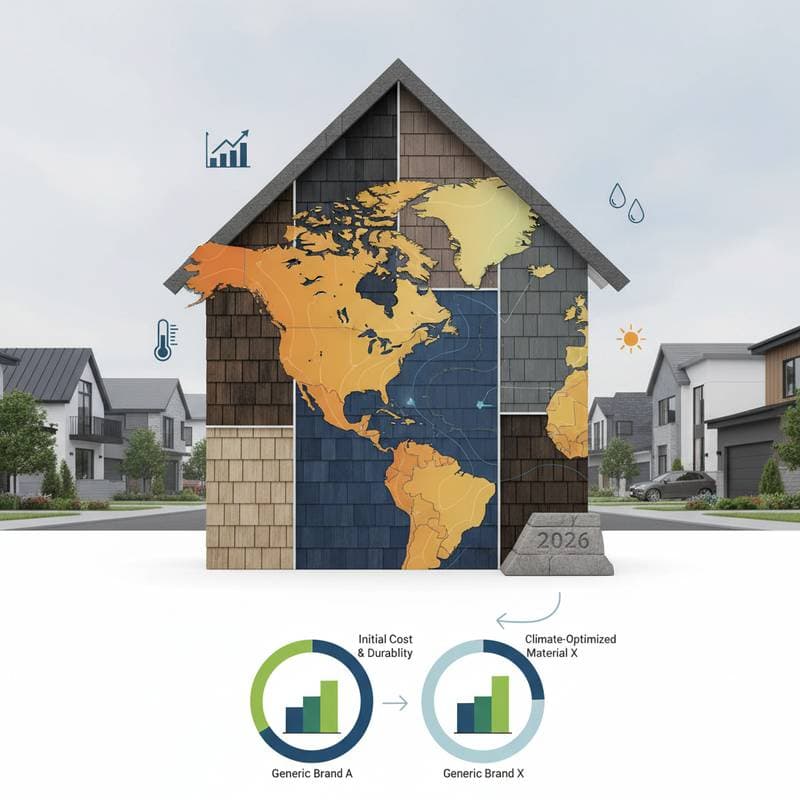
How Climate Zones Shape Siding Returns
Homeowners often compare siding products by price or appearance alone. Regional climate can shift the real return on investment more than brand or color. Temperature swings, moisture exposure, and sunlight intensity all change how materials age and how much upkeep they demand. Understanding these climate zone differences is the first step to predicting long-term value and resale performance.
Cost, ROI, and Impact Factors
Siding ROI depends on three measures. Market value reflects what buyers will pay. Perceived value covers how the home looks and feels. Total cost of ownership includes cleaning, repainting, or repair. Climate affects all three areas.
In humid coastal zones, fiber cement and engineered wood often outperform vinyl. These materials resist swelling and cracking. In dry or high UV regions, color fade and brittleness can cut life spans by as much as 25 percent compared with cooler climates. Cold zones reward insulated vinyl or composite panels. Reduced heat loss can offset 5 to 10 percent of annual energy costs.
Typical cost ranges by scale include the following.
- Small project of 1,000 square feet: 10,000 to 16,000 total.
- Mid project of 1,800 square feet: 17,000 to 30,000 total.
- Large project of 2,500 square feet or more: 25,000 to 45,000 total.
Cost drivers include tear off labor, home height, trim scope, and site access. Removing old siding adds 1 to 3 dollars per square foot. Two story homes require scaffolding and longer setup time. More corners, window wraps, or decorative edges raise finishing labor hours. Tight lots or steep grades limit equipment and slow production.
Match siding type to expected regional stress instead of focusing only on upfront cost. An increase of 5,000 for the right product can prevent 15,000 in early repainting or repair.
Design for Curb Appeal
Climate influences not just durability but also how a home reads from the street. Bright sun can flatten color depth. Overcast conditions emphasize shadows and contrast.
Use consistent horizontal lines between stories. Break large walls with trim bands or vertical accents that suit the architecture. Warm undertones read better in northern light. Cooler grays and taupes hold up visually in strong southern sun. Neutral mid tones fade less noticeably than deep colors.
Weather rated fixtures, clear house numbers, and balanced trim at the entry make any siding choice feel more intentional. Choose mid range tones with enough contrast at corners and around openings. This keeps curb appeal visible even under regional weather extremes.
Maintenance and Longevity
Siding longevity depends on regional exposure and upkeep discipline. A product rated for 40 years may last half that under poor maintenance or wrong climate.
Follow this maintenance checklist.
- Spring: Wash siding with mild detergent and soft brush. Check for mold or chalking.
- Mid season: Inspect caulking and repaint exposed trim ends.
- Fall: Clear gutters and ensure downspouts drain away from foundations.
- Every 3 years: Evaluate color uniformity and reseal joints where caulk has shrunk.
Use low pressure washers below 1,500 psi. Avoid wire brushes or harsh solvents that break finish coatings. Most manufacturers require documented maintenance to keep coverage valid. Keep dated photos and receipts for any cleaning or refinishing work.
Treat maintenance as part of ownership cost. Consistent cleaning and caulking can extend siding life by 5 to 10 years in most climates.
Selecting Materials for Your Region
Once installed, siding should perform quietly for decades if matched correctly to the local climate. In dry regions, repainting or resealing will dominate long term costs. In humid or coastal zones, attention to ventilation and trim detail prevents rot and swelling.
ROI is not just resale price. It also includes fewer repairs, lower utilities, and less time spent arranging maintenance. A siding choice that fits your region will hold its color, resist moisture, and present a stable, clean surface for years.