
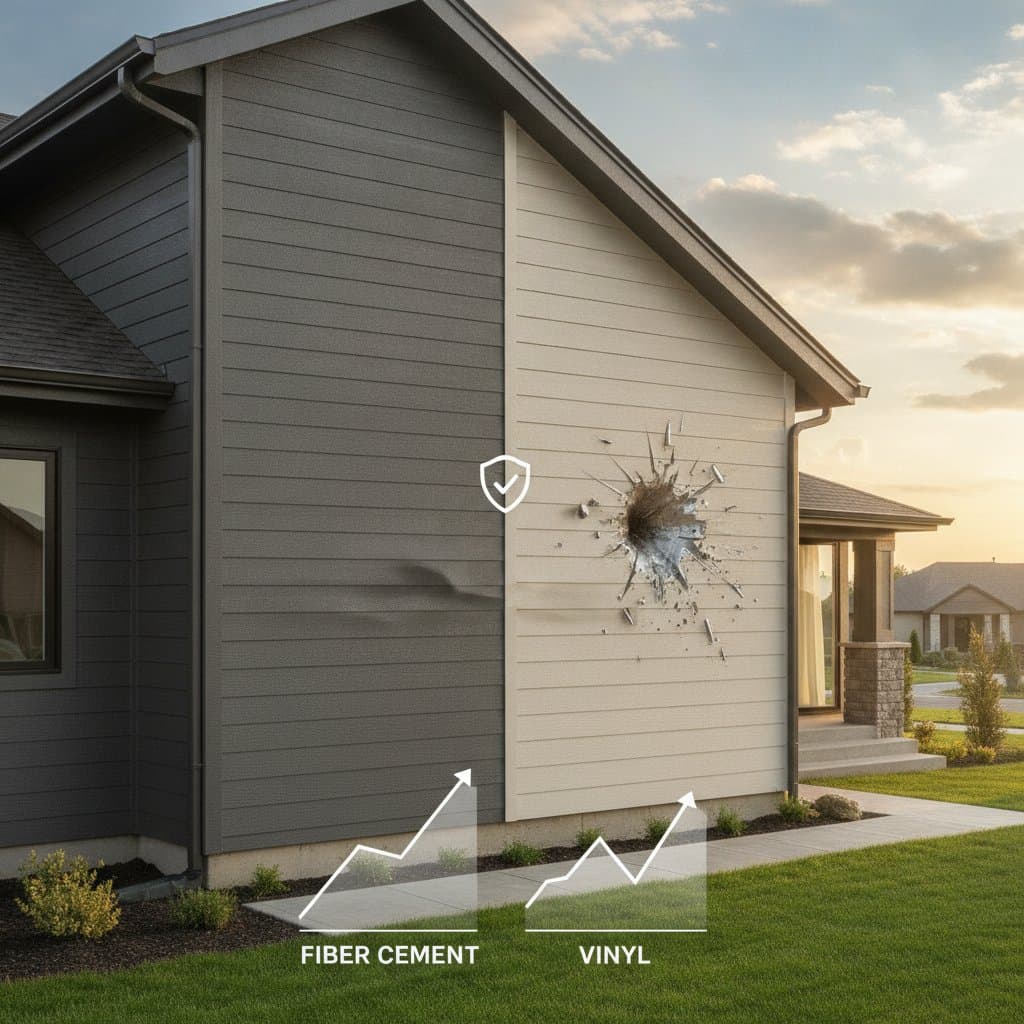
Fiber Cement Siding Outperforms Vinyl in Hail-Prone Areas
Hail storms create both immediate damage and long-term insurance challenges for homeowners. Vinyl siding presents an affordable upfront option with fast installation, yet its performance under repeated hail exposure remains limited. Fiber cement siding requires a larger initial investment, but insurance loss data and impact testing consistently show stronger results in hail-prone regions.
This comparison examines the complete ownership experience. Material strength matters, yet installation quality, wall assembly details, local building codes, deductible structures, and warranty terms all influence long-term outcomes.
Performance Comparison at a Glance
| Factor | Fiber Cement | Vinyl |
|---|---|---|
| Hail Resistance | Dense surface resists small to medium hail impacts | Prone to cracking, punctures, and panel detachment |
| Installed Cost Range | $8 to $15 per square foot | $4 to $9 per square foot |
| Project Timeline | One to three weeks | Several days to two weeks |
| Maintenance Needs | Periodic repainting and joint inspection | Regular cleaning and occasional panel replacement |
| Ideal Applications | Hail zones, high-wind areas, and fire-resistant requirements | Budget-conscious projects in moderate climates |
These cost ranges assume standard wall access, basic trim work, and no significant sheathing repairs. Two-story structures, complex architectural details, existing siding removal, scaffolding requirements, and extensive flashing work can increase either estimate.
Insurance Data Patterns in Hail Regions
Insurance claim records reveal consistent patterns across large property portfolios. Softer or more brittle cladding materials generate higher visible damage rates in hail zones. Vinyl panels frequently crack, split, dent, or detach when struck by larger hailstones. Damage often concentrates at corners, around window openings, and near exposed roof edges.
Fiber cement combines cement, cellulose fibers, and reinforcing materials to create rigid, dense boards. This composition provides better resistance to routine hail impacts than standard vinyl products. However, severe hail events can still chip board edges, damage trim pieces, or affect painted finishes.
Insurance carriers establish their own underwriting criteria. Some companies offer premium credits for impact-rated products, while others require specific documentation before granting any benefit. Homeowners should request exact product approvals, impact classifications, and credit requirements before expecting premium reductions. Lower claim frequency does not automatically translate to reduced insurance costs.
Material Characteristics Under Hail Exposure
Fiber Cement Performance
Fiber cement withstands heat, wind, and insect pressure when installed with proper fasteners and adequate clearances. Its density provides superior resistance to small and medium hail compared to basic vinyl options. Potential failure points include cut edges, improper fastening locations, unsealed joints, and brittle trim pieces in exposed positions.
The material weight requires appropriate lifting techniques and dust management during cutting operations. Workers must employ approved dust collection systems or wet cutting methods, along with protective equipment and site safety controls.
Vinyl Performance Characteristics
Vinyl siding offers lightweight construction, flexibility, and straightforward sectional replacement. The overlapping profile design promotes water shedding when installers maintain proper drainage paths. Hail exposure remains the primary concern in vulnerable locations. A panel may survive one storm but fail during subsequent events after ultraviolet exposure or cold temperatures reduce material flexibility.
Vinyl expands and contracts with temperature fluctuations. Installers must provide specified end clearances and fasten panels loosely enough to accommodate movement. Overdriven fasteners create buckling, distortion, and premature failure. Thicker or impact-rated vinyl products may offer improved performance, though each requires product-specific verification.
Cost Factors and Budget Management
Several conditions drive the largest price variations:
- Existing siding removal and disposal. Hidden rot, insect damage, or failed housewrap beneath existing siding increases disposal costs, especially with multiple layers.
- Structural wall repairs. Damaged sheathing, framing issues, and compromised window openings require correction before new cladding installation.
- Trim and detail work. Fiber cement trim, window bands, corner boards, and frieze boards add substantial material and labor expenses.
- Site access challenges. Tall walls, steep grades, restricted side yards, and limited staging areas increase labor requirements.
- Architectural complexity. Gables, towers, curved walls, and numerous penetrations demand additional cuts and flashing work.
- Finish specifications. Factory-finished boards cost more than field priming and painting, though they reduce onsite labor time.
Request bids with identical scope definitions. Each proposal should specify product thickness, trim types, flashing requirements, housewrap specifications, removal procedures, repair work, cleanup standards, and paint coverage details. Maintain a 10 to 15 percent contingency for concealed damage discovery. Avoid vague allowances for wall repairs without established unit pricing or approval processes.
Installation Practices That Reduce Hail and Moisture Risks
Hail resistance begins with proper wall assembly. Contractors should inspect existing sheathing, install drainage planes or approved weather barriers, and integrate flashing around windows, doors, roof intersections, and utility penetrations. Water requires a planned exit path from the wall system.
Fiber cement installation demands manufacturer-specified fasteners, spacing requirements, clearances, and joint treatments. Butt joints may need additional flashing or approved sealants. Maintain proper distances from roofing materials, decks, soil, and concrete surfaces. Unsealed cut edges absorb moisture and cause swelling or coating failures.
Vinyl requires level, sound substrates and unobstructed drainage paths. Avoid caulking panel bottoms or blocking designed weep routes. Verify that starter strips, corner posts, and window channels remain straight and secure after installation completion.
Request small mockups before full production begins. Confirm exposure conditions, trim proportions, joint layouts, color selections, and flashing details. Document concealed work with photographs before covering.
Seasonal Maintenance Requirements
Quarterly Inspections
- Examine walls after hail events and strong wind storms
- Check for cracks, punctures, loose panels, coating damage, and open joints
- Clear debris from roof edges and redirect sprinklers away from siding surfaces
- Inspect caulking around windows, doors, corners, and penetrations
Regular Cleaning Procedures
- Clean surfaces with garden hoses and soft brushes
- Apply mild detergent solutions when product instructions permit
- Avoid pressure washing, abrasive materials, solvents, and unapproved chemical mixtures
- Confirm coating requirements before painting fiber cement surfaces
- Replace damaged vinyl panels with matching profiles and colors when possible
Storm inspections should encompass gutters, roof coverings, flashing systems, and wall openings. Hail events can damage multiple building systems simultaneously.
Common Questions About Hail Performance
Does fiber cement eliminate hail damage entirely?
No siding material prevents all hail damage. Fiber cement typically resists routine impacts better than standard vinyl, though large hailstones can chip boards, break trim pieces, and damage finishes.
When does vinyl remain practical in hail zones?
Vinyl may suit budget-limited projects in areas with infrequent or small hail. Impact-rated vinyl products with proper documentation can provide acceptable performance when paired with appropriate insurance coverage and maintenance schedules.
Can siding choices alone reduce insurance premiums?
Siding selection represents one factor among many in insurance calculations. Premium credits require specific product approvals, documentation, and carrier acceptance. Homeowners should verify exact requirements with their insurance providers rather than assuming automatic discounts.
Should homeowners repair or replace damaged siding sections?
Repair decisions depend on damage extent, material age, color matching possibilities, and warranty coverage. Localized damage may warrant targeted repairs, while widespread impact often justifies complete replacement for consistent appearance and performance.
Protecting Your Investment Long-Term
Successful siding performance depends on matching material selection to local climate conditions, ensuring proper installation practices, and maintaining consistent inspection schedules. Homeowners who understand these interconnected factors can make informed decisions that balance initial costs against long-term durability and insurance considerations.