
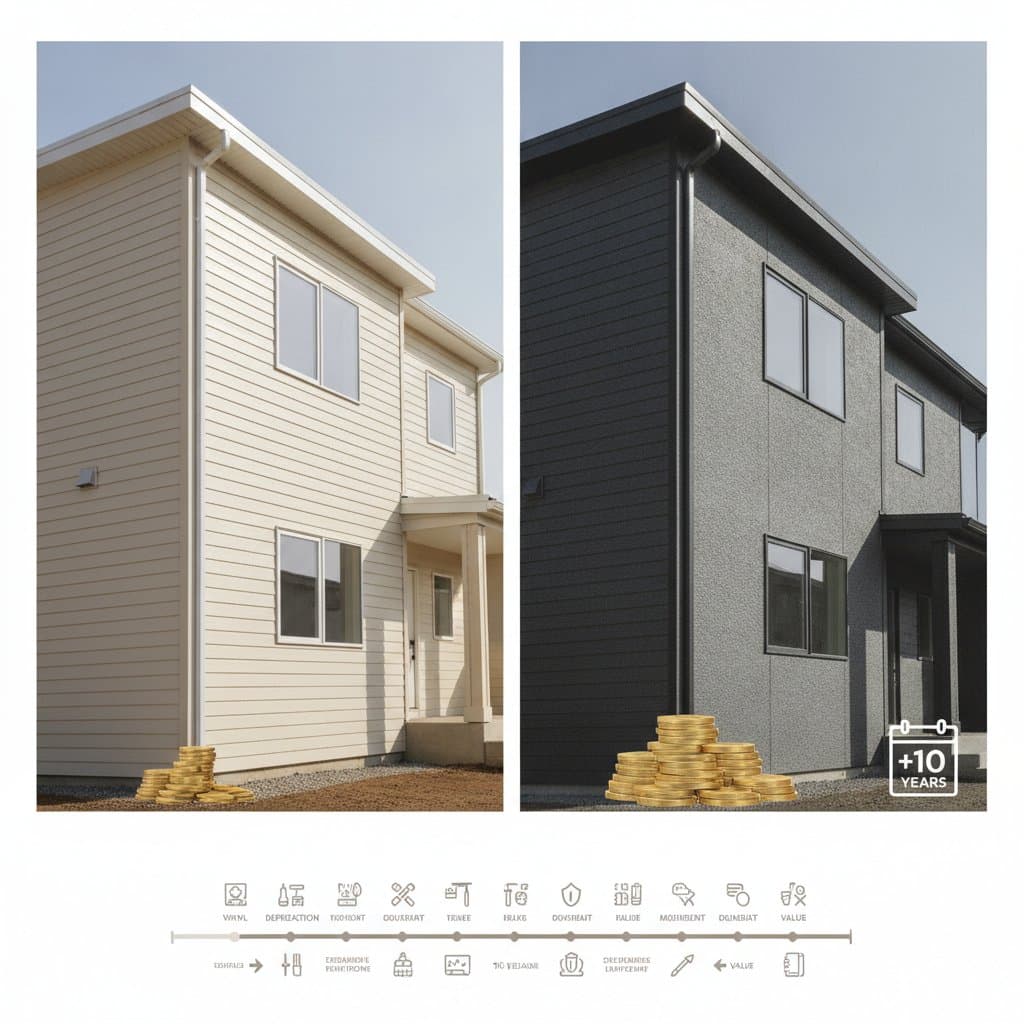
Fiber Cement vs Vinyl Siding: Lifetime Cost Comparison
A siding quote covers only installation. Total ownership cost includes removal, repairs, cleaning, painting, energy effects, and eventual replacement. Fiber cement and vinyl both protect homes for decades, yet their expense patterns differ substantially.
Cost Comparison Overview
| Factor | Fiber Cement | Vinyl |
|---|---|---|
| Installed cost | $7 to $14 per square foot | $4 to $9 per square foot |
| Typical service life | 30 to 50 years | 20 to 40 years |
| Routine upkeep | Moderate | Low |
| Main cost risks | Painting, impact damage, labor | Heat damage, cracking, replacement |
| Project difficulty | High | Moderate |
These ranges assume a straightforward, accessible home with standard profiles. Removal, trim, multiple stories, steep lots, sheathing repairs, and custom details can raise the total significantly.
Initial Installation Costs
Vinyl typically carries the lower entry price. The material is lightweight, cuts quickly, and installs over prepared walls with common hand tools. Fiber cement costs more due to heavier panels, specialized cutting controls, extra flashing care, and increased labor requirements.
A typical 2,000 square foot wall area may produce an installed siding range of roughly $8,000 to $18,000 for vinyl, or $14,000 to $28,000 for fiber cement. These figures are estimates, not bids. They may exclude gutters, insulation, window replacement, structural repairs, permit fees, and painting.
Removal adds about $1 to $3 per square foot for many projects. Older siding can conceal rot around windows, corners, and wall bottoms. Ask each contractor to list an allowance for hidden damage and explain the change order rate before work begins.
Maintenance and Repair Expenses
Vinyl does not require paint. Wash it with a garden hose, a soft brush, and a mild household cleaner. Avoid pressure washing close to the wall. High pressure can force water behind panels and damage finishes.
Fiber cement usually requires factory finished coating care or repainting when the finish wears. Many products need inspection and touch up around cut edges, joints, and penetrations. Repainting can cost $2,000 to $6,000 for a typical home, depending on access, preparation, trim, and coating condition.
Neither material is maintenance free. Vinyl can crack from impact, distort near grills or reflective windows, and loosen during severe wind if fasteners are poorly installed. Fiber cement resists heat and impact better than standard vinyl, but it can fracture from improper handling or movement in the wall.
Climate, Safety, and Building Envelope Details
Climate changes the cost balance. In hot regions, check vinyl temperature ratings and clearance from heat sources. In high wind zones, use the fastening pattern and rated installation method required by the product approval and local code.
Fiber cement requires dust control when cut. Installers should use approved cutting equipment, ventilation, and respiratory protection. Both systems need a weather resistant barrier, correctly lapped flashing, sealed penetrations, and clear drainage paths. Siding is not the wall waterproofing layer.
Fire performance also differs by product. Fiber cement is noncombustible, while vinyl can melt or deform under intense heat. Neither material makes a home fireproof. Local wildfire rules may specify clearance, vents, trim, and attachment details.
Comparing Long Term Ownership Costs
Vinyl often wins when the budget is tight and the wall design is simple. Fiber cement can offer a stronger appearance, greater heat resistance, and a longer replacement interval. Its higher installation and repainting costs can erase that advantage on a low maintenance home.
Use this comparison method:
- Get installed bids that include removal, trim, flashing, permits, cleanup, and tax.
- Add expected painting, washing, minor repairs, and inspection costs.
- Divide the projected total by the expected service years.
- Price a replacement if the material may not last through the ownership period.
A vinyl project at $14,000, with $3,000 in repairs and cleaning, totals $17,000 before replacement. A fiber cement project at $22,000, with one $4,000 repaint and $2,000 in repairs, totals $28,000. Actual results depend on exposure, workmanship, and care.
Maintenance Checklist
- Inspect annually for loose panels, cracks, open joints, and failed caulk.
- Clean vinyl as needed with mild soap and low pressure.
- Check fiber cement edges and repaint worn areas according to the coating instructions.
- Keep sprinklers, soil, and roof runoff away from siding.
- Review warranty terms before using paint, sealant, or pressure equipment.
Frequently Asked Questions
Which siding has the lower total ownership cost?
Vinyl usually costs less at installation and needs less routine care. Fiber cement may offer better value where heat, fire exposure, or long service life matters.
Does fiber cement require painting?
Most factory finished products need eventual repainting or touch up. Follow the product coating warranty and use compatible paint.
Long Term Cost Control Strategies
Calculate your true ownership cost by factoring in all expenses over the material's expected lifespan. Factor in your local climate conditions, home design complexity, and maintenance preferences when making your final decision. Consider how long you plan to own the property and whether the material's durability aligns with your investment timeline.