
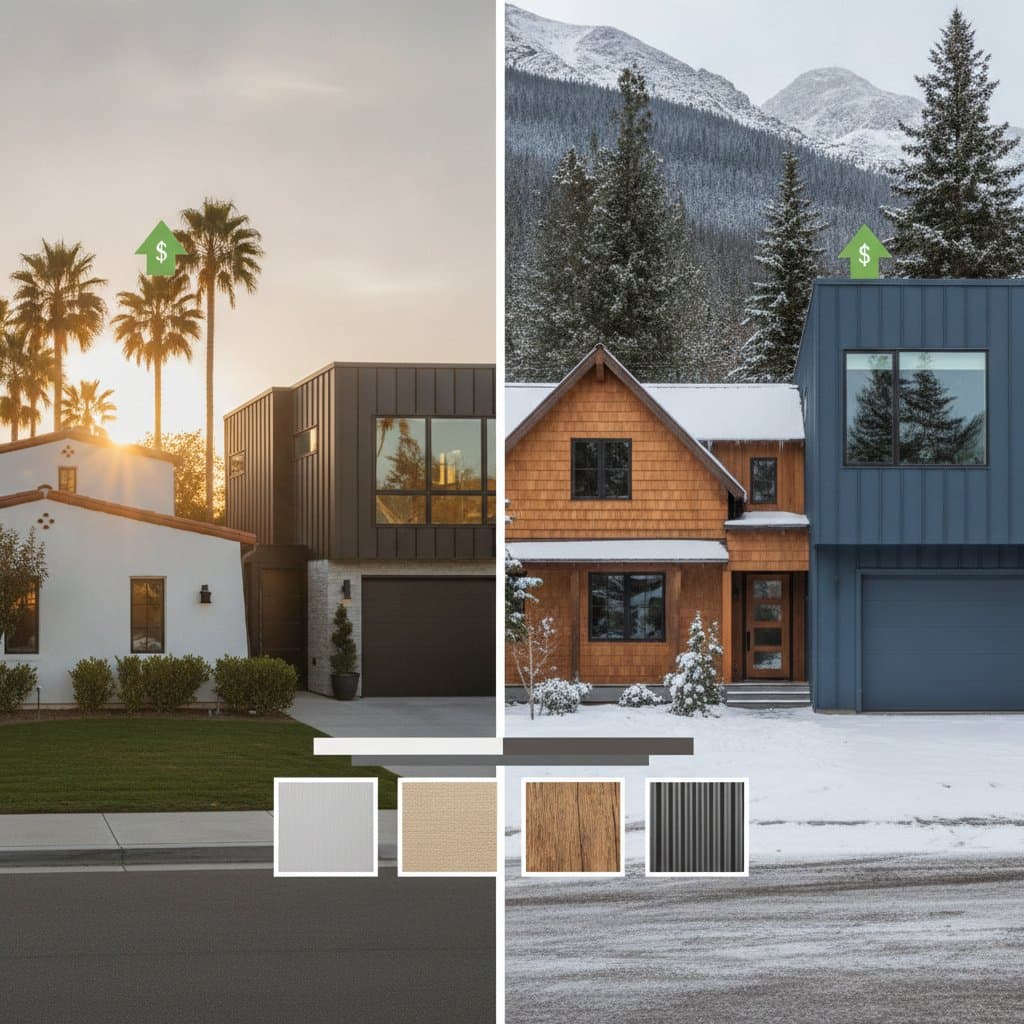
Climate Zones and Siding Performance
Homeowners gain the highest returns when siding matches local weather patterns. Hot and humid regions demand resistance to moisture and mold. Cold areas require materials that withstand freeze and thaw cycles without cracking. Arid zones benefit from options that resist fading from intense sun exposure.
Four primary materials dominate the market. Each carries distinct costs, maintenance needs, and durability profiles. Selection based on these factors directly influences resale value and long-term ownership expenses.
Vinyl Siding Analysis
Vinyl remains the lowest cost option at installation. Average prices range from 3 to 7 dollars per square foot. It performs adequately in moderate climates but expands and contracts with temperature swings. In extreme heat, darker colors may warp over time.
Maintenance stays minimal. Occasional washing removes dirt. Vinyl does not require painting. In coastal or high humidity areas, it resists rot yet can attract mildew if not cleaned regularly. Return on investment reaches 60 to 70 percent in temperate zones where replacement occurs every 20 to 30 years.
Fiber Cement Evaluation
Fiber cement costs between 6 and 12 dollars per square foot installed. It offers superior durability across most climates. The material resists fire, insects, and moisture when properly sealed. In wet regions it prevents water damage better than wood alternatives.
Painting every 10 to 15 years maintains appearance. Fiber cement holds paint well and withstands hail and wind. Home value increases often recover 70 to 80 percent of costs in mixed climate states. This material suits both humid southern states and northern freeze zones.
Wood Siding Review
Wood siding prices start at 8 dollars per square foot and rise with species and finish. Cedar and redwood provide natural resistance to decay. These options excel in dry climates where moisture exposure stays low. Regular sealing prevents cracking in arid conditions.
Annual inspections and refinishing every 5 to 7 years protect the surface. Wood delivers strong curb appeal that appeals to buyers in historic districts. Returns average 65 to 75 percent when maintained consistently. High humidity areas increase risk of rot and reduce payback periods.
Metal Siding Assessment
Steel and aluminum siding range from 7 to 15 dollars per square foot. Metal resists extreme temperatures and impacts. It performs well in both hot desert regions and cold mountain areas. Proper coating prevents corrosion in coastal salt air.
Installation requires attention to insulation to avoid condensation. Metal requires little upkeep beyond occasional cleaning. Energy efficiency improves with reflective finishes in sunny climates. Returns often reach 75 percent or higher in regions prone to severe weather.
Steps to Maximize Return
- Assess local weather data for temperature extremes and precipitation levels.
- Obtain three detailed quotes from licensed contractors for each material.
- Calculate total ownership costs including maintenance over 20 years.
- Review neighborhood comps to confirm buyer preferences in your market.
- Select colors and textures that align with architectural styles common to the area.
Regional Selection Guidance
Hot and humid states favor fiber cement for moisture control. Cold northern climates benefit from metal or fiber cement for freeze resistance. Dry western areas support wood or metal with sun protective finishes. Moderate central regions allow vinyl as a cost effective choice when budgets constrain options.
Consult local building codes before final selection. Proper installation remains essential regardless of material. These choices protect the home exterior while supporting stronger resale outcomes.