
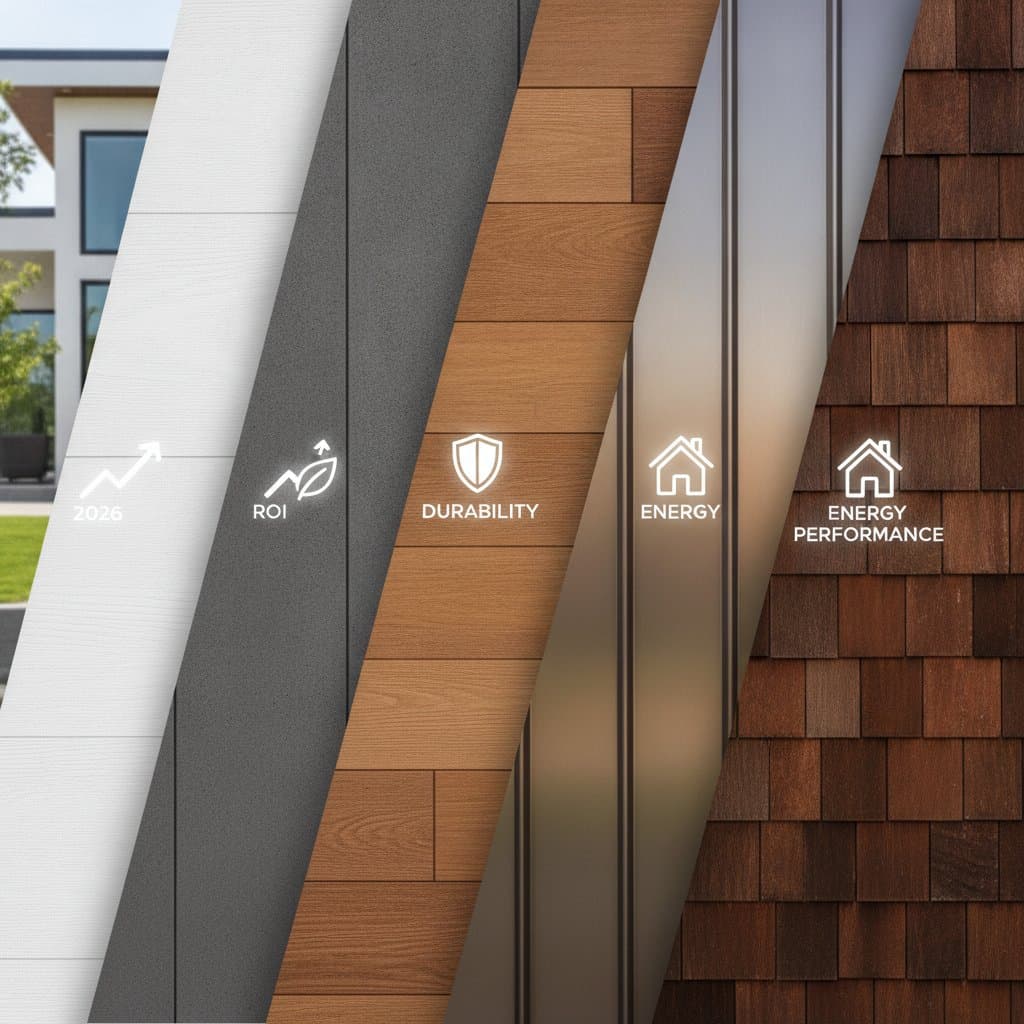
Siding Materials Delivering Highest ROI in 2026
Homeowners planning siding upgrades seek materials that balance curb appeal, energy performance, and long term value. Return on investment measures how much of the installation cost you can expect to recoup when selling or refinancing. The best siding materials protect the home while maintaining color, resisting damage, and minimizing upkeep costs.
This guide explains which materials deliver the strongest ROI, what drives those numbers, and how to plan a project that holds its value for years.
Core Profiles and Best Uses
- Lap siding: Horizontal boards that overlap, suited for most architectural styles.
- Board and batten: Vertical planks with narrow battens covering joints, popular on modern farmhouses.
- Shingle or shake: Staggered edges for texture, best for gables or accent walls.
- Panel systems: Large sheets or planks for clean lines, used in contemporary designs.
A well balanced facade often combines two profiles, such as lap siding on the body with shingle accents in the gables.
Material Options
Vinyl
Vinyl offers the lowest cost, wide color selection, and minimal maintenance. It can crack under impact, may fade in intense sun, and provides limited fire resistance. Vinyl delivers strong ROI when installed with foam backing for improved rigidity and energy efficiency. Repainting is not recommended because it can void warranties.
Fiber Cement
Fiber cement provides excellent fire resistance, stability in temperature swings, and strong paint adhesion. It is heavier, requires skilled installers, and must be sealed at every cut edge. Fiber cement often tops ROI charts due to its durability and upscale appearance that mimics wood without the same upkeep. Expect repainting every fifteen to twenty years to maintain finish integrity.
Engineered Wood
Engineered wood delivers a real wood look, lighter weight, and factory applied finishes. It needs careful sealing and can swell if edges stay wet. This material bridges the gap between traditional wood and fiber cement. It offers high curb appeal and strong resale value when maintained per manufacturer instructions.
Metal Siding
Metal siding is fireproof, insect proof, and recyclable. It can dent and may require specialized trim systems. Steel and aluminum panels suit modern or commercial style homes. Their ROI improves in regions with high fire risk or hail exposure.
Natural Wood
Natural wood provides a classic appearance and comes from a renewable source. It requires regular staining or painting and remains vulnerable to moisture and pests. Wood siding holds value primarily on premium or historic homes where authenticity is part of the design intent. ROI depends on local buyer expectations and maintenance record.
Trim and Accent Logic
Trim frames every siding choice. Use wider corner boards and window casings to define edges, especially when mixing profiles. Accent colors should contrast but not clash with the main body. For long term ROI, choose factory finished trim materials that match the siding warranty.
Example Scenarios
- Suburban two story: Fiber cement lap with composite trim for balanced cost and durability.
- Modern ranch: Metal panel siding with wood look accents.
- Cottage or craftsman: Engineered wood shakes paired with lap siding for texture contrast.
Step by Step Project Prep
Define Goals and Scope
Decide whether the goal is resale appeal, energy savings, or reduced maintenance. Outline the full scope including trim, soffit, and wrapping details.
Shortlist Contractors and Compare Bids
Gather at least three written estimates. Verify license, insurance, and manufacturer certifications. Compare not only price but also product line, finish system, and warranty handling.
Samples, Mockups, and Approvals
Request physical samples for color and texture. A small mockup board helps visualize how joints and trim align. Approve all selections in writing before ordering.
Site Readiness and Daily Routine
Clear landscaping and furniture away from walls. Provide power access and staging areas. Expect noise, vibration, and limited entry on workdays. Ask your contractor to secure panels overnight.
Quality Checks at Each Milestone
Inspect sheathing and framing for rot or insect damage after tear off. Confirm taped seams and flashing placement after weather barrier install. Review panel alignment and fastener spacing midway through the project. Walk through for paint touch ups, caulk uniformity, and cleanup at the final stage. Document each phase with photos for warranty and resale records.
Comparison Table for ROI and Performance
| Material | Typical ROI | Maintenance Level | Lifespan (Years) | Fire Resistance | Impact Resistance |
|---|---|---|---|---|---|
| Vinyl | 65% to 75% | Low | 25 to 40 | Fair | Moderate |
| Fiber Cement | 70% to 80% | Moderate | 40 to 60 | Excellent | High |
| Engineered Wood | 65% to 75% | Moderate | 30 to 50 | Good | High |
| Metal | 60% to 70% | Low | 40 to 60 | Excellent | Very High |
| Natural Wood | 55% to 65% | High | 20 to 40 | Limited | Moderate |
Maximizing Long Term Returns
Select materials that match your climate and architectural style. Schedule regular inspections to catch minor issues before they affect value. Keep detailed records of installation and maintenance to support future resale negotiations.