
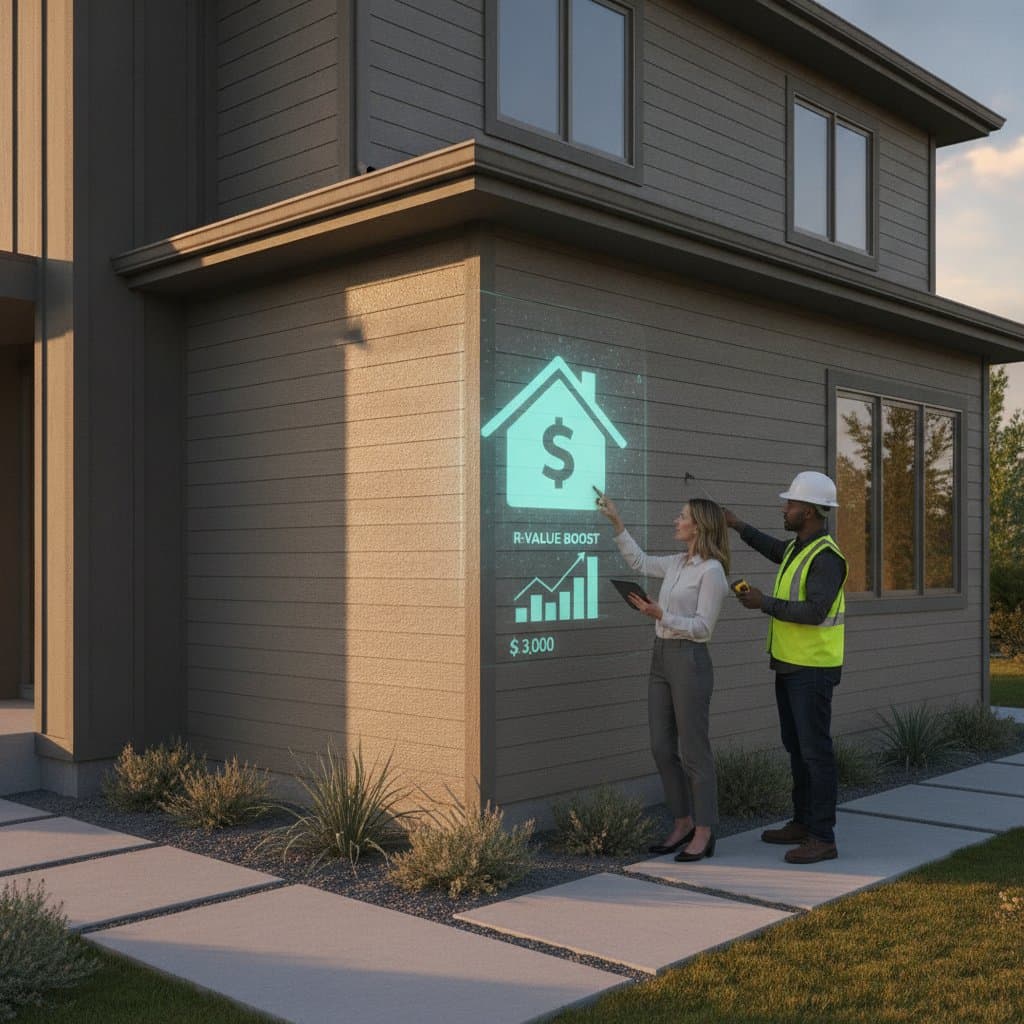
2026 Tax Credits for Energy Efficient Siding
Energy efficient siding qualifies for new federal tax credits that reduce project costs. Homeowners gain direct savings on qualifying installations while lowering ongoing energy expenses. These incentives target measurable improvements to the building envelope.
This guide covers eligibility rules, material options, installation standards, and contractor selection. Each section provides steps that support compliance and long-term performance.
Material and Profile Choices
Only certain siding products meet credit requirements. Qualifying materials must improve thermal resistance and satisfy approved insulation criteria. The table below compares common options.
| Material | Pros | Cons | Maintenance Level | Fire & Moisture Resistance |
|---|---|---|---|---|
| Insulated Vinyl | High R-value, low maintenance, wide color range | Can crack under impact | Minimal | Good moisture resistance, limited fire resistance |
| Fiber Cement | Strong, noncombustible, stable color base | Heavy to install, requires painting | Moderate | Excellent fire resistance, good moisture control |
| Engineered Wood | Warm look, lighter than cement | Needs sealing at cuts | Moderate | Moderate fire resistance, fair moisture control |
| Composite Panels | High rigidity, factory finish | Costly per square foot | Low | Excellent fire and moisture performance |
Insulation and R-Value
R-value indicates resistance to heat flow. Standard vinyl siding provides an R-value near 0.6. Insulated versions reach 2.0 to 3.5. Fiber cement and engineered wood typically range from 0.5 to 1.0. Adding continuous foam sheathing can raise total wall performance above R-13.
Mixing Textures Without Clutter
A balanced design can combine horizontal lap siding with board-and-batten or shingle accents. Limit accent areas to 20 to 30 percent of total wall surface. Maintain consistent trim depth to prevent uneven shadows. Simplify layouts when possible. Clean lines improve appearance from the street.
Takeaway: Select materials with documented R-values and fire ratings. Request test data before purchase.
Installation Quality and Risk Control
Correct installation determines whether siding delivers expected efficiency. Proper sealing, fastening, and water management protect performance and warranty coverage.
Building Envelope Details
- Apply a continuous weather-resistant barrier beneath siding.
- Install metal or flexible flashing at windows, doors, and roof intersections.
- Use high-grade exterior caulk at joints while preserving drainage gaps.
- Drive corrosion-resistant fasteners straight to avoid panel distortion.
Common Failure Points
- Improper overlap that allows capillary water leaks.
- Missing kick-out flashing that directs roof runoff onto walls.
- Overdriven fasteners that cause buckling.
- Unsealed cut edges on engineered wood that lead to swelling.
Site and Neighbor Considerations
Schedule work hours and contain debris before starting. Use netting or temporary fencing to protect adjacent properties. Maintain clear access for deliveries and cleanup.
Takeaway: Choose contractors who follow manufacturer instructions exactly and record each step for warranty and tax documentation.
Contractor Selection and Bidding
Energy efficient siding requires crews experienced with both finishes and insulation systems. Proper selection supports credit qualification and performance goals.
Scope Checklist
Prepare a written scope before requesting quotes. Include siding material and profile, insulation type and thickness, weather barrier and flashing specifications, trim and soffit details, removal and disposal procedures, and permit responsibilities.
Comparing Bids
Require identical scopes from each contractor. Review labor, materials, and waste removal as separate line items. Calculate cost per square foot for fair comparison. Confirm that bids list start and finish dates, payment terms, and warranty coverage.
Payment Schedule
Tie payments to milestones. Provide a 10 to 20 percent deposit at signing. Release a midpoint payment after delivery and partial installation. Complete final payment after inspection. Retain at least 10 percent until punch list items are finished.
Takeaway: Competitive bids require matching scopes. Emphasize complete documentation and clear warranty terms.
Compact FAQ
Q: How do I know if my siding qualifies for the tax credit?
Review the manufacturer certification statement. It must list tested R-values and confirm compliance with federal standards. Retain a copy with tax records.
Q: Can I claim the credit if I only replace siding on part of the house?
Partial projects qualify when new siding meets efficiency definitions. The credit covers eligible materials rather than labor. Track invoices carefully.
Q: Are insulated vinyl and foam-backed panels treated the same?
Both qualify when they achieve required R-values. Insulated vinyl bonds foam directly to panels. Foam-backed systems use continuous sheathing beneath standard siding. Either approach must increase wall thermal resistance.
Planning for Long-Term Performance
Document all materials and installation steps at project completion. Store receipts, certifications, and inspection records together. These files support tax filing and future maintenance decisions. Proper planning converts credit savings into sustained energy reductions and preserved property value.