
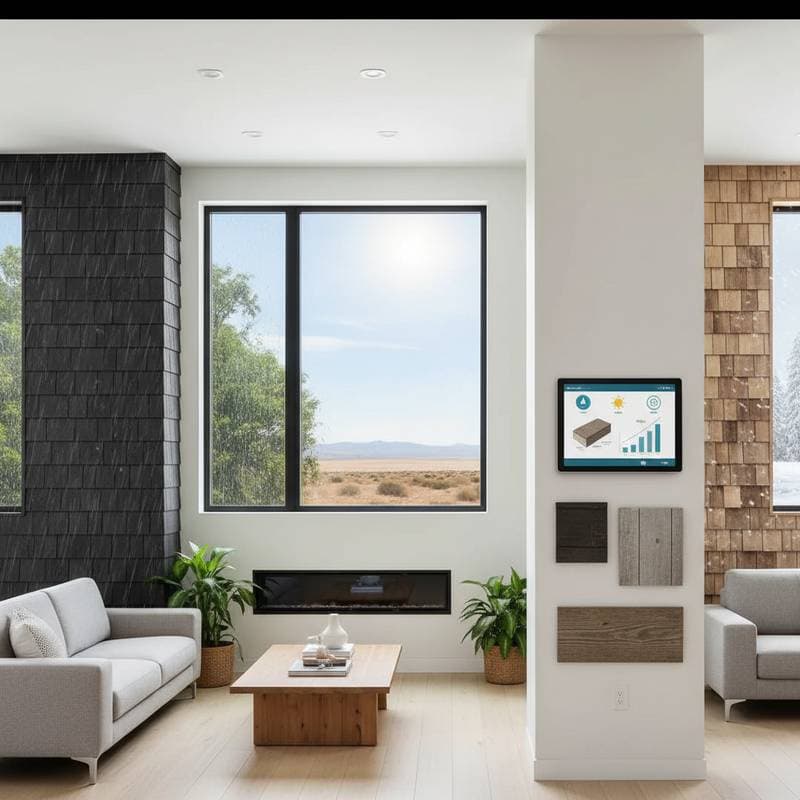
Why Climate-Specific Siding Matters for Your Home
Choosing siding that fits your local climate protects your home value in direct ways. Siding serves as the first visual impression and the primary barrier against weather. The right material prevents moisture intrusion, stabilizes energy costs, and keeps maintenance routines predictable. The wrong selection shortens exterior life and reduces resale appeal.
This guide shows how climate-matched siding materials safeguard your investment. It addresses costs, returns, material performance, design considerations, and upkeep requirements. You will learn how to align siding choices with weather patterns and decisions that preserve value across seasons.
Material and Profile Options
Each siding type reacts differently to heat, moisture, and physical stress. Selection starts with the main regional challenge.
Common Materials
| Material | Strengths | Weaknesses | Maintenance Level | Fire/Moisture Resistance |
|---|---|---|---|---|
| Vinyl | Low cost, easy upkeep | Cracks in extreme cold, warps in strong sun | Low | Moderate |
| Fiber Cement | Stable, non-combustible, resists rot | Heavy, higher labor cost | Moderate | High |
| Engineered Wood | Natural appearance, lighter than fiber cement | Requires sealed edges, periodic coating | Moderate | Moderate |
| Metal (Steel/Aluminum) | Fireproof, insect-proof | Dents easily, color fades in coastal air | Low | High |
| Natural Wood | Classic look | Needs frequent refinishing | High | Low |
Regional Fit
- Hot, sunny climates benefit from fiber cement because it resists ultraviolet distortion and fading. Lighter colors limit heat absorption.
- Cold, freeze-thaw climates suit engineered wood and insulated vinyl, which retain flexibility and limit cracking.
- Humid or coastal zones call for metal and fiber cement to block salt and moisture entry.
- Dry, wildfire-prone areas rely on metal and fiber cement for high fire-resistance ratings.
Combining Textures
Pair lap siding with vertical panels or shingles to create depth while preserving balance. Limit secondary materials to accent walls, dormers, or gables. Consistent color undertones maintain clean transitions and prevent visual overload.
Select material according to weather stress first, then adjust for style. Climate compatibility influences lifespan more than profile alone.
Installation Quality and Risk Reduction
Premium siding fails prematurely without climate-aware installation. Expansion rates, fastener choices, and moisture barriers shift with local temperature and humidity patterns.
Envelope Protection
- Install a weather-resistant barrier rated for local rainfall amounts.
- Tape all seams and flashing transitions at windows and doors.
- Maintain proper vertical overlaps and clear drainage paths behind the siding.
Frequent Failure Points
- Over-driven nails restrict expansion and produce buckling.
- Unsealed cut edges in engineered wood absorb moisture rapidly.
- Siding placed too close to grade or roofing allows wicking and rot.
- Poor ventilation traps moisture and raises mold risk.
Site Preparation
Clear vegetation from the foundation to improve airflow. Protect nearby structures from dust and debris. Coordinate work hours with neighbors to limit disruption.
Installation quality controls warranty coverage. Confirm that installers follow manufacturer guidelines for spacing, fasteners, and sealants in your climate zone.
Contractor Selection and Bidding
The right contractor protects both investment and schedule. A detailed scope removes hidden costs and supports accurate bid comparisons.
Scope Checklist
- Material type and profile
- Underlayment or weather barrier specifications
- Trim and flashing details
- Removal and disposal plan
- Painting or finishing steps
- Permits, inspections, and final cleanup
Bid Comparison
Request itemized bids that separate material and labor. Verify that every bid covers identical square footage, trim quantities, and insulation layers. Lower bids sometimes omit disposal or coating steps that affect long-term performance.
Payment Schedule
Tie payments to milestones rather than calendar time. A typical structure includes a 10 to 20 percent deposit at signing, a midpoint payment after removal and preparation, and final payment after walkthrough and punch-list completion.
The strongest bid offers transparency rather than the lowest price. Confirm the contractor experience with your climate zone and request references from comparable homes.
Daily Care After Installation
Once installed, siding joins the regular maintenance cycle. Climate-matched materials reduce unexpected issues, yet seasonal observation remains useful. Monitor how sun and moisture affect the walls and note swelling, fading, or joint movement at the first sign.
Buyers value documented care and visible condition at resale. Clean, well-aligned siding indicates a sound building envelope. Even color, consistent joints, and sealed trim lines reflect both quality material and attentive ownership.
Practical Recommendations
- Test color samples outdoors at different times of day to observe real undertone changes.
- Choose factory-finished boards when possible because controlled curing improves color retention.
- Avoid shortcuts on flashing because proper metal or membrane details extend system life.
- Provide adequate ventilation in attics and wall cavities to lower trapped humidity.
- Retain copies of product data sheets and installation records for future warranty needs.
Common Issues and Solutions
Small cracks near nails
These cracks usually result from fasteners driven too tightly or from thermal movement without expansion allowance. Replace affected panels and set nails flush rather than recessed.
Uneven paint fading
Uneven fading points to unbalanced ultraviolet exposure or coating wear. Clean the surface first, then apply a new finish with a higher ultraviolet rating matched to the region.
Dark streaks under eaves
Check for blocked gutters or missing drip-edge flashing. Moisture running down the wall stains or loosens siding over time.
Mixing old and new siding
Mixing works when profiles match and the existing layer remains sound. Seal all joints carefully and repaint to create uniform color.
Preserving Long-Term Value
Consistent attention to climate-specific siding keeps maintenance costs low and supports steady property value. Regular inspections combined with prompt repairs maintain both appearance and performance through changing seasons.