
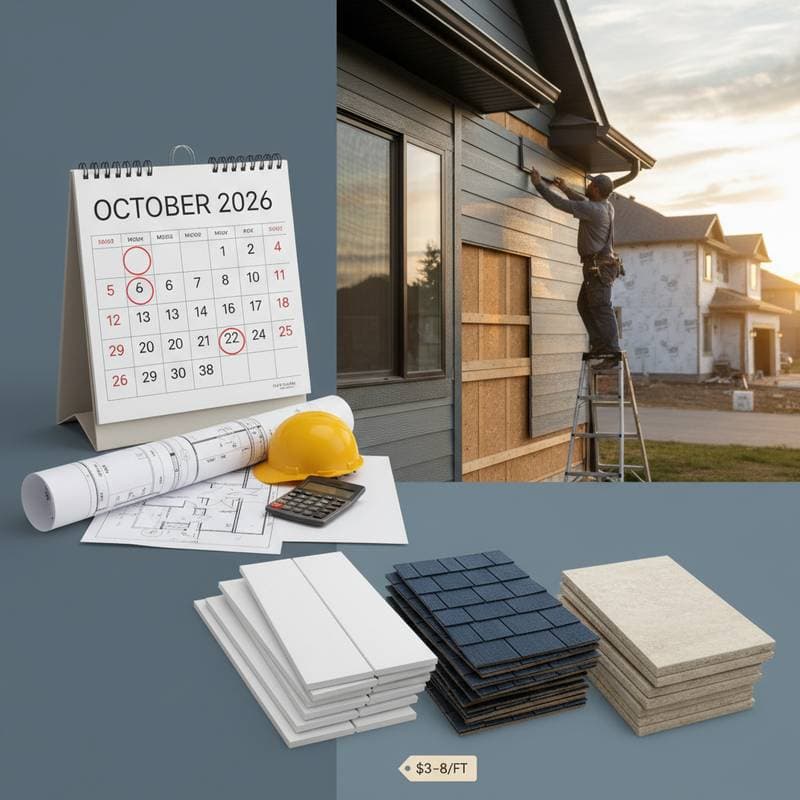
Understanding 2026 Siding Lead Times and Their Implications
Homeowners undertaking exterior renovations in 2026 face extended lead times for siding materials and installation. These delays stem from persistent supply chain disruptions, heightened seasonal demand, and shortages in skilled labor. Such factors not only prolong project timelines but also elevate costs by $3 to $8 per linear foot, depending on material choices and regional conditions. Grasping these dynamics enables better forecasting of expenses, sequencing of trades, and maintenance of overall quality standards.
Lead times typically range from 8 to 16 weeks for popular options like vinyl and fiber cement, with premium materials such as custom metal panels extending to 20 weeks or more. Early planning mitigates risks of rushed installations that compromise durability. Contractors often advise securing commitments from suppliers months in advance to align with permitting and weather windows.
Selecting Siding Styles and Materials
Choosing the right siding involves balancing aesthetics, functionality, and budget constraints. Profiles and materials determine how well the exterior withstands local climates while enhancing curb appeal. Homeowners benefit from reviewing options that align with architectural styles and long-term maintenance needs.
Key Siding Profiles
- Lap siding: Horizontal planks with overlapping edges provide a classic, versatile finish suitable for most residential structures.
- Board and batten: Vertical boards covered by narrow strips conceal joints, ideal for rustic or contemporary facades.
- Shake or shingle: Textured, staggered pieces add dimension, frequently applied to gable ends or focal areas.
- Panel systems: Large-format sheets with integrated trims support sleek, modern installations.
Material Comparisons
| Material | Advantages | Disadvantages |
|---|---|---|
| Vinyl | Affordable, minimal upkeep, diverse colors | Prone to cracking in extreme cold, challenging repairs |
| Fiber Cement | Resistant to fire, mimics wood grain | Heavier weight, requires painting and specialized cutting |
| Engineered Wood | Natural aesthetic, straightforward fabrication | Demands regular sealing, susceptible to swelling without protection |
| Metal (Steel or Aluminum) | Exceptional longevity, eco-friendly, sharp profiles | Elevated price, vulnerable to dents from impacts |
Vinyl remains a budget-friendly entry point, while fiber cement offers superior resilience in variable weather. Metal suits high-exposure sites but demands precise installation to avoid thermal bridging.
Combining Materials Effectively
Layering materials optimizes performance and visual interest. Install robust fiber cement or metal at ground level for impact resistance, transitioning to lighter vinyl or shakes higher up. Position shifts at logical points, such as above window sills or along rooflines, to ensure seamless integration. Restrict combinations to two primary materials to preserve uniformity and simplify future upkeep.
Integrating Trim and Accents
Trim elements frame openings and edges, contributing to a polished appearance. Select hues that complement roofing and fenestration for harmony. Opt for PVC or metal trims during shortages of wood to expedite progress without sacrificing style.
Practical Application Examples
- Ranch-style suburban home: Employ vinyl lap siding paired with broad corner boards and aluminum venting for straightforward maintenance.
- Craftsman two-story residence: Feature fiber cement lap on the base level, shingle accents in gables, and stained timber columns at the porch.
- Contemporary rectangular dwelling: Utilize smooth metal panels with hidden fasteners and reduced seam lines for a minimalist effect.
These configurations demonstrate adaptability across housing types, emphasizing coordination with existing features.
Ensuring Durability and Safety in Siding Choices
Siding serves as the first line of defense against environmental stressors, demanding selections that prioritize longevity and compliance. Regional hazards dictate specific attributes, from wind loads to pest resistance. Proper specification prevents premature failures and associated repair costs.
Addressing Weather and Impact Challenges
Coastal regions require siding engineered for gale-force winds and salt corrosion, often incorporating reinforced fasteners. In hail belts, opt for thicker metal gauges or impact-rated fiber cement to minimize damage. Areas with freeze-thaw fluctuations necessitate sealed seams and pre-primed boards to block water penetration and subsequent warping.
Evaluating Fire and Moisture Resistance
Non-combustible options like fiber cement and metal excel in fire-prone settings, such as near outdoor cooking areas or wildland interfaces. Vinyl and engineered wood achieve adequate ratings through strategic spacing and compatible underlayments. Confirm that all components, including housewrap and nails, align with the siding's safety classifications.
Building Envelope Considerations
A robust envelope integrates siding with insulation, flashing, and ventilation to control moisture and energy loss. Install weather-resistive barriers behind panels to direct water away from the structure. Use continuous insulation layers to reduce thermal breaks, enhancing efficiency in varying climates.
Maintenance Protocols
- Clean vinyl and metal surfaces biannually using low-pressure water flow.
- Refresh coatings on fiber cement or engineered wood every decade or as recommended by producers.
- Examine sealant lines seasonally for deterioration and reapply as needed.
- Maintain clearance between vegetation and walls, trimming back to six inches minimum for circulation.
Routine attention extends service life and preserves warranties, which generally span 25 to 50 years depending on material and installation quality.
Warranty Fundamentals
Most manufacturers provide limited warranties covering defects in materials and fading. Coverage extends to labor if installed by certified professionals. Document installations with photos and receipts to facilitate claims, noting that improper maintenance voids protections.
Preparing for a Successful Siding Project
Thorough preparation transforms potential obstacles into manageable phases. Begin with clear objectives to guide decisions on scope and resources. This structured approach minimizes disruptions and ensures adherence to timelines amid lead time pressures.
- Establish project objectives: Identify priorities such as energy upgrades, visual refresh, or structural repairs. Allocate a realistic budget accounting for a 10 to 20 percent contingency.
- Vet potential contractors: Verify credentials, including state licenses, client testimonials, and liability coverage. Solicit bids from no fewer than three firms, each detailing materials, timelines, and exclusions.
- Examine physical samples: Test full-scale sections in daylight to assess texture, shade, and scale against your home.
- Secure timelines and supplies: Obtain firm quotes from vendors on delivery dates and commit orders prior to contract finalization.
- Site readiness: Relocate outdoor items, protect landscaping, and ensure access for equipment.
- Ongoing oversight: Conduct regular site visits to verify alignment of flashing, joints, and hardware with plans.
- Completion review: Inspect for finishes, cleanup, and compliance before permit closure and final payment.
Permitting processes vary by locality, often requiring 4 to 6 weeks; factor this into early stages to avoid bottlenecks.
Maximizing Long-Term Value from Your Siding Investment
Well-executed siding enhances protection and property value for generations. Despite lead time hurdles, strategic foresight averts compromises in craftsmanship. Foster ongoing dialogue with your team, authenticate incoming shipments, and record specifications for reference. This diligence yields a resilient exterior that withstands time and elements effectively.