
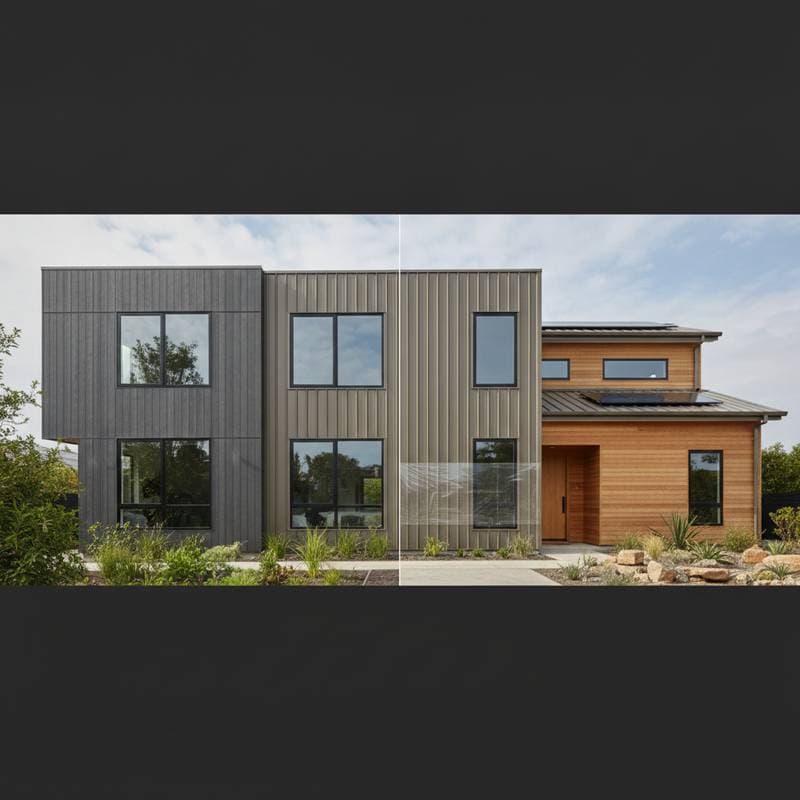
Match Siding to Climate for Lasting Durability
Choosing siding that fits your region protects your investment and supports resale value. The right material resists local weather patterns and reduces maintenance needs over time. The wrong choice leads to swelling, cracking, or fading that shortens lifespan.
This guide explains how to match siding materials to climate conditions. It covers cost factors, installation practices, and long term care.
Material and Profile Choices
Comparison Table
| Material | Strengths | Weaknesses | Best Climates | Maintenance |
|---|---|---|---|---|
| Vinyl | Affordable, colorfast, low maintenance | Brittle in extreme cold, warps under high heat | Moderate, low humidity zones | Annual wash |
| Fiber Cement | Fire, rot, and pest resistant | Heavy, needs repainting | Humid or wildfire prone areas | Repaint every 10 to 12 years |
| Engineered Wood | Natural look, treated for moisture | Needs sealed edges | Mixed climates with freeze thaw cycles | Inspect joints twice a year |
| Metal (Steel or Aluminum) | Non combustible, recyclable | May dent or scratch | Dry, windy, or fire risk regions | Touch up coating as needed |
| Natural Wood | Classic appearance | High upkeep, susceptible to insects | Dry regions with moderate humidity | Stain or seal regularly |
| Stucco or EIFS | Seamless look, energy efficient | Vulnerable to trapped moisture | Arid or temperate zones | Inspect for cracks annually |
Fire and Moisture Resistance
Fiber cement and metal deliver the highest fire ratings. Vinyl softens near direct flame but self extinguishes when heat drops. Wood requires treatment to resist ignition. In moisture heavy regions, materials with breathable backing and sealed joints prevent rot. Engineered wood uses resin binders to resist swelling. Proper venting behind panels limits condensation buildup.
Mixing Textures
Combining materials can emphasize entryways or upper gables. Use one dominant texture and one accent. Keep color families consistent to avoid visual clutter. For example, pair smooth fiber cement planks with a small section of board and batten under a gable for balanced contrast.
Choose materials for local stress factors first and style second. The best siding for your home performs dependably under your region most common conditions.
Installation Quality and Risk Control
Even the best siding fails if installed poorly. Water intrusion, fastener corrosion, and unsealed joints cause early deterioration.
Risk Prevention Steps
- Install a weather resistant barrier behind all panels and tape it correctly.
- Add flashing around windows and doors with weep paths for drainage.
- Leave expansion gaps at trim joints to prevent buckling.
- Use starter strips and vented soffits to balance airflow.
- Apply sealant lines only where flexible movement is needed.
Common Failure Points
- Missing or blocked flashing at horizontal transitions.
- Nails driven too tight, causing panel deformation.
- Poor cut edge sealing on engineered wood or fiber cement.
Site and Neighbor Considerations
Plan debris disposal and protect landscaping during work. Communicate start and stop times to minimize disruption. If scaffolding crosses property lines, secure written permission before work begins.
Quality installation protects the wall envelope. Confirm that your contractor follows manufacturer fastening patterns and includes moisture management details in writing.
Contractor Selection and Bidding
Scope Checklist
- Material type and profile
- Trim, flashing, and barrier details
- Removal and disposal of old siding
- Surface prep and sheathing repair allowance
- Paint or finish requirements
- Permit and inspection responsibilities
Comparing Bids
Request itemized pricing per square foot. Confirm inclusion of trim, caulking, and scaffolding. Avoid lump sum quotes without breakdowns. Review each bidder insurance and warranty support in writing.
Payment Schedule
Link payments to milestones. Example stages include a deposit to secure materials, a midpoint payment after tear off and barrier installation, and a final payment after inspection and cleanup.
Ongoing Care for Peak Performance
Inspect siding twice each year for loose fasteners or early signs of wear. Clean surfaces according to material guidelines to maintain appearance. Address small issues promptly to avoid larger repairs later. These steps extend service life and preserve home value.