
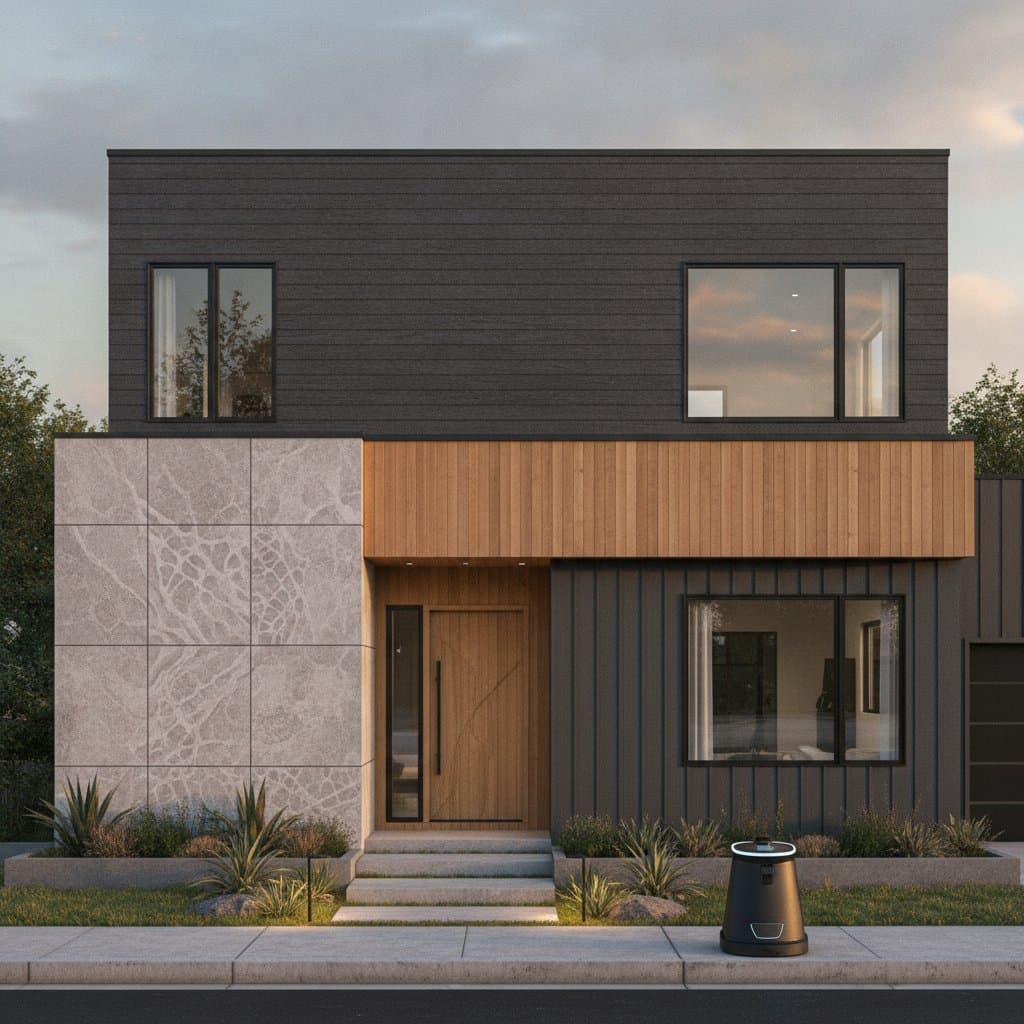
Why Mixed-Material Siding Combinations Excel in 2026 Projects
Mixed-material siding has become standard practice for modern exterior work. Homeowners combine textures, profiles, and finishes to balance appearance with performance needs. This method suits both remodels and new construction while supporting curb appeal and cost management.
Core Profiles and Placement Strategies
Select profiles that define specific zones on each elevation. Horizontal lap siding serves as the primary layer on main walls. Board and batten provides vertical lines on gables and porch areas. Shingles add texture at roofline transitions. Panels paired with trim battens suit contemporary designs.
Place heavier textures and darker tones on lower sections to anchor the visual weight. Limit any single elevation to three materials maximum. Align trim thicknesses at every transition to maintain flush surfaces. Keep reveal lines consistent where materials change.
Material Options and Selection Criteria
- Vinyl offers low cost and minimal upkeep but shows limited texture realism and requires expansion gaps.
- Fiber cement delivers strong fire and impact resistance while accepting paint evenly yet demands heavier handling and specialized cutting.
- Engineered wood supplies a natural appearance with reduced weight but requires thorough sealing on all cut edges.
- Metal panels provide extended service life and sharp profiles though they remain vulnerable to dents and carry higher material expense.
- Natural wood creates classic warmth but needs regular refinishing and ongoing care.
Effective Mixing and Trim Practices
Match window casings and corner boards to one consistent tone across the entire elevation. Introduce accent bands or belly boards to mark transitions and direct water away from joints. In a Craftsman bungalow, combine fiber cement lap on the body with cedar shingles in the gables and stone veneer at the base. A modern farmhouse might use vertical board and batten near the eaves, horizontal lap lower down, and metal inserts at the entry.
Weather Resistance and Safety Measures
Install metal or PVC flashing behind every vertical material change. In high-wind regions, fasten panels with ring-shank nails and manufacturer-approved clips. Apply a continuous weather-resistive barrier over the entire wall surface. Flash all window heads and base joints with membrane tape. Maintain at least six inches of clearance between wood products and grade level.
In fire-prone zones, prioritize fiber cement or metal for main surfaces and restrict wood accents to sheltered locations. Seal critical joints at corners, horizontal transitions, and penetrations with backer rod and high-grade sealant. Leave small expansion gaps wherever dissimilar materials meet.
Project Preparation Steps
- Clarify project goals such as reduced maintenance or added insulation and set a firm budget per square foot.
- Collect three written bids that detail square footage, material specifications, flashing methods, and disposal fees.
- Request physical samples and construct an on-site mockup to verify joint alignment before full installation begins.
- Clear vegetation within three feet of walls and protect windows and fixtures daily.
- Inspect work at each stage for proper fastening, flashing, and sealant application.
Maintenance for Sustained Performance
Rinse surfaces with low-pressure water once or twice annually. Use a mild soap solution to remove surface dirt. Avoid pressure settings above 1,500 psi. Repaint or reseal fiber cement and wood surfaces every five to seven years based on exposure. Retain installation records including photographs of flashing and barrier products to support warranty claims.