
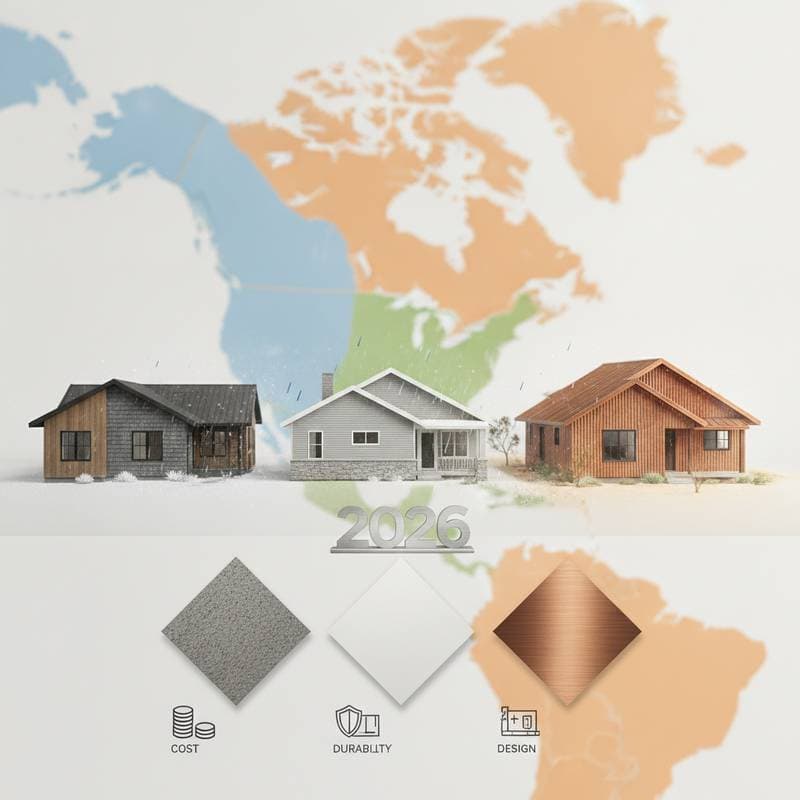
Best Siding Choices by Climate Zone for 2026 Homes
Siding protects the building envelope. It defines curb appeal and directly affects long-term maintenance costs. The right choice depends on local weather, installation quality, and how the material performs under temperature swings, moisture, and sunlight.
This guide outlines how to match siding materials to climate zones. It covers what to expect in cost and return. It also explains how to maintain lasting value over time.
Cost, ROI, and Impact Factors
Siding projects vary widely in cost and return on investment. The total expense depends on material, removal, trim details, and job access. Most projects fall between 12000 and 35000 dollars for an average single-family home. Homeowners often recover 70 to 85 percent of their cost at resale when the material is chosen and installed correctly.
Primary Cost Drivers
- Removal and disposal of old siding add 1 to 2 dollars per square foot.
- Complexity of elevation increases labor, especially on multi-story homes.
- Trim and corner details influence both look and cost.
- Climate-resistant upgrades such as house wraps or rain screens add upfront cost but reduce future repairs.
Scale examples include a small cottage with 900 to 1200 square feet of siding at 8000 to 12000 dollars. A mid-size home with 1800 to 2400 square feet costs 15000 to 28000 dollars. A large residence over 3000 square feet runs 25000 to 45000 dollars.
Budget by square footage and complexity, not just material type. Compare bids that list removal, trim, flashing, and moisture barriers separately to understand what drives cost.
Design for Curb Appeal
Good design reads well from the street and in listing photos. Balanced proportions and clean transitions between materials create a finished look that buyers trust.
Key design principles include keeping horizontal lines even and aligning trim with window headers for a calm visual rhythm. Use lighter trim against darker siding for definition without harsh separation. Choose mid-range tones with muted undertones that age gracefully and hide dirt. A defined entry with proper lighting and clean house numbers adds perceived value immediately. Match siding color temperature to roofing material so both read as one composition.
Subtle contrast and consistent profiles suggest quality craftsmanship. Buyers associate this with lower maintenance risk.
Maintenance and Longevity
Every siding type benefits from regular inspection and cleaning. Preventative care extends life and validates many manufacturer warranties.
Maintenance Checklist
| Task | Frequency | Method |
|---|---|---|
| Wash siding to remove dirt and mildew | Twice a year | Low-pressure water and mild detergent |
| Inspect caulking and trim joints | Annually | Reseal gaps larger than 1/8 inch |
| Check paint or finish | Every 5 to 7 years | Repaint or refinish per manufacturer |
| Clear vegetation and soil contact | Ongoing | Keep 6-inch clearance from grade |
| Inspect fasteners and loose panels | Annually | Tighten or replace corroded nails |
Most siding warranties require proof of maintenance. Keep written records of cleaning and repainting. Improper installation or trapped moisture usually voids coverage. Hire certified installers when possible.
A clean, intact finish signals to buyers that the home has been cared for. This protects both performance and resale value.
Living With Your Choice
Once installed, siding becomes a long-term asset that influences comfort, energy performance, and resale perception. The best siding for your climate balances durability, maintenance, and design consistency with your budget.
Engineered wood or insulated vinyl limit heat loss and resist freeze-thaw cycling in cold climates. Fiber cement or metal withstands UV exposure without fading or cracking in hot-dry areas. Metal or vinyl with corrosion-resistant coatings prevents salt damage in coastal regions. Fiber cement and engineered wood provide balanced moisture control in mixed-humid zones.
When maintained, any of these materials can exceed their expected lifespan. Consistent cleaning, proper drainage, and timely repainting keep them performing well long after installation.
Making the Final Selection
Photograph each stage of the project. These records help document warranty compliance and create a visual log for future resale discussions. Compare multiple contractor bids that detail every line item. Verify that the chosen material aligns with both local climate demands and your long-term maintenance capacity.