
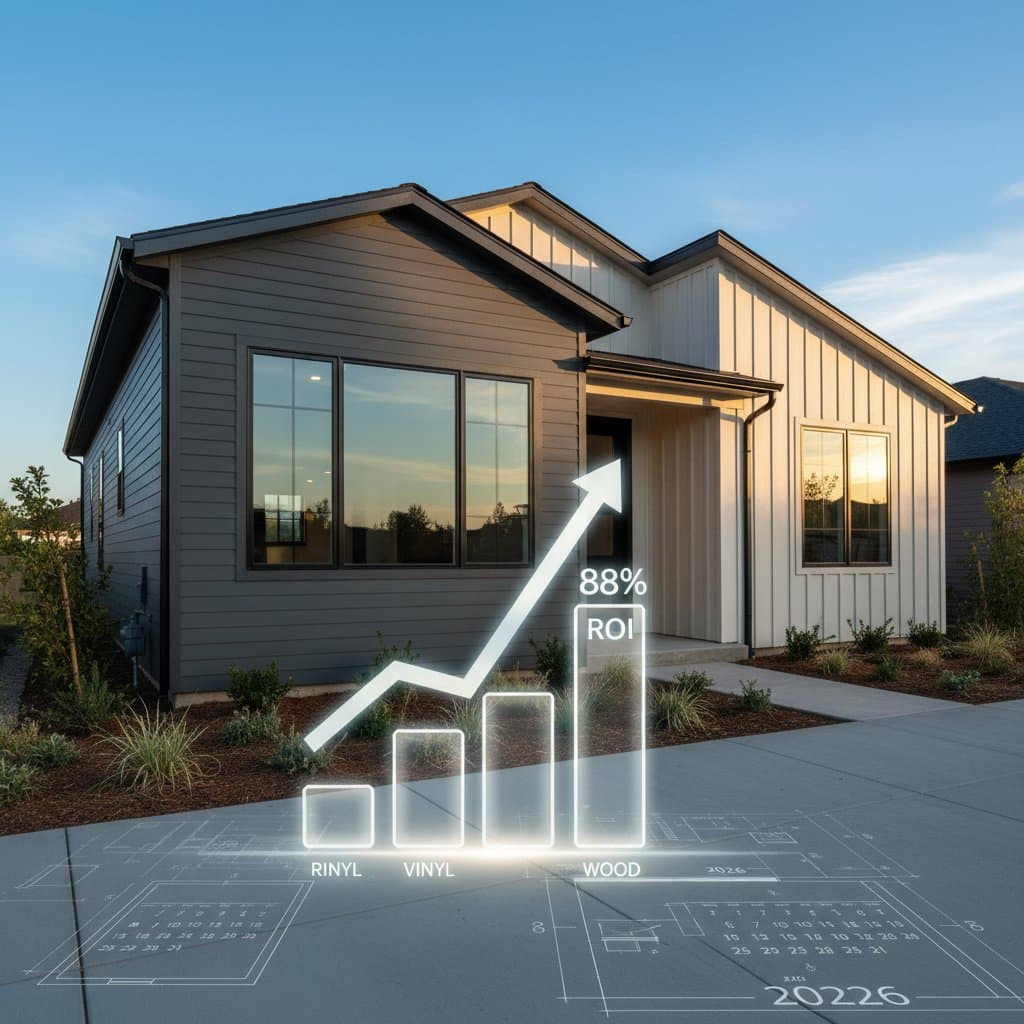
Fiber Cement Siding Achieves Top ROI Among Options in 2026
Homeowners considering siding replacement frequently seek materials that maximize resale value. Fiber cement siding consistently ranks highest in national reports, delivering an average return on investment of 88 percent. This means that for every dollar invested, approximately 88 cents recoups in home value upon sale. Such performance exceeds that of vinyl, wood, and composite alternatives in both financial recovery and buyer-perceived quality.
The material's strength lies in its combination of durability, fire resistance, and visual elegance. Prospective buyers view fiber cement as a reliable, low-maintenance enhancement that provides an upscale appearance free from concerns like rot or insect infestation. For those weighing expenses, aesthetics, and future benefits, fiber cement strikes an effective balance between cost-effectiveness and high-end functionality.
Understanding Costs, ROI, and Influencing Elements
Standard Project Costs
Replacing fiber cement siding on a medium-sized home typically ranges from $20,000 to $30,000. Single-story homes of smaller scale often fall nearer to $14,000, whereas expansive or intricate designs may surpass $35,000. These estimates encompass removal of prior siding, installation of moisture barriers, addition of trim, and basic finishing work.
Primary Cost Influences
- Siding Removal and Disposal: Expect $1 to $2 per square foot for dismantling existing materials. Presence of asbestos or layered siding elevates expenses.
- Architectural Complexity: Increased numbers of corners, gables, and trim elements demand additional cutting and finishing labor.
- Building Height: Access to a second story necessitates scaffolding and safety measures, raising labor fees.
- Trim Details: Selection of premium or broader trim profiles increments both material and installation charges.
- Site Accessibility: Confined property boundaries or features such as decks prolong setup and debris management.
Examples by Project Size
- Compact Project (1,500 sq. ft.): $14,000 to $20,000, suitable for a single-story ranch-style residence.
- Standard Project (2,000 to 2,500 sq. ft.): $22,000 to $28,000, common for suburban dwellings.
- Expansive Project (3,000+ sq. ft.): $30,000 to $40,000, applicable to multi-level homes with elaborate features.
Essential Insight
Despite the elevated initial outlay, fiber cement siding yields one of the strongest national recovery rates. Its ROI frequently surpasses 80 percent, as buyers appreciate the material's longevity and contemporary aesthetic. Individuals preparing to sell in the coming years gain a clear edge through this choice, coupled with reduced ongoing maintenance demands.
Enhancing Curb Appeal Through Design
Balancing Form, Contrast, and Scale
Effective curb appeal arises from harmonious proportions, seamless transitions, and discernible texture. Fiber cement's precise edges generate shadow lines that impart depth, particularly in natural light. Select trim widths aligned with the home's dimensions: 3.5-inch boards for modest structures and 5-inch options for grander facades.
Selecting Colors and Finishes
Fiber cement retains paint adhesion superior to wood, often requiring repainting only after 10 years or longer. Opt for medium to deep neutral shades with understated undertones that harmonize with roofing and stone elements. Prefer matte or satin sheens over glossy varieties, as they appear more inviting from afar and capture consistent light in photographs.
Highlighting the Entryway with Lighting
Position the entrance as the central feature. Employ broader trim, a complementary color accent, and symmetrical illumination to elevate initial views. Upgrade legacy fixtures to straightforward designs with transparent glass that distribute light uniformly. Ensure house numbers remain prominent and scaled appropriately to the door's dimensions.
Essential Insight
Thoughtful application of color and proportion elevates apparent worth without necessitating major alterations. The smooth or textured surfaces of fiber cement interact with light to convey solidity in real estate images, thereby boosting buyer engagement.
Ensuring Longevity Through Maintenance
Regular Cleaning and Assessment
Fiber cement demands little routine care. Perform a gentle rinse with a garden hose and soft brush once or twice annually. Steer clear of pressure washers, which may damage protective coatings. Conduct yearly reviews of caulk lines and apply paint touch-ups where necessary.
Maintenance Schedule
| Task | Frequency | Guidelines |
|---|---|---|
| Rinse siding | Twice yearly | Employ mild detergent exclusively |
| Examine caulk and trim | Annually | Renew any deteriorated sealant |
| Repaint exterior | Every 10-12 years | Select premium acrylic formulations |
| Inspect fasteners | Every 5 years | Substitute rusted nails or screws |
| Clear gutters | Twice yearly | Avoid water accumulation on siding |
Warranty Protections
Leading fiber cement manufacturers provide 30- to 50-year warranties on the core material and 10- to 15-year coverage for prefinished surfaces. Maintain records of upkeep and repainting to uphold warranty terms. Retain documentation and visual evidence for potential claims during resale or repairs.
Essential Insight
A straightforward maintenance regimen sustains the siding's fresh appearance and bolsters resale potential. Proactive checks and prompt corrections safeguard against water infiltration and prolong surface integrity.
Maximizing Benefits from Fiber Cement Siding
Fiber cement siding harmonizes expense, resilience, and style more effectively than many competitors. It withstands fire, adheres to paint reliably, and introduces a sophisticated texture that captivates prospective buyers. The 88 percent ROI captures tangible financial gains alongside the immediate allure of enhanced exteriors.
With proper care, this siding endures for up to 50 years, incurring few interventions. The infrequent need for repainting ultimately compensates for the upfront investment.
- Precise Installation Practices: Prioritize moisture management and meticulous detailing to avert issues.
- Strategic Design Choices: Incorporate neutral palettes, appropriate trim sizing, and subtle textures for timeless elegance.
- Diligent Upkeep: Regular cleansing and inspections maintain both aesthetics and manufacturer assurances.
Undertaking a siding upgrade influences a home's exterior protection, market positioning, and long-term equity. Fiber cement stands as a dependable selection for those seeking quantifiable returns, efficient care, and a refined, lasting exterior.