
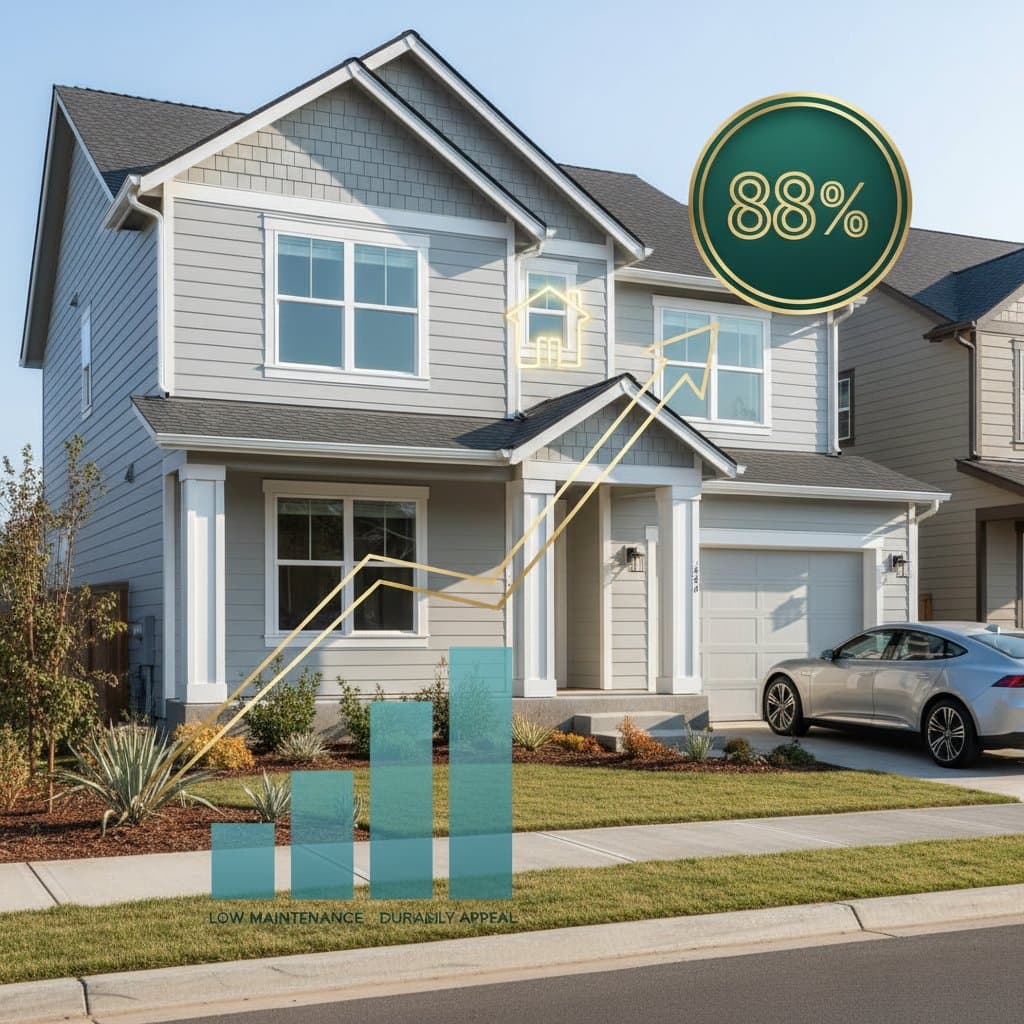
Understanding Fiber Cement's 88 Percent Return on Investment
Homeowners selecting new siding must weigh expenses, longevity, and potential gains at sale. Fiber cement siding stands out with a reported return on investment approaching 80 to 90 percent. This translates to recovering nearly nine dollars for every ten dollars invested upon selling the property. The following sections detail the elements contributing to this performance, comparisons with alternative materials, and preparations for a siding replacement initiative.
Evaluating Costs, Returns, and Influencing Elements
Core Dimensions of Value
Assessing siding involves three primary value categories:
- Market value: The amount a buyer offers, informed by regional transaction records.
- Perceived value: The influence of fresh siding on exterior aesthetics, architectural style, and prospective buyer attraction.
- Total cost of ownership: Comprehensive expenses across the material's service life, encompassing upkeep and durability.
Fiber cement excels across these dimensions. It retains pigmentation, withstands fire and pest damage, and maintains a high-end appearance despite prolonged environmental exposure.
Scope of Projects and Associated Costs
- Compact project (1,200 square feet residence): 12,000 to 18,000 dollars
- Moderate project (2,000 square feet residence): 20,000 to 30,000 dollars
- Extensive project (3,000 or more square feet residence): 30,000 to 45,000 dollars or higher
These estimates account for complete removal of prior siding, application of fresh house wrap, installation of fiber cement panels or planks, addition of trim, sealing with caulk, and final touches.
Primary Cost Influences
Several elements determine overall expenses:
- Demolition and waste management: Legacy materials such as asbestos-containing shingles or accumulated layers elevate labor demands and disposal charges.
- Structural intricacy: Features like gables, dormers, and ornamental trim extend time required for precise cutting and alignment.
- Building height: Properties with multiple levels necessitate scaffolding and extended preparation.
- Trim extent: Enhanced trim designs, including corner boards and soffit elements, increase both material quantities and installation efforts.
- Site accessibility: Confined spaces or extensive landscaping hinder progress and amplify setup durations.
Effects on Property Valuation
The strong return from fiber cement arises from its evident craftsmanship and reduced ongoing expenses. Prospective buyers perceive it as a superior facade indicative of meticulous property care and resilience. Fire-resistant properties may also lower insurance premiums in qualifying regions, thereby enhancing appeal. Although vinyl siding presents lower initial outlays, the extended service life and elevated resale recovery of fiber cement frequently justify the premium.
Key Insight: Allocate funds for expert installation, particularly on intricate facades. Anticipate reclaiming the majority of costs via increased sale price and diminished maintenance obligations.
Enhancing Exterior Appeal Through Design
Balancing Proportions and Scale
Effective curb appeal hinges on harmonious proportions. Expansive residences accommodate broader board widths, whereas compact homes benefit from slimmer profiles for equilibrium. Maintain uniform horizontal alignments across all facades and manage transitions deliberately near windows and entryways.
Selecting Contrasts and Hues
Strong differentiation between siding and trim accentuates architectural details, whereas subtle variations foster a serene, cohesive appearance. Fiber cement accepts paint applications with exceptional adhesion, preserving vibrant shades over extended periods. Opt for hues featuring subdued undertones that render effectively in photographs and remain consistent under varying light conditions, from direct sun to shadow.
Highlighting the Entrance Area
The entrance serves as the central element of exterior allure. Encircle it with trim coordinating with window surrounds, incorporate illumination that accentuates surface textures without excessive brightness, and ensure numerals display clearly. Symmetrical lighting flanking the doorway improves security and facilitates sharp, professional images in property listings.
Capturing Value in Visual Documentation
Real estate imagery frequently forms the initial buyer encounter. The matte surface of fiber cement minimizes glare, yielding authentic representations in natural and artificial lighting. Uniform shadow patterns from lap siding underscore superior workmanship, conveying reliability during virtual tours and in-person viewings.
Key Insight: Employ color and scale to emphasize the building's form rather than superfluous adornments. Precise lines and even illumination generate enduring, compelling visual effects.
Ensuring Durability Through Upkeep
Routine Cleaning Procedures
Fiber cement demands limited maintenance. Perform an annual rinse using gentle detergent and a soft-bristled brush. Refrain from high-pressure washers, which may force moisture into seams. Examine sealant lines regularly and apply fresh paint approximately every 15 years to preserve the protective coating.
Recommended Equipment
Select non-abrasive brushes and steer clear of metal tools that risk scratching the material. Prior to repainting, conduct a thorough cleaning and apply premium exterior paint designed specifically for cement-based substrates.
Scheduled Assessments
| Task | Frequency | Indicators to Monitor |
|---|---|---|
| Wash siding | Annually | Accumulation of dirt or mildew in shaded areas |
| Examine caulk | Biennially | Fissures or gaps at seams |
| Repaint surfaces | Every 15 years | Color fading or powdery residue |
| Review flashing | Every five years | Corrosion or misalignment |
Fulfilling Warranty Conditions
Leading manufacturers stipulate evidence of qualified installation alongside maintenance records. Retain documentation including invoices for materials, painting services, and assessment reports. Such files bolster claims should defects emerge.
Key Insight: Employ mild cleaning methods and regular evaluations to sustain fiber cement's performance over decades. Consistent care safeguards aesthetics and preserves economic worth.
Realizing Long-Term Benefits
Fiber cement siding supports sustained ownership through consistent performance and value preservation. Its authentic textures and defined trim edges attract purchasers seeking robust construction standards.
Property owners who diligently seal joints, cleanse surfaces, and adhere to repainting timelines witness minimal wear over many years. With escalating costs for materials and labor throughout the sector, resilient selections that retain worth gain increasing relevance.
Practically, replacing siding ranks among the select exterior improvements capable of reshaping both visual impact and fiscal outcomes. Fiber cement strikes an optimal equilibrium between endurance and market recovery, positioning it as a prudent selection for residents intending to remain or market their home in forthcoming cycles.
Sustaining Investment Returns: Individuals pursuing a siding option that guarantees prolonged reliability, aesthetic excellence, and substantial cost reclamation at sale will find fiber cement a steadfast enhancement. Strategic planning in design, meticulous execution during installation, and reliable upkeep unlock the complete potential of this investment.