
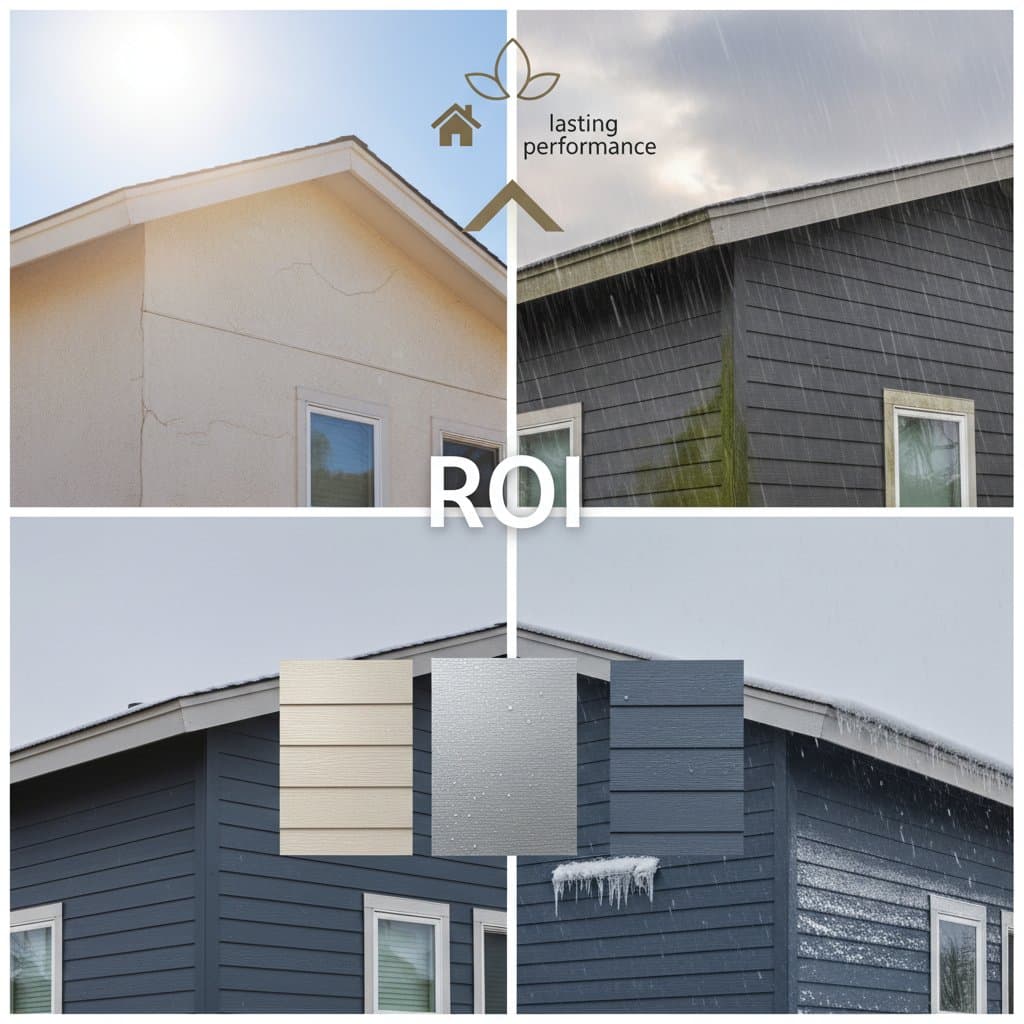
The Hidden Impact of Climate on Siding ROI
Homeowners often initiate siding projects by evaluating colors and budgets, yet the actual return on investment relies significantly on regional climate conditions. Extreme temperatures, precipitation patterns, humidity, and wind forces influence how siding materials endure over time, the frequency of required upkeep, and the perceptions of potential buyers regarding long-term reliability. Selecting materials aligned with your specific climate zone distinguishes projects that appreciate in value from those necessitating early replacements.
Climate zones, as defined by frameworks like the Köppen classification, group areas by predominant weather traits. For instance, temperate zones with moderate rainfall demand materials that resist moisture absorption, while arid regions prioritize options that withstand intense ultraviolet radiation. Understanding these zones enables informed decisions that optimize both performance and economic outcomes.
Cost, ROI, and Impact Factors
Project Overview:
- Scope: Complete replacement of exterior siding
- Timeline: One to three weeks, depending on home size and crew efficiency
- Complexity Level: Moderate to high, influenced by architectural details
- Cost Range: $8 to $18 per square foot, including labor and materials
Several elements drive project expenses. The removal of old siding requires careful handling to avoid damaging underlying structures. Homes with intricate wall geometries, multiple stories, or extensive trim increase labor demands. Additional factors include the extent of flashing and weatherproofing, as well as challenges related to site accessibility and waste disposal.
For a modest single-story residence, total costs may fall between $14,000 and $20,000. Properties with elaborate features, such as multi-level designs or custom accents, often surpass $35,000. Investment recovery typically achieves 60 to 80 percent, varying by market trends and upkeep records. In humid or coastal environments, prospective buyers value siding that prevents warping or coating degradation. Conversely, in sun-drenched or arid areas, resistance to fading and thermal expansion preserves aesthetic and structural integrity, thereby supporting higher resale prices.
Key Insight: Align the quality and style of your siding with the environmental challenges of your location, rather than focusing solely on aesthetic preferences.
Material and Profile Choices
Selecting the right material involves evaluating how it performs under local conditions. Each option offers unique advantages and limitations, particularly in response to temperature fluctuations, moisture, and solar exposure.
| Material | Advantages | Disadvantages | Maintenance Requirements |
|---|---|---|---|
| Fiber Cement | Resists fire and maintains stability in damp conditions; durable against impacts | Requires periodic repainting every 10 to 15 years; heavier weight demands sturdy installation | Clean with mild detergent annually; check sealant integrity regularly |
| Vinyl | Affordable initial cost; low ongoing maintenance needs | Prone to cracking in subzero temperatures or deforming in excessive heat | Rinse surfaces biannually to remove debris |
| Engineered Wood | Provides a authentic wood appearance; available in factory-applied finishes | Demands meticulous sealing at edges to prevent water infiltration | Apply fresh coatings as the original finish deteriorates |
| Metal | Inherently fireproof; delivers a sleek, contemporary aesthetic | Susceptible to dents from hail or scratches from branches | Repair paint chips promptly to avoid corrosion |
When incorporating varied profiles, such as horizontal lap siding paired with vertical board-and-batten elements, maintain uniformity in alignment and color schemes. Overly diverse patterns can create visual disarray, detracting from street-level appeal. Consult local building codes to ensure compatibility with regional weather demands, such as enhanced wind resistance in hurricane-prone areas.
Key Insight: Prioritize materials with documented success in your area's prevailing weather before committing to decorative elements.
Design for Curb Appeal
Effective curb appeal emerges from balanced proportions and streamlined architectural forms. In regions with high humidity or frequent overcast skies, opt for lighter shades to conceal potential mold growth. Bolder colors suit arid or north-facing exposures, where color retention occurs more gradually. Position entryways, exterior lighting, and address numerals to draw attention naturally. Consistent trim proportions around corners and openings enhance photographic marketability and in-person allure.
To elevate design further, consider how siding interacts with roofing and landscaping. For example, in snowy climates, select profiles with wider overlaps to shed ice buildup efficiently. Test color samples under actual site lighting conditions to predict long-term vibrancy.
Key Insight: Streamline exterior compositions and emphasize a single dominant feature, like the front entrance or window arrangement, to guide viewer focus.
Installation Quality and Risk Control
Thorough preparation of exterior walls forms the foundation for leak prevention, decay avoidance, and minimized post-installation issues. Frequent vulnerabilities arise from inadequate window flashing, absent moisture barriers, or overly tightened fasteners that compromise material flexibility. Installation teams must clear debris each day to prevent disputes with neighbors and safeguard landscaping.
Verify that contractors adhere to manufacturer-specified fastening schedules, as deviations may invalidate guarantees. In freeze-thaw cycles common to northern zones, use corrosion-resistant screws spaced no more than 16 inches apart. For coastal installations, incorporate galvanized or stainless steel components to combat salt air corrosion.
Key Insight: Meticulous installation safeguards the building envelope and maximizes the financial return on your siding upgrade.
Maintenance and Longevity
Consistent care extends the service life of siding and upholds warranty validity. Follow this routine schedule:
- Clean surfaces using a gentle detergent solution twice annually to eliminate dirt and pollutants.
- Examine caulk lines and joints each spring for signs of deterioration.
- Refresh paints or sealants according to producer guidelines, typically every 7 to 15 years.
- Maintain a clearance of at least six inches between siding and surrounding vegetation to promote airflow.
Regular assessments identify minor fissures or loose attachments before water penetrates interior walls. Document upkeep efforts with timestamped images and invoices, as many warranties stipulate evidence of diligent care. In high-wind areas, secure loose elements promptly to avert larger repairs.
Key Insight: Proactive cleaning and monitoring sustain property worth and ensure warranty protection.
Contractor Selection and Bidding
Seek detailed written proposals that specify materials, trim work, protective barriers, waste management, and permitting responsibilities. Evaluate estimates by individual components rather than aggregate figures to identify discrepancies. Structure payments around verifiable progress points, including material arrival, rough completion of walls, and comprehensive final walkthrough.
Interview multiple contractors with experience in your climate zone. Request references from similar projects and confirm licensing, insurance, and adherence to local codes. A reputable professional will conduct a pre-installation site audit to address potential obstacles.
Securing Long-Term Benefits
Opting for climate-adapted siding enhances daily living while building equity. Materials attuned to local conditions lower repair frequencies, prolong surface treatments, and fortify market positioning. Homeowners gain peace of mind knowing their exterior withstands seasonal rigors, delivering enduring value and aesthetic satisfaction.