
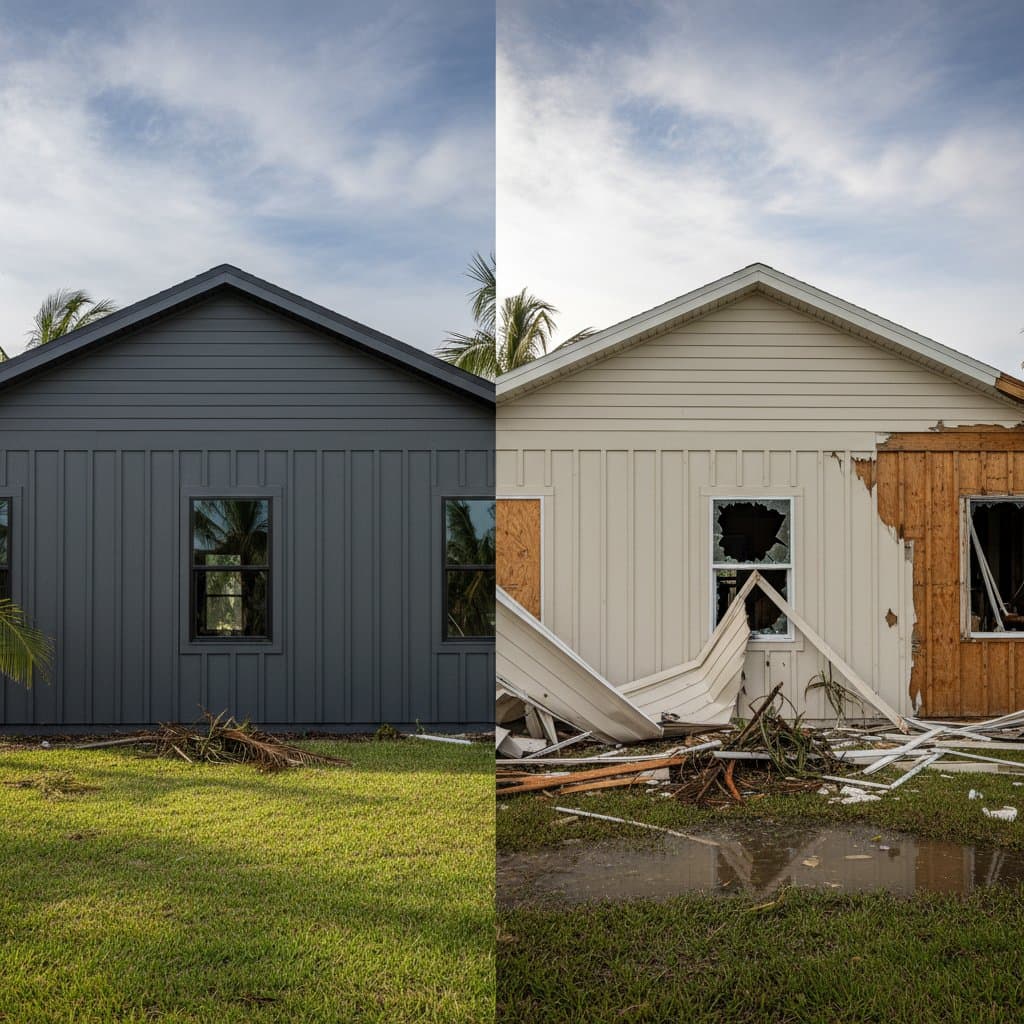
Fiber Cement Versus Vinyl Siding: Performance in Hurricane Conditions
Hurricanes pose severe risks to homes in coastal areas, where siding must function as a protective barrier. This cladding shields the underlying structure from moisture, wind damage, and debris while maintaining the home's market value through multiple storm events. Property owners in vulnerable regions frequently consider fiber cement and vinyl siding as leading choices. These materials offer reduced upkeep and enduring hues, yet their effectiveness against intense weather elements varies considerably.
The following sections examine the expenses, resilience, and care requirements of each option. This evaluation relies on verifiable performance data rather than promotional assertions, enabling informed decisions that balance financial constraints with exposure to severe weather.
Options in Materials and Designs
Comparison of Key Features
| Feature | Fiber Cement | Vinyl |
|---|---|---|
| Composition | Blend of cement, sand, and cellulose fibers | Polyvinyl chloride resin |
| Wind Resistance | Withstands speeds of 130 to 150 mph, based on installation method | Handles 90 to 110 mph for standard configurations |
| Fire Resistance | Non-combustible with Class A rating | Susceptible to melting at elevated temperatures, lacks rating |
| Moisture Resistance | Remains stable with appropriate painting and sealing | Impervious to water absorption but prone to trapping moisture behind panels |
| Impact Resistance | Superior ability to deflect flying objects | Adequate but susceptible to fractures from impacts |
| Maintenance | Requires repainting every 10 to 15 years | Needs only periodic cleaning |
| Weight | Substantial, demands professional installation | Lightweight and straightforward to install |
| Color Options | Available in paintable or pre-finished varieties | Features colors embedded throughout the material |
Resilience and Upkeep Requirements
The dense composition of fiber cement provides exceptional resistance to impacts from storm debris. This material neither melts nor catches fire easily and shows minimal expansion when exposed to heavy, wind-driven precipitation. Protective paint layers or factory-applied finishes further prevent water penetration. In contrast, vinyl repels water on its surface, but the design of overlapping seams may permit rain to seep toward the building's framework if flashing proves inadequate.
Protection Against Fire and Water
In regions affected by hurricanes, preventing water entry often matters more than fire safety. Fiber cement creates a solid barrier that restricts moisture even if wind dislodges minor flashing components. Vinyl effectively channels away surface runoff, yet it relies entirely on the underlying moisture barrier for full protection. Once water breaches these defenses, it may cause gradual deterioration of wooden supports or insulating layers without immediate detection.
Combining Textures for Balanced Aesthetics
Certain property owners opt to integrate materials strategically, applying fiber cement to sections exposed to prevailing winds and vinyl to less vulnerable areas. Such an approach manages overall expenses while prioritizing defense where needed most. To maintain a cohesive appearance:
- Align horizontal seams consistently across different materials.
- Ensure trim elements share uniform thickness for seamless junctions.
- Restrict mixed applications to focal points like gable ends, dormer sections, or single-level portions of the structure.
Key Insight: Fiber cement demonstrates clear advantages in overall strength and water repellency. Vinyl provides simpler installation and reliable color retention, though it demands precise joint sealing to achieve dependable waterproofing.
Ensuring Proper Installation for Enhanced Protection
Critical Details for a Watertight Building Envelope
The integration of a comprehensive weather-resistant layer underpins the longevity of any siding installation. Essential elements encompass:
- Placement of a seamless water-resistive membrane beneath every panel.
- Installation of metal flashing over window and door openings.
- Application of sealant at the rear of vertical seams in fiber cement systems.
- Use of fasteners driven directly into structural studs, avoiding reliance on sheathing alone.
Identifying and Avoiding Typical Issues
- Detachment of Vinyl Panels: This problem arises from overly tight nailing, which restricts natural expansion. Leave adequate space for thermal movement.
- Cracks in Fiber Cement: Improper cutting tools or nails placed too near edges often cause these defects. Employ specialized blades and adhere to recommended margins.
- Gaps in Flashing: Such oversights invite water around penetrations. Layer flashing materials and apply durable sealants for robust coverage.
- Insufficient Clearances: Keep at least two inches of separation from roofs or decks to avoid capillary action that draws moisture upward.
Preparation of the Site, Management of Waste, and Neighbor Coordination
Installation of either material produces considerable waste, with fiber cement generating fine dust that necessitates careful containment. Equip tools with vacuum attachments and provide workers with respiratory masks. Removing existing vinyl may scatter lightweight particles, so cover surrounding grounds with tarps. Inform adjacent property owners in advance about the use of elevated platforms or scaffolding that might encroach on shared boundaries.
Key Insight: The effectiveness of a storm-resistant siding assembly hinges on the integrity of its connections. Rigorous oversight during the process minimizes future repairs and upholds manufacturer warranties.
Choosing and Evaluating Contractors
Comprehensive Project Specifications
A thorough contract outline must detail:
- Specific type and gauge of siding panels or boards.
- Components for the water barrier and associated flashing.
- Sizes and styles of trim along with corner finishes.
- Specifications for painting or pre-applied coatings.
- Procedures for disposing of removed materials.
- Obligations regarding permits and required inspections.
Conducting Fair Bid Evaluations
Obtain a minimum of three detailed proposals based on uniform project descriptions. Verify that each bid accounts for:
- Expenses related to demolition and preparation of the substrate.
- Selection and placement pattern of fasteners.
- Materials for trim and joint sealing.
- Duration and scope of labor guarantees.
Assess proposals beyond mere total cost by reviewing commitments to quality craftsmanship and prior experience with installations designed for high-wind zones. An inexpensive bid that skimps on secure attachments or protective flashing may lead to substantial additional costs following the initial severe weather incident.
Structured Payment Arrangements
Equitable payment terms safeguard interests on both sides:
- Initial Deposit: Ten to twenty percent upon agreement execution to cover material procurement.
- Progress Payment: Issued after demolition and application of the moisture barrier.
- Final Disbursement: Released following final walkthrough and resolution of any outstanding items.
Withhold complete payment until all work concludes satisfactorily. Retain the last portion until the site appears clean of debris and documentation for product warranties has been provided.
Key Insight: Selecting a skilled professional extends beyond surface enhancements to fortify the home against elemental forces. Precise documentation and phased payments secure value and promote reliable execution.
Long-Term Performance and Homeowner Experiences
Both fiber cement and vinyl siding contribute to sleek, contemporary facades, though their responses to hurricane forces diverge significantly. Fiber cement acts as a steadfast barrier, deflecting airborne hazards and blocking moisture ingress effectively. Vinyl suits calmer climates well but shows greater susceptibility to panel lift and breakage under escalating storm pressures.
Homeowners who invest in fiber cement often report fewer post-storm repairs, despite the higher upfront investment. This choice supports sustained property protection and aesthetic integrity over decades. Vinyl appeals to those prioritizing affordability, provided installation adheres to stringent standards. Ultimately, aligning the material with local weather patterns and personal priorities ensures the siding enhances both safety and satisfaction for years ahead.