
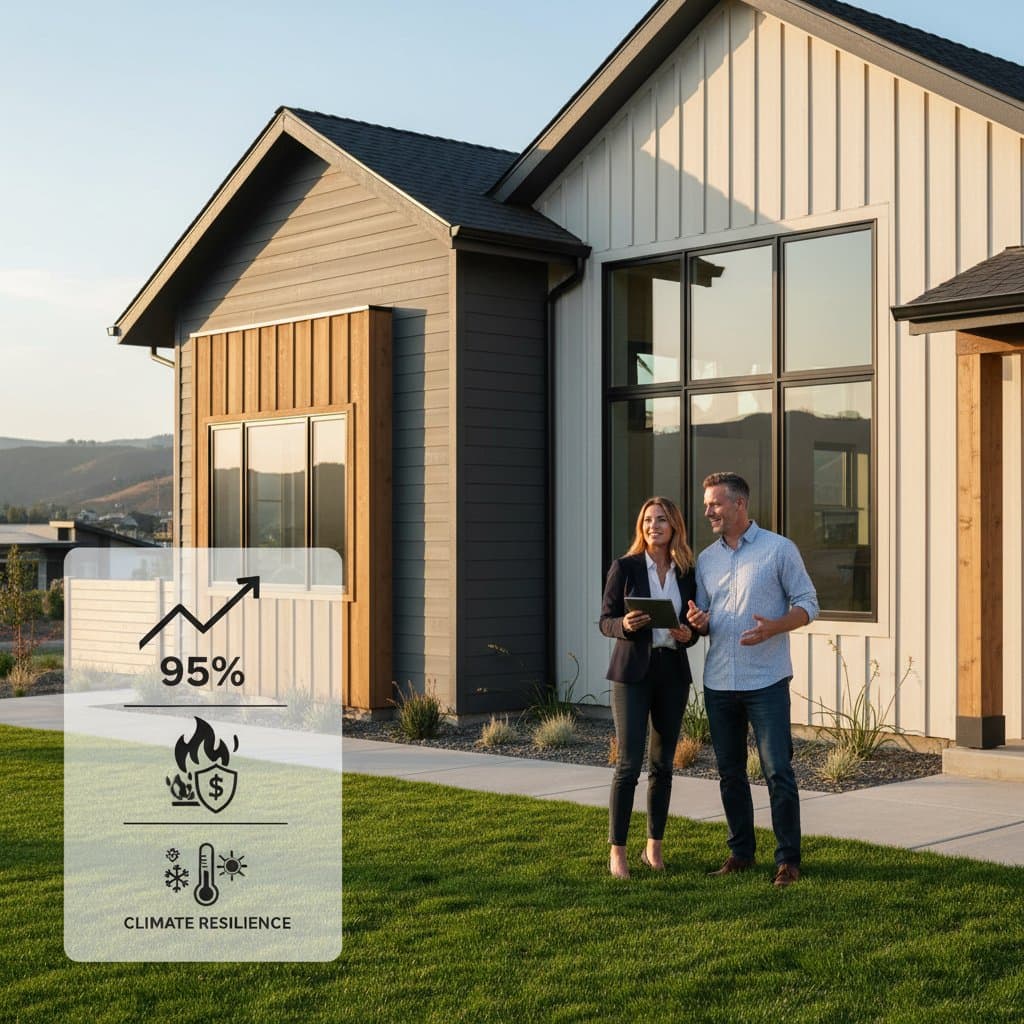
Fiber Cement Siding Achieves 95 Percent Return on Investment
Fiber cement siding stands out as a durable and fire-resistant option for home exteriors. The material consists of cement, sand, and cellulose fibers, forming a solid board that withstands flames, moisture, and physical impacts. Property owners select it for long-lasting safeguards and substantial resale benefits. Industry data indicates an average 95 percent return on investment, positioning fiber cement as a wise choice for enhancing both security and market appeal.
Cost and Planning Essentials
Project Overview
| Aspect | Timeframe | Complexity | Cost Range |
|---|---|---|---|
| Complete siding replacement | 10 to 20 workdays | Moderate to high | $7 to $13 per square foot installed |
Project Details
A comprehensive fiber cement installation involves stripping existing siding, fixing underlying sheathing, applying weather-resistant barriers, adding trim and flashing, and finishing with paint or pre-coated panels. Typical projects cover 2,000 to 3,000 square feet of exterior walls.
Factors Influencing Costs
- Panel Dimensions and Surface Treatment - Basic smooth panels cost less than those with intricate wood-grain patterns.
- Demolition and Waste Removal - Dismantling old vinyl or wood siding adds $1 to $2 per square foot.
- Trim Details - Elements like corner pieces, soffits, and window surrounds extend labor requirements.
- Site Accessibility - Challenging terrain or limited space demands extra equipment, increasing expenses.
- Finishing Choices - Prefinished panels carry a higher initial price but eliminate the need for early repainting.
Schedule and Regulatory Steps
Projects span two to three weeks, from material arrival to final approval. Municipal codes frequently mandate permits for siding work, particularly in fire-risk areas that require Class A or B fire classifications.
Budget Management Strategies
Allocate 10 percent of the total for unexpected fixes to framing or flashing. Hidden issues like water damage often prompt adjustments, so document the site's condition with photographs prior to finalizing agreements.
Design and Material Choices
Primary Profiles
- Lap Siding - Horizontal planks that suit traditional and contemporary homes.
- Shingle Panels - Perfect for gable ends and decorative highlights.
- Vertical Panels - Appropriate for sleek modern, rustic farmhouse, or hybrid architectural styles.
Composition Variations
Every fiber cement product uses a consistent core formula, though thickness and surface treatments differ. Heavier boards provide superior strength in regions prone to strong winds. Manufacturer-applied coatings outperform on-site painting and often include 15-year guarantees on appearance.
Design Guidelines
Pair horizontal lap siding on primary surfaces with shingle or vertical accents on gables and projections. Employ trim to delineate shifts and preserve aesthetic harmony. Select subdued color variations to emphasize texture while simplifying ongoing care.
Practical Application Example
For a two-story suburban residence with 2,400 square feet of exterior, opt for smooth lap siding in a soft neutral shade paired with cedar-textured panels beneath the gables. This approach maintains uniform fire protection alongside an organic visual effect.
Performance in Durability and Safety
Response to Weather and Fire
Fiber cement qualifies as noncombustible with a Class A fire rating. It resists ignition from direct exposure and does not fuel fire spread. The material also avoids distortion from temperature extremes or humidity, fitting well in coastal or fire-vulnerable environments.
Resistance to Impacts and Moisture
Its compact structure endures hail and flying objects more effectively than vinyl or timber alternatives. Installing a rain-screen system behind the panels promotes airflow and water shedding, safeguarding the home's framework from decay.
Maintenance Practices
- Clean yearly using gentle soap and water.
- Examine sealant joints at the start of each spring season.
- Refresh factory-primed surfaces every 10 to 15 years.
- Steer clear of pressure washers exceeding 1,500 psi to preserve coatings and seals.
Warranties and Homeowner Responsibilities
Most manufacturers provide 30- to 50-year limited warranties on the product against defects, with 15-year coverage for finishes. Homeowners must follow installation guidelines and perform routine inspections to validate claims. Proper care extends the material's lifespan and preserves warranty eligibility.
Preparation Steps for Installation
- Establish Objectives - Identify whether the focus lies on fire protection, aesthetic enhancement, or extended intervals between repaints.
- Identify Qualified Installers - Select contractors endorsed by the siding producer for expertise.
- Evaluate Proposals - Scrutinize breakdowns covering demolition, trim work, weatherproofing, and coatings.
- Review Material Samples - Verify hues and textures prior to ordering.
- Ready the Property - Remove landscaping obstacles and locate underground lines for secure operations.
- Monitor Installation - Ensure proper placement of flashing before enclosing with siding.
- Conduct Final Inspection - Verify all seals, minor corrections, and site restoration.
Benefits of Fire-Rated Fiber Cement Siding
Selecting fiber cement siding secures both structural integrity and financial returns for homeowners. The nonflammable nature shields the building during threats, and the infrequent maintenance schedule supports consistent upkeep. With correct installation featuring adequate barriers and airflow, the siding endures for 50 years or longer. This combination yields a 95 percent return on investment through elevated resale prices, diminished hazards, and lower repair demands.