
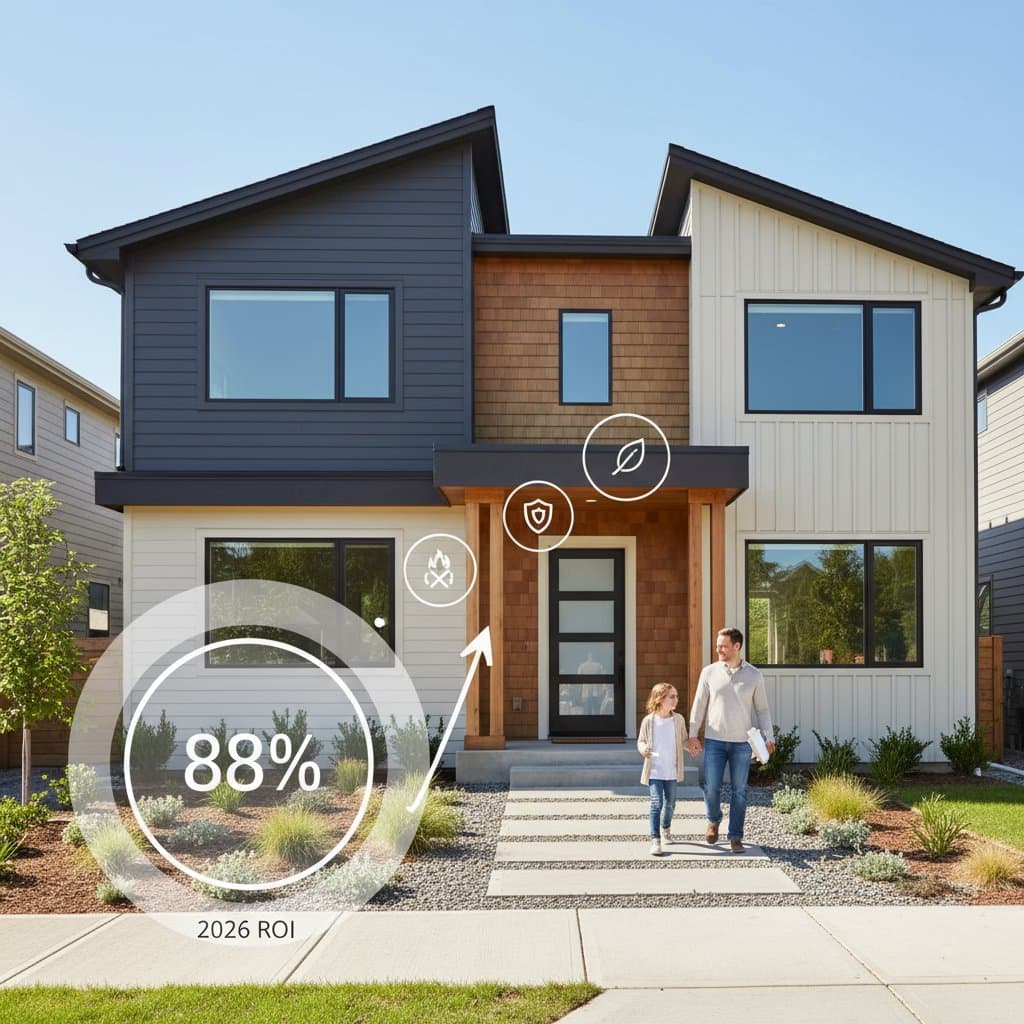
Why Fiber Cement Siding Delivers an 88 Percent ROI in 2026
Homeowners frequently seek siding options that maximize value at resale. National cost analyses and industry reports highlight fiber cement siding as a top performer, offering an average return on investment of 88 percent. This strong performance stems from its exceptional durability, minimal maintenance needs, and enduring aesthetic appeal, all while maintaining predictable installation expenses across diverse markets.
The 88 percent ROI figure derives from comprehensive studies by organizations like the Remodeling Impact Report, which evaluate resale value recovery after typical upgrades. Fiber cement excels due to its resistance to fire, pests, and weathering, ensuring homes retain premium pricing. In the sections ahead, explore the origins of these benefits, strategies for cost management, and practical steps for design and upkeep to safeguard this investment.
Understanding the ROI Advantage
Return on investment for siding measures the percentage of project costs recouped through increased home value. For fiber cement, this reaches 88 percent in 2026 projections, surpassing vinyl at 68 percent and brick veneer at 75 percent. Factors include rising demand for resilient materials amid climate challenges and buyer preferences for low-maintenance exteriors.
Initial costs range from $10 to $20 per square foot installed, depending on profile and region. Over time, these expenses yield savings through reduced repairs; for instance, fiber cement withstands hail and high winds better than softer alternatives, avoiding frequent replacements. Homeowners in coastal or wildfire-prone areas particularly benefit, as insurers often offer discounts for its Class A fire rating.
To calculate potential ROI, consider local market data. In suburban markets, a 2,000-square-foot home upgrade might cost $25,000 but add $22,000 to resale value. Tools from real estate platforms can refine these estimates based on zip code and home style.
Selecting Materials and Profiles
Fiber cement siding combines cement, sand, and cellulose fibers into durable panels that resist combustion, moisture, and dimensional changes in varying climates. Panels arrive primed or prefinished, simplifying application and ensuring color consistency.
Choose profiles based on architectural style and performance needs. The table below outlines key options.
| Profile Type | Appearance | Pros | Cons | Maintenance |
|---|---|---|---|---|
| Lap (horizontal) | Traditional clapboard | Versatile for most home styles | Demands precise overlapping | Repaint every 12 to 15 years |
| Board and Batten | Vertical with narrow strips | Suits modern farmhouse aesthetics | Involves more cuts and joints | Inspect battens annually |
| Shingle Panels | Mimics cedar shakes | Provides textured depth | Elevates labor expenses | Check caulk periodically |
| Panels with Trim | Large flat expanses | Supports sleek contemporary looks | Requires precise flashing | Infrequent repainting needed |
With a density greater than vinyl, fiber cement enhances wind resistance but requires careful handling during installation. It deters woodpeckers and rot, preserving structural integrity over decades.
For cohesive designs, select a dominant profile for main walls and introduce variety sparingly, such as shingles on gables. Opt for trim in a lighter shade than the siding to enhance definition in photographs and appraisals. This approach boosts curb appeal without overwhelming the facade.
Verify that installers use corrosion-resistant fasteners, like hot-dipped galvanized nails, to uphold manufacturer warranties typically spanning 30 to 50 years.
Managing Costs Effectively
Budgeting for fiber cement involves balancing material quality with labor efficiency. Expect $8 to $15 per square foot for materials alone, plus $5 to $10 for installation, totaling $13 to $25 per square foot. Regional variations apply; labor rises 20 percent in urban areas due to access challenges.
Break down expenses: tear-off of old siding adds $2 to $4 per square foot, while custom cuts for around windows increase costs by 10 percent. Factory finishes save on-site painting labor, reducing overall outlay by up to 15 percent.
Secure multiple bids to compare; aim for contractors offering fixed-price contracts that itemize contingencies like weather delays. Financing options, such as home equity lines, can spread payments, preserving cash flow during the project.
Design Strategies for Maximum Appeal
Effective design elevates fiber cement from functional to standout. Align profiles with your home's era: lap siding suits colonials, while board and batten fits craftsman revivals. Incorporate color palettes that harmonize with roofing and landscaping; neutral tones like grays and beiges offer broad resale versatility.
Accent key areas strategically. Apply vertical panels to side elevations for height illusion, or integrate stone veneer at the base for grounded texture. Ensure transitions between materials feature proper sealing to prevent water intrusion.
Consult local trends via real estate listings to predict buyer preferences. In growing markets, sustainable features like fiber cement's recyclability appeal to eco-conscious buyers, further supporting high ROI.
Ensuring Quality Installation
Installation quality determines long-term performance. Subpar work, such as inadequate flashing or uneven spacing, invites moisture damage and warranty invalidation.
Address common pitfalls proactively:
- Install kick-out flashing at every roof-to-wall junction to divert water.
- Maintain 1/8-inch joint gaps with backer rod and sealant for expansion.
- Avoid overdriving fasteners, which compromise the finish; space nails 16 inches on center.
- Provide 1/4-inch ventilation behind vertical installations to reduce moisture buildup.
Prepare the site by confirming dry, level sheathing. Apply a water-resistive barrier over the entire surface, and use metal flashing around doors, windows, and vents. Cut panels outdoors with wet saws to minimize silica dust, and schedule daily cleanups to safeguard surroundings.
Conduct a pre-installation inspection with your contractor. Review specifications for barriers, sealants, and fasteners to align with guidelines from producers like James Hardie or Allura.
Choosing the Right Contractor
Select contractors experienced in fiber cement to avoid costly errors. Look for certifications from manufacturers and reviews emphasizing clean, timely work.
Develop a detailed scope of work covering:
- Specific material gauge (typically 5/16 inch) and profile.
- Installation of housewrap and flashing protocols.
- Inclusion of trim, soffits, and fascia details.
- Finish application method and color selections.
- Debris management and site restoration.
- Acquisition of necessary permits.
Structure payments securely:
- 10 percent initial deposit to secure scheduling.
- 40 percent after old siding removal and substrate inspection.
- 40 percent upon completion of siding and trim.
- 10 percent final upon walkthrough and cleanup approval.
This phased approach incentivizes progress while protecting funds.
Maintenance for Longevity
Fiber cement demands little upkeep, contributing to its ROI edge. Annually inspect for cracks or loose trim, especially after storms. Clean with low-pressure washing to remove mildew, using mild detergent.
Repaint as needed, every 10 to 15 years, selecting 100 percent acrylic latex for adhesion. Address caulk joints promptly; replace deteriorated sealant with silicone-based products rated for exterior use.
In harsh environments, apply protective coatings biennially. These routines prevent minor issues from escalating, ensuring the siding performs for 50 years or more.
Realizing Lasting Value
Fiber cement siding secures financial and aesthetic returns through resilience and style. By selecting quality materials, prioritizing skilled installation, and committing to basic care, homeowners protect their investment against time and elements. This choice not only enhances daily living but positions properties favorably in competitive markets, delivering tangible benefits for years ahead.