
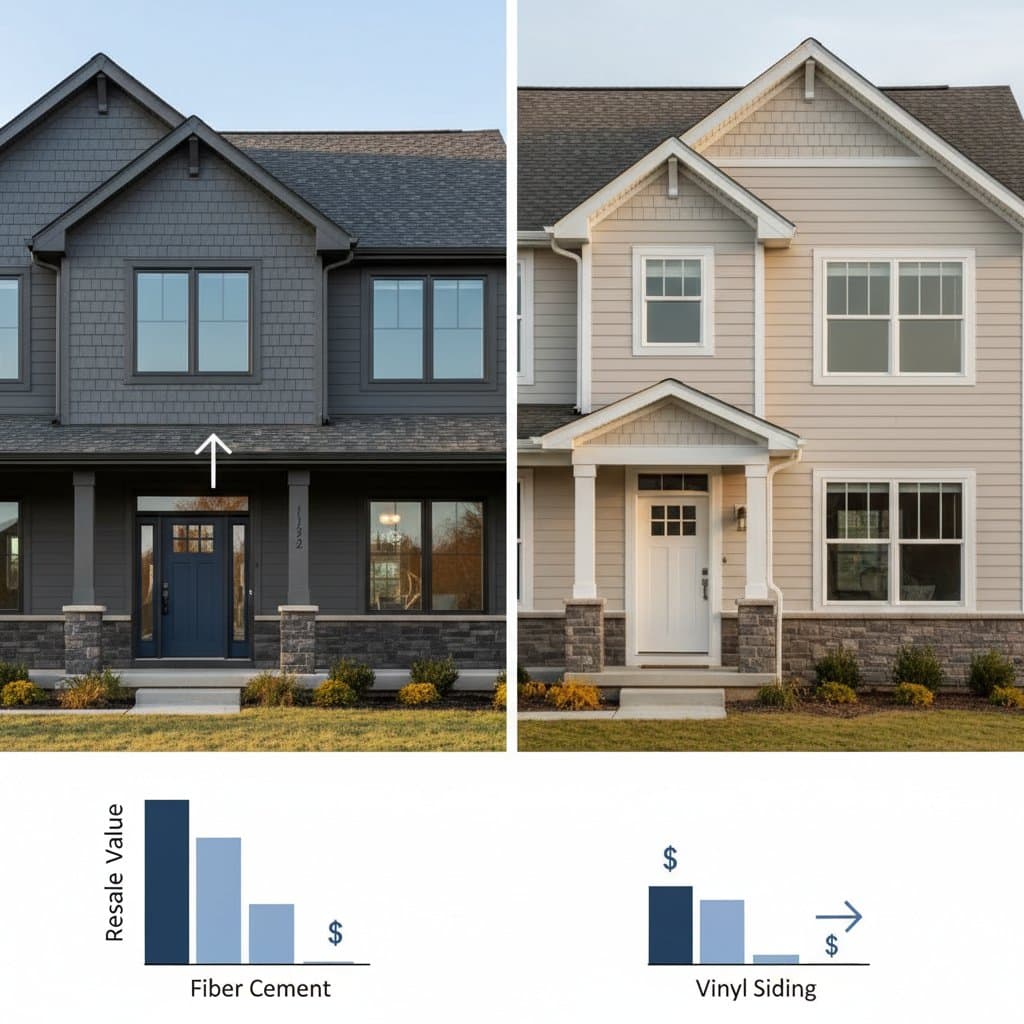
Fiber Cement vs Vinyl: Which Siding Maximizes Resale Value?
Homeowners facing a re-siding project seek materials that deliver durability, minimal upkeep, and strong financial returns upon sale. Fiber cement and vinyl siding lead the market, each offering distinct advantages. However, their contributions to home value differ significantly based on factors such as regional climate, architectural style, and investment priorities.
This analysis details how these materials influence resale outcomes, project expenses, longevity, and buyer preferences. Readers gain insights to inform decisions that align with specific home characteristics and market dynamics.
Understanding Styles and Material Choices
Essential Profiles and Applications
Siding profiles determine aesthetic compatibility with various home designs. Common options include:
- Lap siding: Overlapping horizontal planks suitable for traditional and contemporary exteriors.
- Board and batten: Vertical boards with battens concealing joints, favored in modern and rustic settings.
- Shingle or shake: Textured panels perfect for gables, accents, or coastal-inspired looks.
Both fiber cement and vinyl accommodate these profiles. Fiber cement excels in replicating authentic wood textures through precise milling, whereas vinyl provides a uniform, molded appearance that suits budget-conscious updates.
Key Properties: Pros and Cons
Selecting the right material hinges on performance attributes. The following table outlines core differences:
| Property | Fiber Cement | Vinyl |
|---|---|---|
| Composition | Portland cement, sand, cellulose fibers | Polyvinyl chloride (PVC) resin |
| Finish Options | Factory-primed or pre-painted; fully paintable | Baked-on color; not paintable |
| Fire Resistance | Non-combustible; meets strict codes | Combustible; softens at high temperatures |
| Impact Resistance | Superior; withstands hail and debris | Adequate; dents under heavy impact |
| Maintenance Needs | Periodic repainting every 10-15 years | Annual cleaning with mild soap |
| Insulation Value | Minimal unless paired with foam backing | Enhanced with insulated backer boards |
| Weight | Substantial; requires structural support | Lightweight; simplifies handling |
| Warranty | 30-50 years for material integrity | 25 years to lifetime, limited terms |
Fiber cement demands professional installation due to its heft, but it endures extreme weather better. Vinyl installs quickly, appealing to projects with tight timelines.
Guidelines for Combining Materials
Strategic material mixes enhance visual interest without compromising cohesion. For fiber cement as the primary surface, incorporate vinyl only in less visible areas like high gables. Position transitions at architectural features such as soffits or horizontal bands to maintain harmony.
Select complementary color tones to avoid clashing contrasts. This approach elevates curb appeal, a key driver of buyer interest and property valuation.
Trim and Accent Recommendations
Opt for fiber cement or cellular PVC trim with either siding type to prevent moisture-related decay. Avoid natural wood adjacent to vinyl, as it traps condensation. Generous trim widths around doors and windows convey craftsmanship, positively influencing appraisals and offers.
Tailored Advice by Home Category
- Entry-level homes: Vinyl siding aligns with affordability goals. Its fresh, clean finish reassures first-time buyers without demanding premium pricing.
- Mid-tier suburban residences: Fiber cement positions the property as upgraded. Prospective owners associate it with reliability over basic vinyl alternatives.
- Premium or heritage properties: Fiber cement complies with rigorous preservation standards and emulates historic wood siding. It bolsters market value in competitive segments.
Preparing for a Successful Siding Installation
Establishing Project Objectives
Clarify priorities upfront: prioritize visual refresh for imminent sales or invest in resilient materials for extended ownership. For resale focus, select timeless neutrals like soft grays or beiges that broaden appeal.
Calculate total surface area, factoring in peaks, valleys, and overhangs. Add 10-15 percent for cuts and errors. Outline trim dimensions, ventilation paths, and soffit details in initial plans.
Evaluating Contractors
- Solicit detailed proposals from three or more certified professionals.
- Review portfolios of comparable installations and contact past clients.
- Scrutinize bid breakdowns for labor, materials, and contingencies.
Fiber cement specialists command higher fees for precise detailing, such as proper underlayment and sealing. Vinyl installers range in expertise; visit active sites to assess workmanship before commitment.
Reviewing Samples and Mockups
Insist on large-scale material samples to evaluate texture and color under natural light. Chips alone distort perceptions. Request a test panel from the contractor demonstrating plank alignment, seam treatments, and edge finishes prior to procurement.
Pre-Installation Site Preparation
Remove vegetation and fixtures within a three-foot perimeter. Cap or relocate utilities like hose bibs. Designate zones for waste removal and supply storage to minimize disruptions.
Monitoring Installation Progress
Conduct daily inspections to verify adherence to plans. Observe uniform plank reveals, secure fastenings, and debris management. Address deviations promptly to uphold quality standards.
Milestone Quality Verifications
- Post-demolition: Examine underlying structure for water damage or pest infestation; repair as needed.
- House wrap application: Ensure shingle-style overlaps and sealed penetrations for weatherproofing.
- Siding placement: Confirm proper nailing patterns and allowances for thermal movement.
- Final walkthrough: Inspect sealed gaps, finished paint touches, and overall alignment.
Capture progress with timestamped photographs to support warranties and future disclosures.
Analyzing Resale Value Impacts
Real estate professionals note that fiber cement instills greater trust in durability and permanence. It positions homes as low-risk investments. Vinyl conveys practicality and ease, yet rarely elevates perceived luxury.
Projected Return on Investment
| Material | ROI Percentage (Cost Recouped) | Influencing Buyer Views |
|---|---|---|
| Fiber Cement | 65-80% | Premium quality, weatherproof, code-compliant |
| Vinyl | 55-70% | Economical, straightforward upkeep |
Regional economics modulate these figures. In affluent areas, fiber cement aligns with high-end comparables, sustaining elevated asking prices. Budget markets favor vinyl's cost efficiency, yielding solid recoveries relative to outlay.
Elements That Capture Buyer Attention
Prospective buyers scrutinize texture authenticity, color consistency, and installation precision. Fiber cement's wood-like depth and resistance to fading impress during tours. Vinyl's seamless uniformity appeals to those valuing simplicity over opulence.
Examine warranties and maintenance histories; transparent records reassure offers. Subtle upgrades, like integrated lighting or stone accents, amplify siding's value signal.
Sustaining Your Siding Investment
Post-installation care preserves appearance and functionality. For fiber cement, schedule inspections every five years to touch up paint and clear debris. Vinyl benefits from gentle pressure washing biannually to prevent mildew buildup.
Monitor for early wear signs, such as cracking or discoloration, and consult certified technicians for repairs. These habits extend material life, safeguarding the enhanced equity from your siding choice. Homeowners who maintain diligently report sustained appeal and fewer negotiation hurdles at sale.