
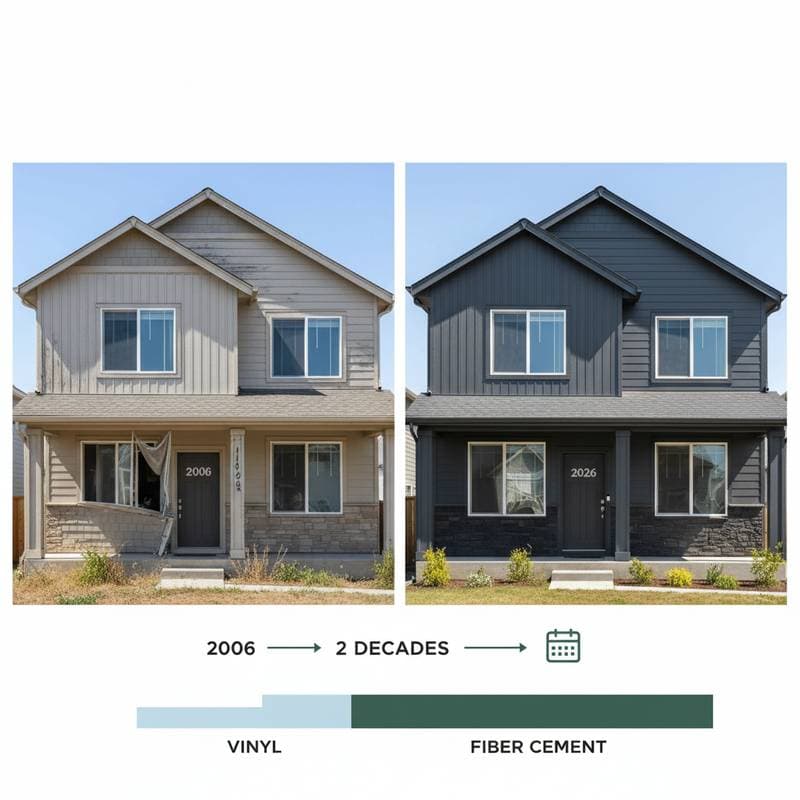
Fiber Cement vs Vinyl Siding: Lifespan Realities in 2026
Homeowners evaluating fiber cement and vinyl siding frequently focus on longevity, affordability, and resilience. Fiber cement typically endures for 50 years or more, while vinyl siding lasts 20 to 40 years, depending on environmental factors. This section delves into these differences, influenced by installation quality, regional weather patterns, and routine upkeep, to equip readers with data for confident choices.
Fiber cement, composed of cement, sand, and cellulose fibers, resists moisture and impacts effectively. Vinyl, made from polyvinyl chloride, offers initial economy but shows wear sooner in severe conditions. Understanding these traits helps align material selection with long-term home goals.
Selecting Styles and Materials
Common Siding Profiles and Applications
Siding profiles determine visual impact and functional suitability. Lap siding features horizontal panels that overlap for water runoff, serving as a versatile option for most residences. Board and batten involves vertical boards with covering strips over joints, suiting contemporary or rustic designs like gables on farmhouses.
Shingles and shakes replicate traditional textures, enhancing accents on roofs or coastal structures. Both fiber cement and high-end vinyl provide these forms, though fiber cement delivers greater dimensional stability.
Comparing Material Advantages and Drawbacks
The table below outlines key attributes of each material.
| Material | Advantages | Disadvantages |
|---|---|---|
| Fiber Cement | Resists fire and pests; accepts paint for customization; offers realistic textures; provides extended durability up to 50+ years | Requires heavier lifting during installation; incurs higher labor expenses; demands specialized cutting tools with dust management; needs repainting every 10-15 years |
| Vinyl | Delivers budget-friendly pricing; features extensive pre-colored selections; eliminates painting requirements; maintains minimal upkeep needs | Prone to cracking from impacts or freezing temperatures; susceptible to warping in high heat; exhibits reduced longevity in extreme weather, often 20-40 years |
Fiber cement excels in fire-prone or humid areas, while vinyl suits milder climates with budget constraints.
Guidelines for Combining Profiles
Integrate lap siding on primary walls with shingles or board and batten on upper sections for cohesive architecture. Maintain uniform trim hues across elements to unify the facade. Refrain from blending vinyl and fiber cement on the same surface, as variations in thickness create inconsistent shadow lines and expansion rates lead to gaps.
Choosing Trim and Accents
Pair fiber cement siding with fiber cement or PVC trim to accommodate natural joint shifts. Vinyl installations benefit from compatible vinyl or aluminum trim that permits thermal expansion. Install back-flashing around all windows and doors to block moisture entry and extend material life.
Tailored Examples for Different Homes
For a suburban ranch-style home, opt for vinyl lap siding with insulated backing to enhance energy efficiency and reduce utility costs. A historic craftsman residence thrives with fiber cement in smooth or wood-grain finishes, emulating cedar aesthetics while complying with fire safety regulations.
Coastal cottages perform best with fiber cement shingles on exposed, wind-facing walls for superior storm resistance, complemented by vinyl accents on protected areas to optimize expenses.
Preparing for Your Siding Project
Establishing Objectives and Project Boundaries
Identify whether durability, ease of care, or upfront affordability drives the decision. Conduct precise measurements of all exterior walls, document any existing rot or moisture issues, and consider integrating trim or soffit updates to streamline the process and avoid future disruptions.
Evaluating Contractors and Quotes
Prioritize contractors certified by the siding manufacturer for assured expertise. Obtain at least three detailed bids specifying materials, labor, and timelines. Inquire about fastening techniques and flashing methods during discussions; value comprehensive proposals over the lowest bid for optimal results.
Reviewing Samples and Mockups
Examine physical samples under daylight to assess color accuracy and texture depth. For fiber cement, verify paint finish and sheen preferences. With vinyl, inspect panel gauge and secure locking mechanisms. Authorize a test installation on a small area to confirm alignment with expectations before committing to the full scope.
Preparing the Site and Managing Workflow
Clear the work area of obstacles and protect landscaping with tarps. Coordinate daily schedules to minimize weather exposure, ensuring materials arrive protected. Establish communication protocols with the crew for prompt issue resolution.
Ensuring Quality During Installation
Monitor progress through structured checkpoints to uphold standards.
-
Weather Barrier Review: Prior to siding application, inspect the house wrap for complete coverage and sealed seams to safeguard against water infiltration.
-
Starter and Trim Setup: Confirm the starter strip and trim install level and plumb to prevent undulations in the siding surface.
-
Panel Placement Verification: Every several rows, measure reveals for uniformity and check alignment to maintain straight lines.
-
Completion Assessment: Examine all caulking joints, perform necessary paint touch-ups, and ensure thorough cleanup of debris.
These steps mitigate common pitfalls and secure a professional finish.
Sustaining Your Siding for Decades
Once installed, fiber cement benefits from gentle cleaning with low-pressure washing annually and repainting as needed to preserve vibrancy. Vinyl requires occasional rinsing to remove dirt and inspection for loose panels after storms.
Both materials contribute to home value when maintained properly. Fiber cement's extended lifespan reduces replacement frequency, while vinyl's low upkeep appeals to hands-off owners. Select based on your lifestyle and locale for a facade that enhances protection and pride of ownership over time.